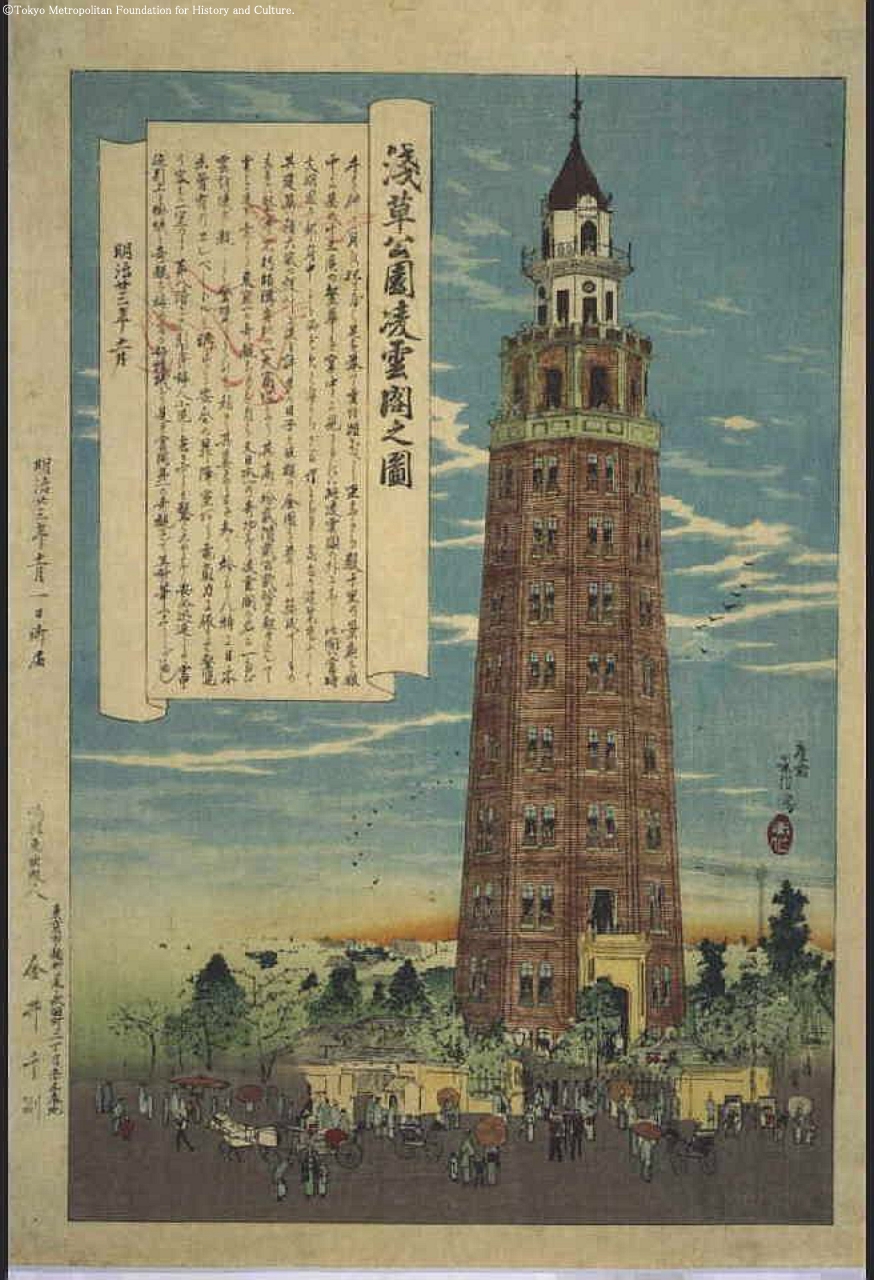
Picture of Asakusa Park and the Ryounkaku Building
- Medium:
- Color woodblock print
- Source:
- Edo-Tokyo Museum
Description
Picture of Asakusa Park and the Ryounkaku Building is a color woodblock print by Taguchi Beisaku held in the Edo-Tokyo Museum collection and accessible through ukiyo-e.org. The subject is the Ryounkaku, the twelve-story Western-style observation tower constructed in Asakusa Park in 1890 to designs by the British engineer William K. Burton, which briefly stood as the tallest building in Japan and dominated the Tokyo skyline until its destruction in the 1923 Great Kanto Earthquake. The Ryounkaku—literally 'cloud-reaching pavilion'—was popularly known as the Junikai (Twelve Stories) and became one of the iconic landmarks of the Meiji modernization, attracting visitors who climbed its eight elevators and electric-lit galleries to view the city from above. Beisaku, like many Meiji designers, treated the tower as a symbol of Japan's emergence into the visual vocabulary of late nineteenth-century modernity, presenting it rising above the festive crowds of Asakusa Park—the great popular entertainment district of Tokyo, famous for its Sensoji temple, its archery galleries, its street performers, and its newly built Western-style amusements. The print belongs to the broader genre of kaika-e (pictures of civilization and enlightenment) that flourished in the 1880s and 1890s, and it documents the same modernizing impulse that animated Beisaku's senso-e work: an embrace of new technologies, new architectural forms, and new urban scenes as appropriate subjects for the woodblock print tradition.
More Prints by Taguchi Beisaku
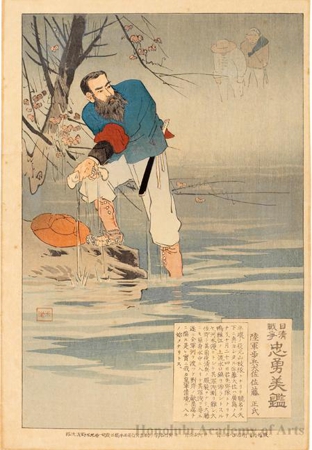
Infantryman Sato Tadashi
1895
Color woodblock print
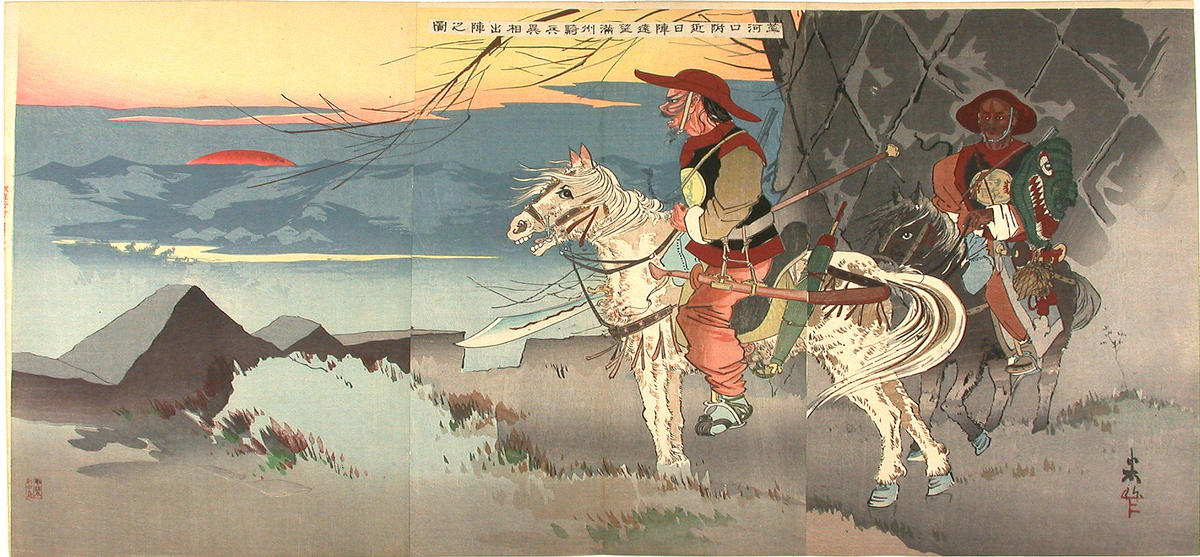
On the Estuary of the Soka River, Manchurian Raiders Spy on the Japanese Camp
1894/95
Color woodblock print; oban triptych

Master Scout Takeuchi
1894/95
Color woodblock print; oban triptych
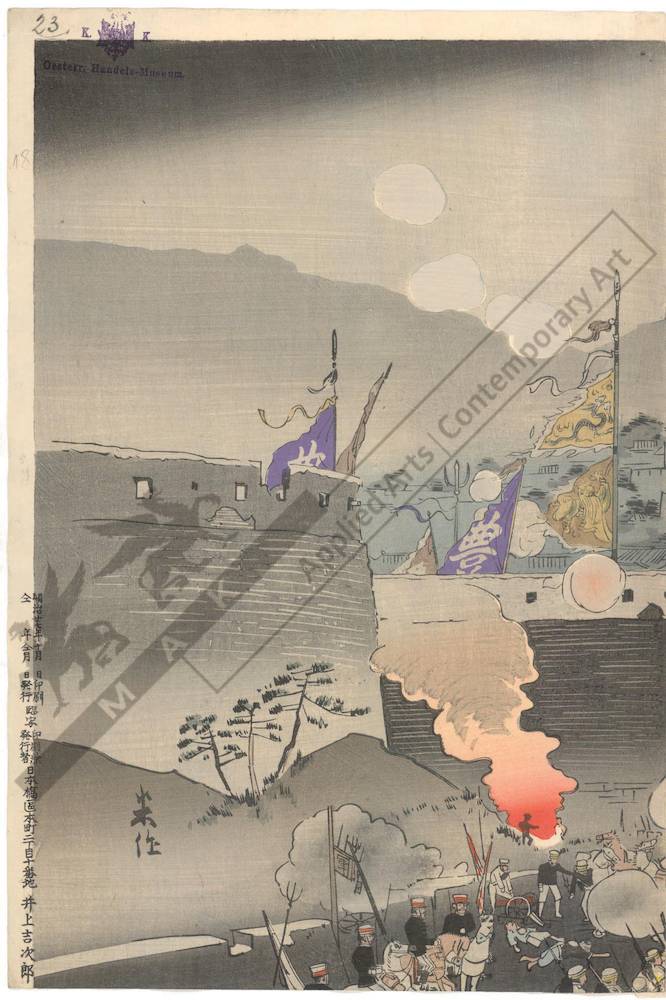
First Soldiers at the Genbu Gate in Pyongyang
1894
Color woodblock print; oban triptych
Frequently Asked Questions
Picture of Asakusa Park and the Ryounkaku Building was created by Taguchi Beisaku (田口米作).