
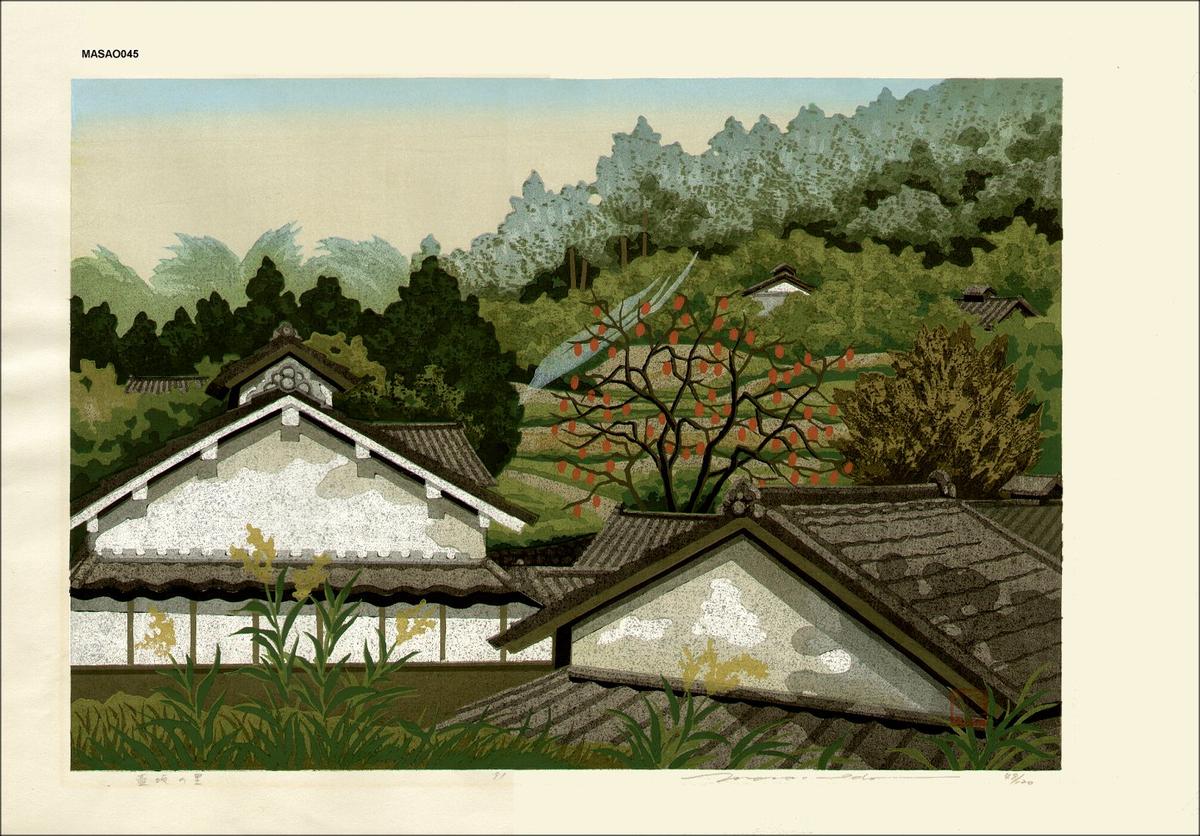
Washimi village
- Medium:
- Etching
- Image courtesy of
- Saru Gallery
Description
Washimi village depicts one of the small rural settlements that Tanaka Ryohei recorded throughout the Kyoto countryside. The composition likely shows clustered thatched-roof minka set against surrounding fields or wooded hills, drawn from sketches made on his repeated walking tours through the region. Tanaka's village views typically place the viewer at a slight remove, allowing the relationships between dwellings, garden walls, and the surrounding land to become legible. Working in copperplate etching, he built tonal density through massed parallel hatching and fine cross-hatching, often combined with aquatint to give the thatched roofs and shaded eaves their characteristic weight. His attention to the geometry of stone foundations, sliding shoji panels, and the peaks of kayabuki roofs is consistent across his Wachi, Saru, and similar village series. The print belongs to the broader documentary impulse that defined Tanaka's career — a sustained record of folk architecture that was already disappearing from rural Japan during the postwar decades when he was working.
More Prints by Tanaka Ryohei

More Village Scenes Prints

A Farmhouse in Autumn, Ayashi, Miyagi Prefecture (Noka no aki (Miyagi ken Ayashi)
Noka no aki (Miyagi ken Ayashi
1946
Color woodblock print
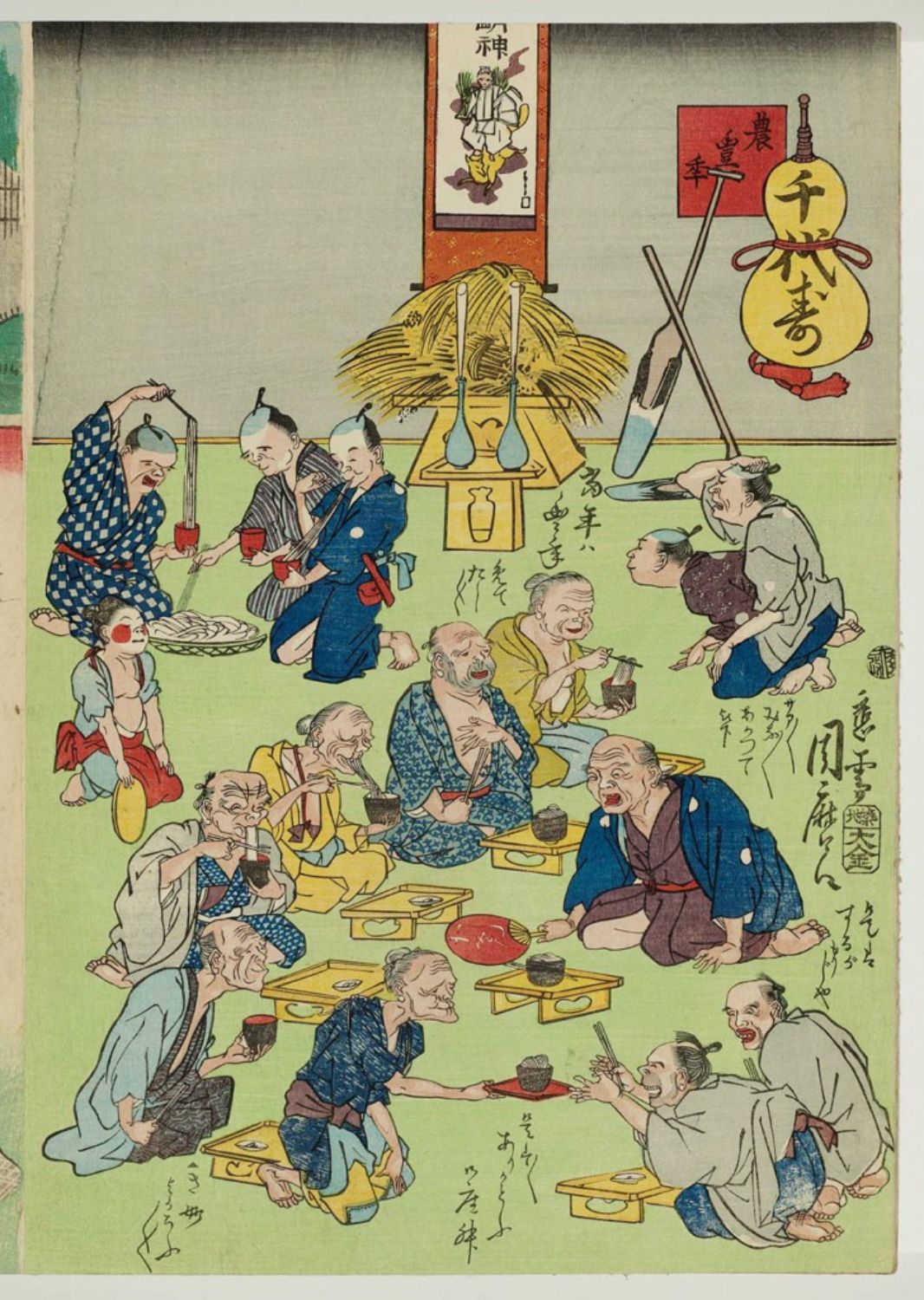
Celebrating the Good Harvest: Felicitations for a Thousand Ages (Nôhônen, Chiyo no kotobuki)
Woodblock print

Eastern Hamlet, Horyu Temple (Horyuji higashi sato)
1956
Color woodblock print
Village Scene in Nara
Woodblock print
Featured in Collections
Curated cross-cuts that include this print.
Frequently Asked Questions
Washimi village was created by Tanaka Ryohei (田中良平).
Washimi village depicts village scenes.