- Date:
- ca. 1906
- Medium:
- Woodblock print; ink and color on paper
- Source:
- Metropolitan Museum of Art
Description
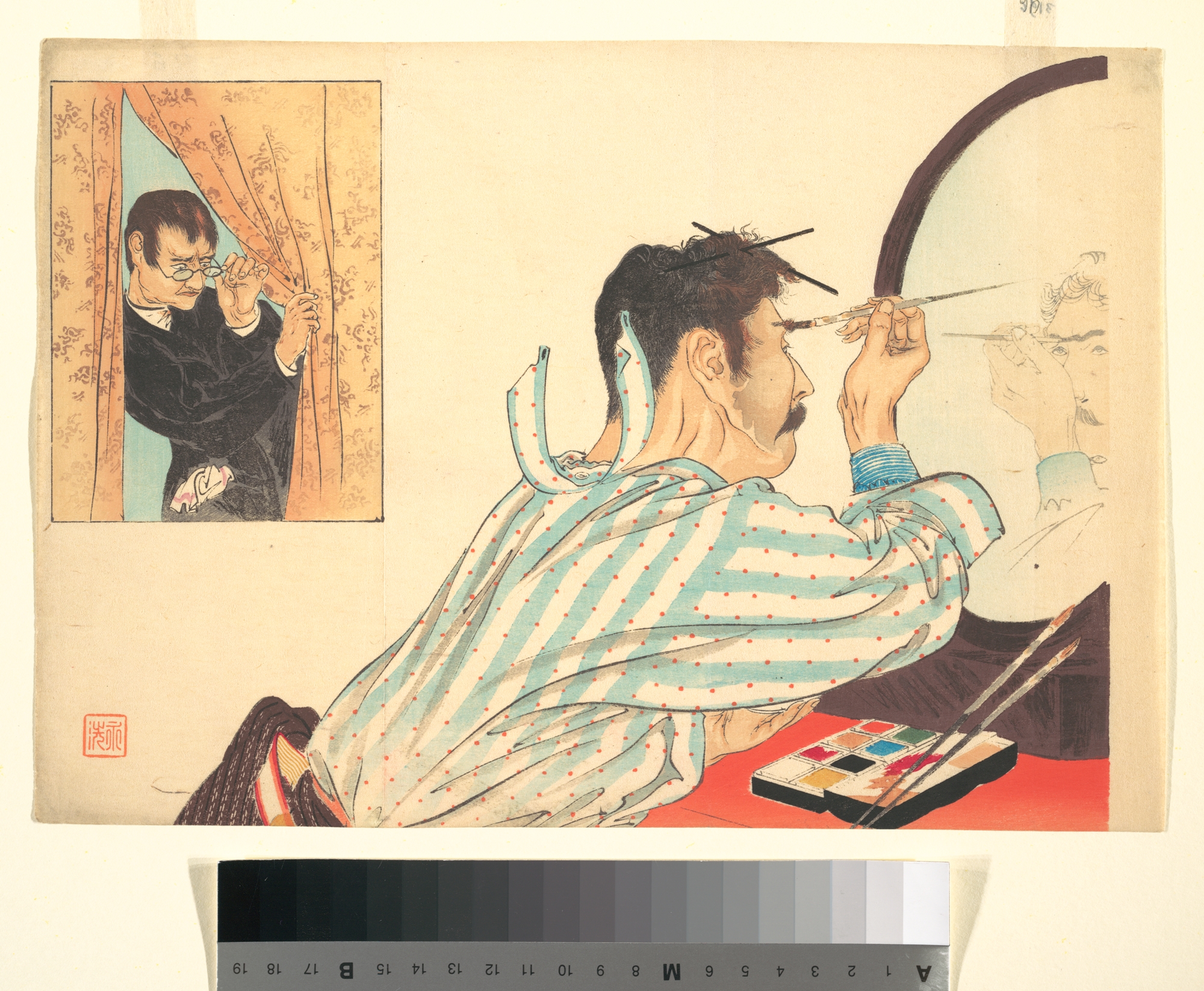
Print, dated 1906 and held by the Metropolitan Museum of Art (https://www.metmuseum.org/art/collection/search/55180), is a late-Meiji single-sheet woodblock by Tomioka Eisen, produced in the final year of the artist's short career. By 1906 Eisen had emerged as one of the foremost ukiyo-e and book illustrators of the late Meiji period, a specialist in bijin-ga and the new format of kuchi-e literary frontispieces that publishers were attaching to popular novels and to the prestige literary magazine Bungei Kurabu. The print belongs to that late-Meiji moment when the traditional ukiyo-e single-sheet had been largely displaced by photolithography and by the new mass-market periodical, and surviving artists such as Eisen, Tsukioka Kogyo, and Mizuno Toshikata were carrying the woodblock tradition forward through smaller editions aimed at a connoisseur market. Eisen had trained under the Kano-school painter Sano Toshiaki before turning to ukiyo-e, and his bijin-ga reflect that hybrid background, combining the disciplined figure drawing of his Kano apprenticeship with the colorist sensibility of the late ukiyo-e tradition that he had absorbed from his work for the Edo and Tokyo publishers. The Meiji-era bijin he developed inhabits a recognizably modern social world, the kimono and hairstyles registering the contemporary moment rather than the Edo-period nostalgia that had carried earlier Meiji bijin-ga, and the prints accordingly read as documents of late-Meiji urban femininity rather than as exercises in historical pastiche. The Metropolitan Museum of Art preserves the work as a representative example of Eisen's late single-sheet production in the year of his death, a document of the final flowering of the ukiyo-e single-sheet tradition before its complete absorption into the new printmaking movements of the early twentieth century.
More Prints by Tomioka Eisen


Frequently Asked Questions
Print was created by Tomioka Eisen (富岡永洗) in ca. 1906.