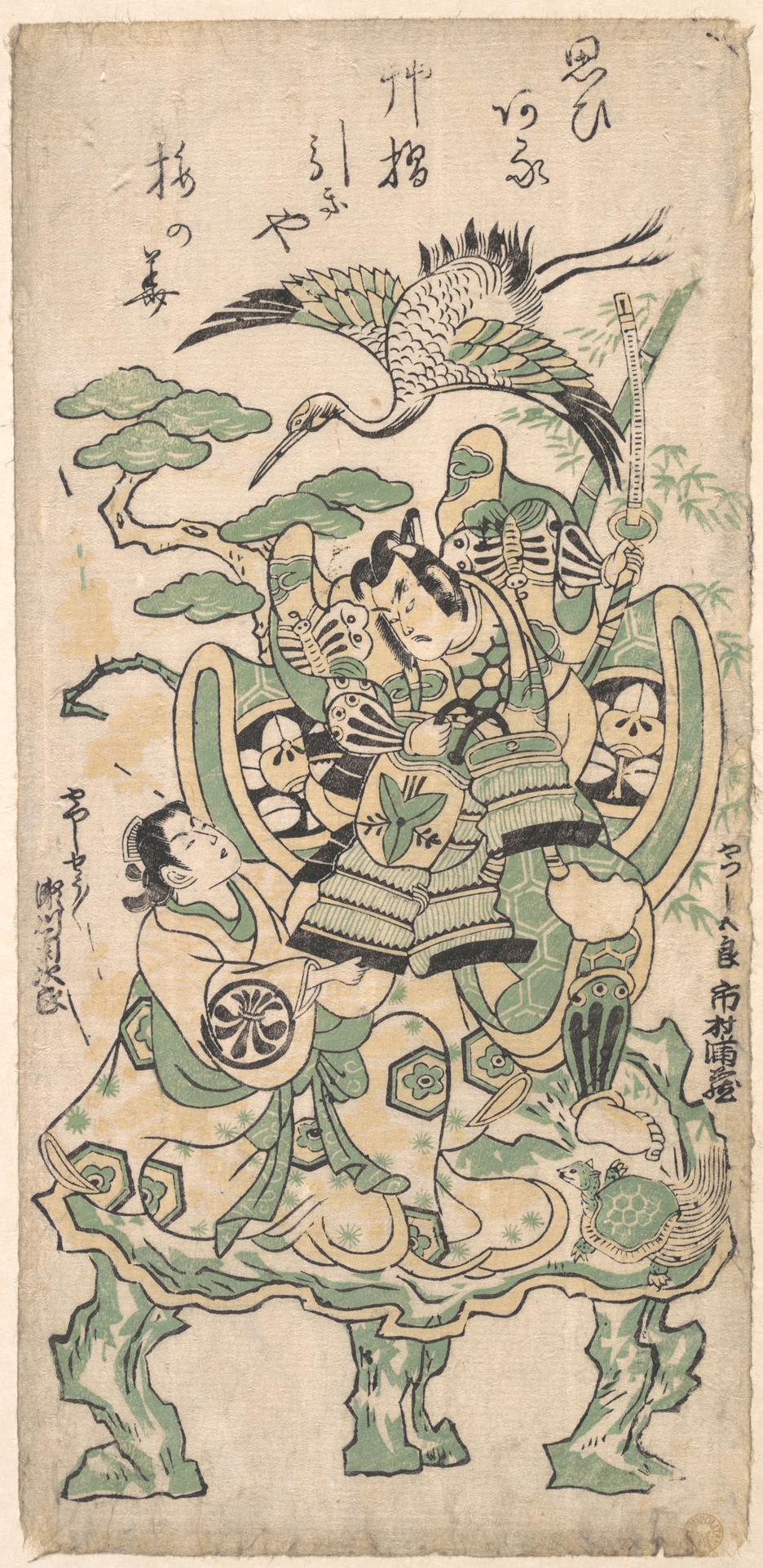
Ichimura Manzo as Yatsushi Goro and Segawa Kikujiro as Yatsushi Shosho
- Date:
- ca. 1745
- Medium:
- Woodblock print; ink and color on paper
- Source:
- Metropolitan Museum of Art
Description
Ichimura Manzo as Yatsushi Goro and Segawa Kikujiro as Yatsushi Shosho, dated 1735, presents a paired-actor portrait in which the established Soga-cycle roles of Goro and his courtesan-lover Kewaizaka no Shosho receive their yatsushi or modern-dress treatment. The 1735 date situates the print firmly within the Kiyomasu II generation of the Torii signature, the second-phase signature carried on after the death of the first Kiyomasu around 1722, with the Metropolitan Museum of Art preserving the impression under the umbrella attribution to Torii Kiyomasu (source_url https://www.metmuseum.org/art/collection/search/37267). The yatsushi convention allowed the canonical figures of the Soga vendetta cycle to appear in the dress and demeanor of contemporary Edo townspeople, inviting audiences to recognise the classical narrative beneath the modern visual register. Ichimura Manzo, whose career stretched across the 1730s and 1740s, here takes the Goro role while Segawa Kikujiro plays the disguised Shosho. The Torii workshop's bold contour line, descended from the first Kiyomasu's hyotan-ashi gourd-leg and mimizu-gaki earthworm-line stylisations, distinguishes the male and female roles through subtle adjustments while maintaining the unified visual register of the design, even as the yatsushi conceit subdues the muscular aragoto display that would have accompanied a straight Goro portrayal. The hosoban or wide-bordered tate-e format frames the paired figures, with patterned costume motifs supplying the principal visual interest against the lightly inked ground. The Metropolitan impression documents the mid-1730s Torii workshop's continuing engagement with the Soga repertoire under its yatsushi modern-dress treatment.
More Prints by Torii Kiyomasu I

The Actors Arashi Koroku I as Makomo no Mae and Ichikawa Uzaemon VIII as Taira no Koremochi in the play "Shusse Momijigari," performed at the Ichimura Theater in the eleventh month, 1747
1747
Color woodblock print; hosoban, benizuri-e

The Actors Sanogawa Ichimatsu I as Soga no Goro and Ikushima Daikichi II as Kewaizaka no Shosho in the play "Monzukushi Nagoya Soga," performed at the Ichimura Theater in the first month, 1748
1748
Color woodblock print; hosoban, benizuri-e
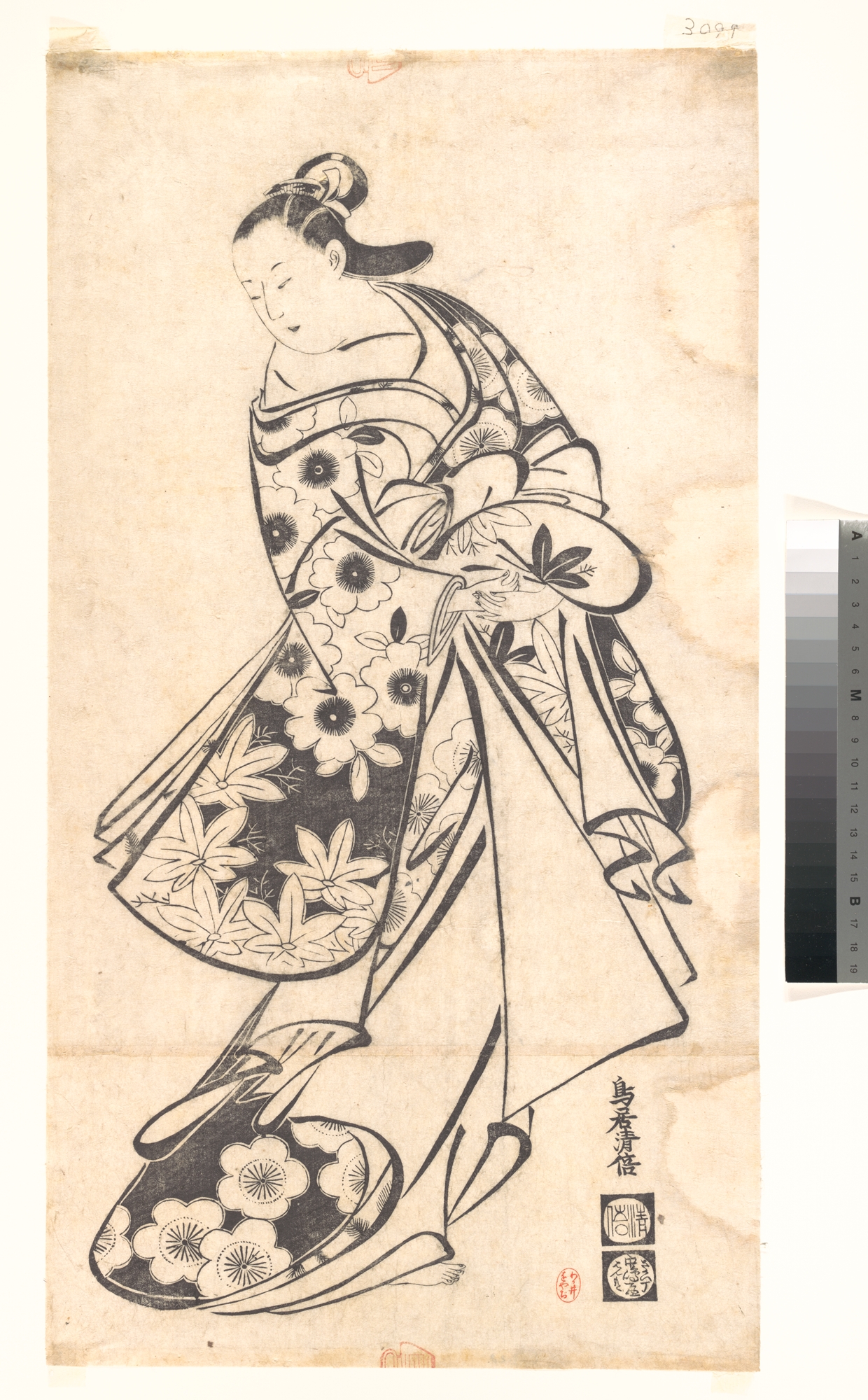
Courtesan
ca. 1712
Monochrome woodblock (tan-e) print; ink on paper

A Hawk Capturing a Crane in Flight
c. 1715
Hand-colored woodblock print; vertical o-oban, tan-e
Frequently Asked Questions
Ichimura Manzo as Yatsushi Goro and Segawa Kikujiro as Yatsushi Shosho was created by Torii Kiyomasu I (鳥居清倍) in ca. 1745.