
The Actors Arashi Koroku I as Makomo no Mae and Ichikawa Uzaemon VIII as Taira no Koremochi in the play "Shusse Momijigari," performed at the Ichimura Theater in the eleventh month, 1747
- Date:
- 1747
- Medium:
- Color woodblock print; hosoban, benizuri-e
- Source:
- Art Institute of Chicago
Description
The Actors Arashi Koroku I as Makomo no Mae and Ichikawa Uzaemon VIII as Taira no Koremochi in the play Shusse Momijigari, performed at the Ichimura Theater in the eleventh month, 1747, documents a kaomise programme from the opening of the 1747 theatrical year at the Ichimuraza. The 1747 date situates the print well within the long second phase of the Kiyomasu signature, carried on by a successor whom modern scholarship designates Kiyomasu II working within the Torii workshop's exclusive contract for kabuki publicity following the death of the first Kiyomasu around 1722. The Art Institute of Chicago preserves the impression under the umbrella Torii Kiyomasu attribution (source_url https://www.artic.edu/artworks/19402). Shusse Momijigari draws on the celebrated no play Momijigari, in which the Heian warrior Taira no Koremochi encounters an aristocratic lady viewing autumn maple leaves at Togakushi, only to discover that she is a demon in disguise. Ichikawa Uzaemon VIII, who would inherit the Ichimuraza zamoto management, here takes the Koremochi warrior role, with Arashi Koroku I as the supernatural Makomo no Mae before her demonic disclosure. The Torii workshop's bold contour line, descended from the hyotan-ashi gourd-leg and mimizu-gaki earthworm-line stylisations developed in the first Kiyomasu's tan-e and sumizuri-e, persisted as the workshop's visual signature into the 1740s even as the medium had advanced into early polychrome benizuri-e production. The hosoban or wide-bordered tate-e format frames the paired figures, with patterned costume motifs supplying the principal visual interest and the eleventh-month Togakushi setting evoked through reduced background detail. As the founding image-makers for the licensed Edo theatres, the Torii workshop maintained the documentary function of commemorating specific role-and-run combinations across successive generations of actors and successive bearers of the school's signatures.
More Prints by Torii Kiyomasu I

The Actors Sanogawa Ichimatsu I as Soga no Goro and Ikushima Daikichi II as Kewaizaka no Shosho in the play "Monzukushi Nagoya Soga," performed at the Ichimura Theater in the first month, 1748
1748
Color woodblock print; hosoban, benizuri-e
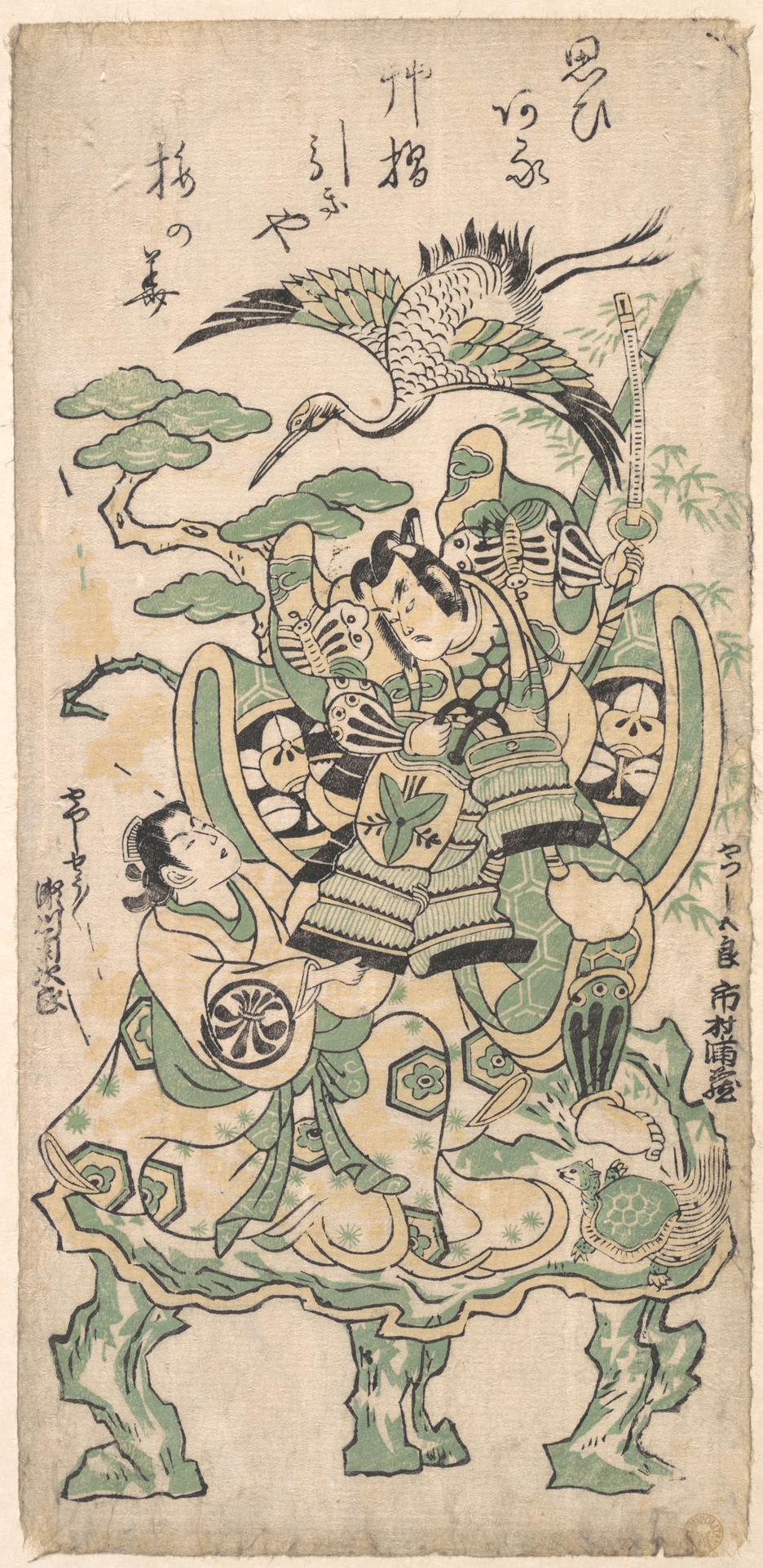
Ichimura Manzo as Yatsushi Goro and Segawa Kikujiro as Yatsushi Shosho
ca. 1745
Woodblock print; ink and color on paper
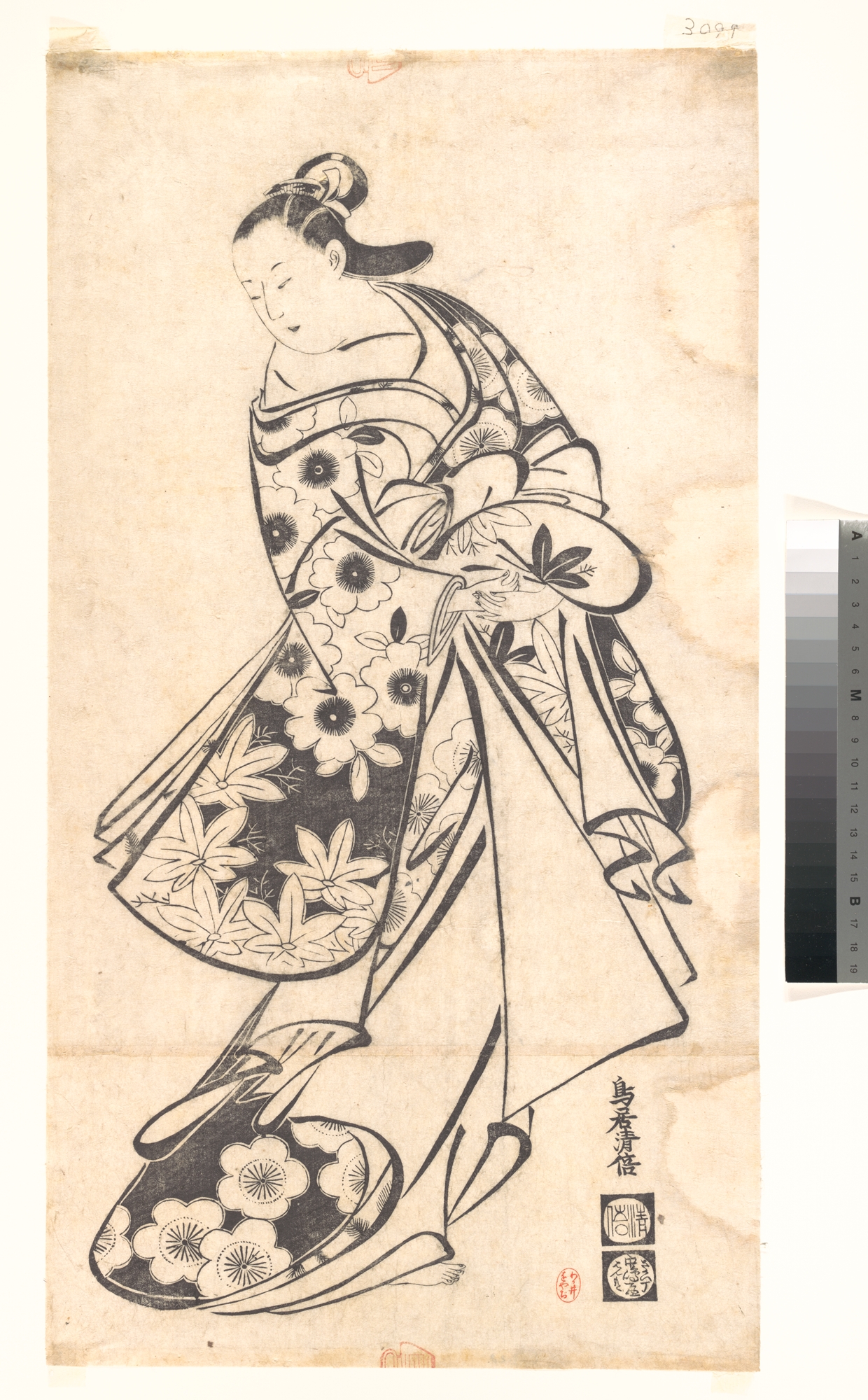
Courtesan
ca. 1712
Monochrome woodblock (tan-e) print; ink on paper

A Hawk Capturing a Crane in Flight
c. 1715
Hand-colored woodblock print; vertical o-oban, tan-e
Frequently Asked Questions
The Actors Arashi Koroku I as Makomo no Mae and Ichikawa Uzaemon VIII as Taira no Koremochi in the play "Shusse Momijigari," performed at the Ichimura Theater in the eleventh month, 1747 was created by Torii Kiyomasu I (鳥居清倍) in 1747.