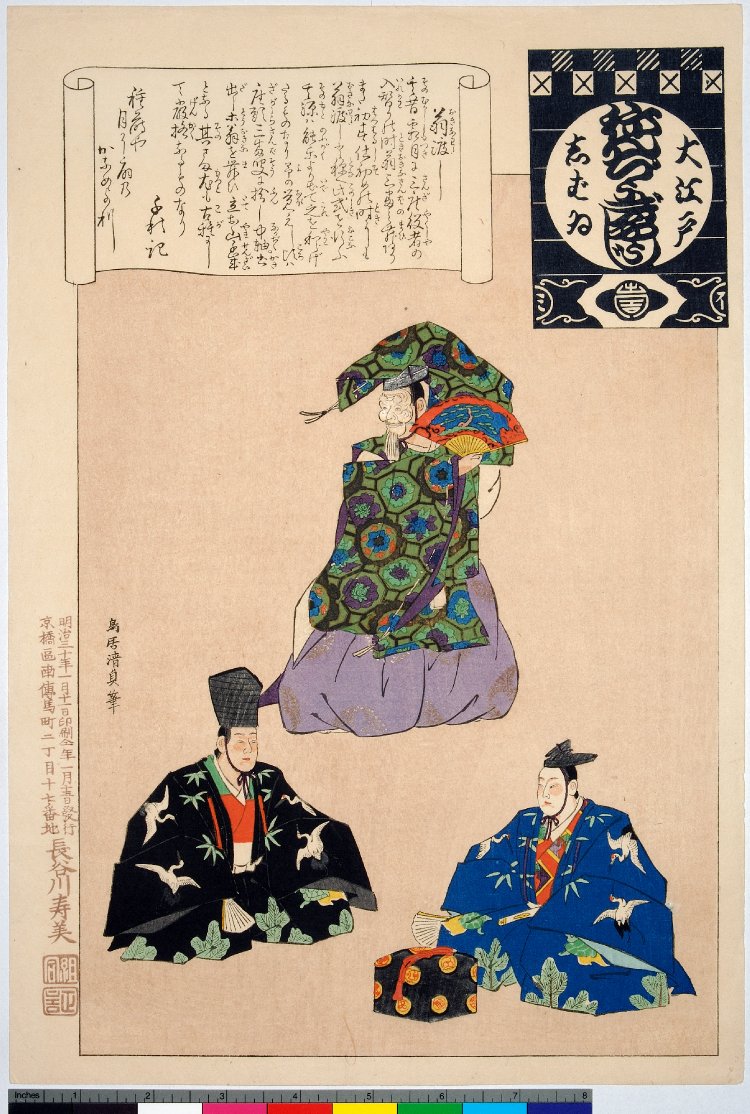
Okina-watashi, from the series Annual Events of the Theater in Edo (Ōedo shibai nenjū-gyōji)
大江戸しばゐねんぢうぎやうじ 翁渡し
- Date:
- 1897
- Medium:
- Woodblock print (nishiki-e); ink and color on paper
- Source:
- British Museum
Description
The Okina-watashi ('Passing of the Okina') - the ceremonial transfer of the sacred Okina mask that traditionally opened each year's theatrical season in pre-Meiji Edo - is documented here in Torii Kiyosada's 1897 print from the series Annual Events of the Theater in Edo (Ōedo shibai nenjū-gyōji). The Okina mask is the most sacred object of the no theatre tradition: a smiling, white-bearded mask used in the ritual play Okina that opens auspicious no programmes with a slow ceremonial dance invoking long life, abundant harvest, and the blessing of the deities on the year ahead. In Edo kabuki, the formal opening of each annual theatrical season - the kao-mise ('face-showing') in the eleventh month - included a borrowed ceremonial use of the Okina mask, with the mask formally passed from the head of the previous year's troupe to the head of the new season's company in a ritual that affirmed continuity across the year-to-year reorganisation of theatrical contracts. By the late nineteenth century the ritual had been largely abandoned under the modernising pressures of Meiji theatrical reform, and Kiyosada's documentary print preserves the older form for posterity. The series Annual Events of the Theater in Edo functioned as the Torii school's deliberate memorial to the pre-Meiji ceremonial framework of Edo kabuki, a tradition the Torii lineage had served from the time of its founder Torii Kiyonobu I in the 1690s. The print is held by the British Museum.
More Prints by Torii Kiyosada
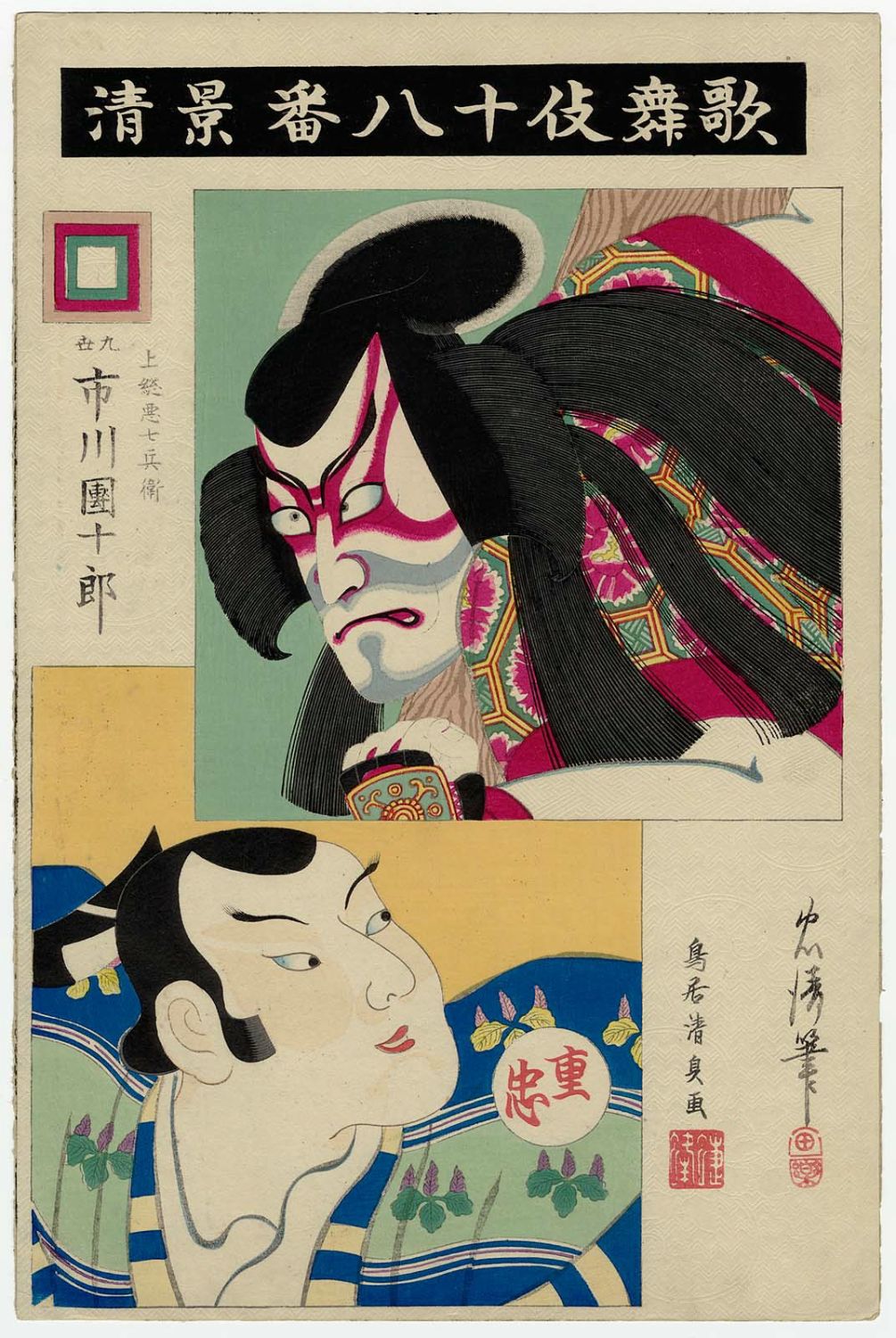
Actor Ichikawa Danjūrō IX as Kazusa Akushichibyōe in Kagekiyo, from the series The Eighteen Great Kabuki Plays (Kabuki Jūhachi-ban)
歌舞伎十八番 景清
1895
Woodblock print (nishiki-e); ink and color on paper
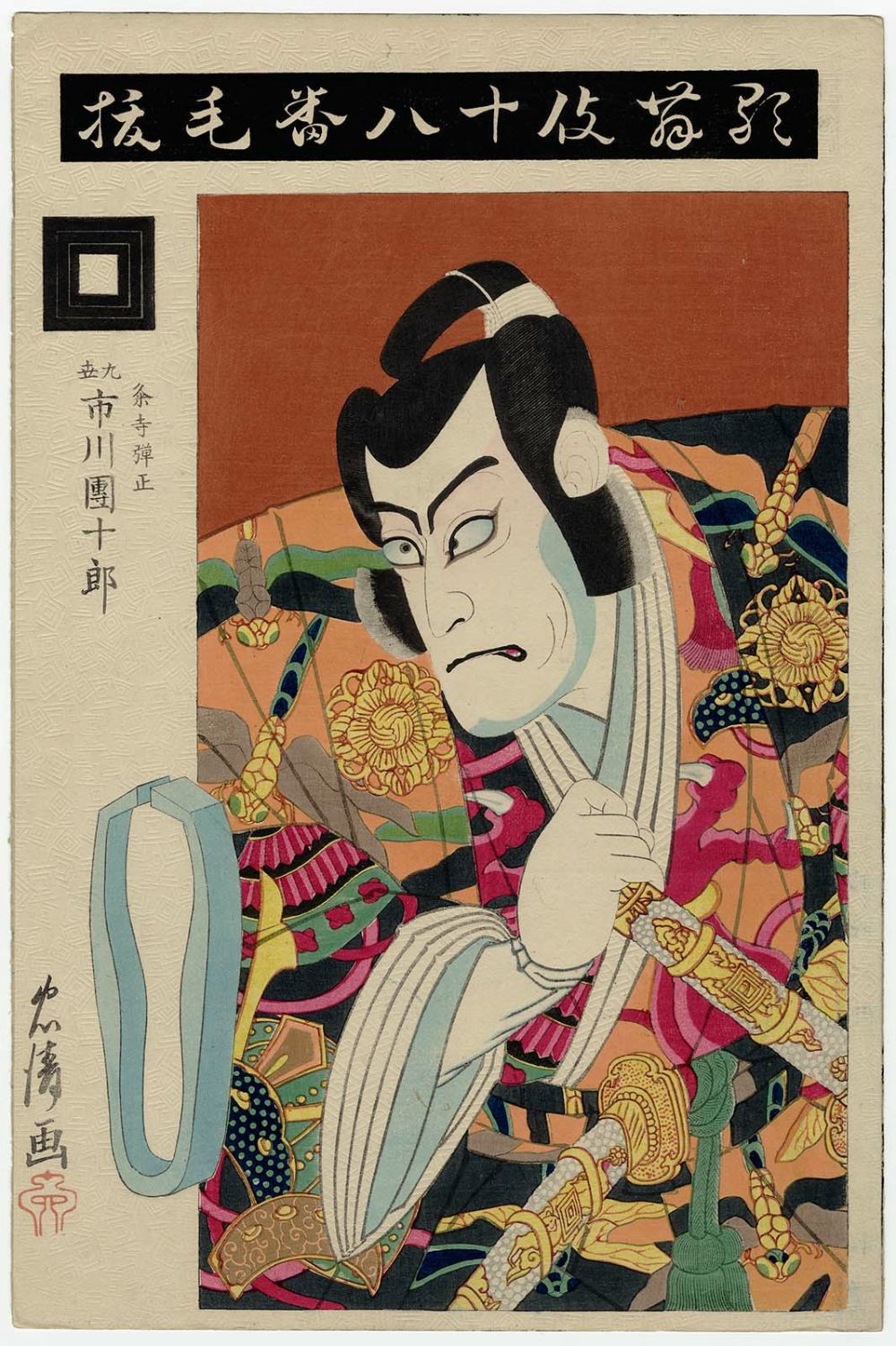
Actor Ichikawa Danjūrō IX as Kumedera Danjō in Kenuki, from the series The Eighteen Great Kabuki Plays (Kabuki Jūhachi-ban)
歌舞伎十八番 毛抜
1895
Woodblock print (nishiki-e); ink and color on paper
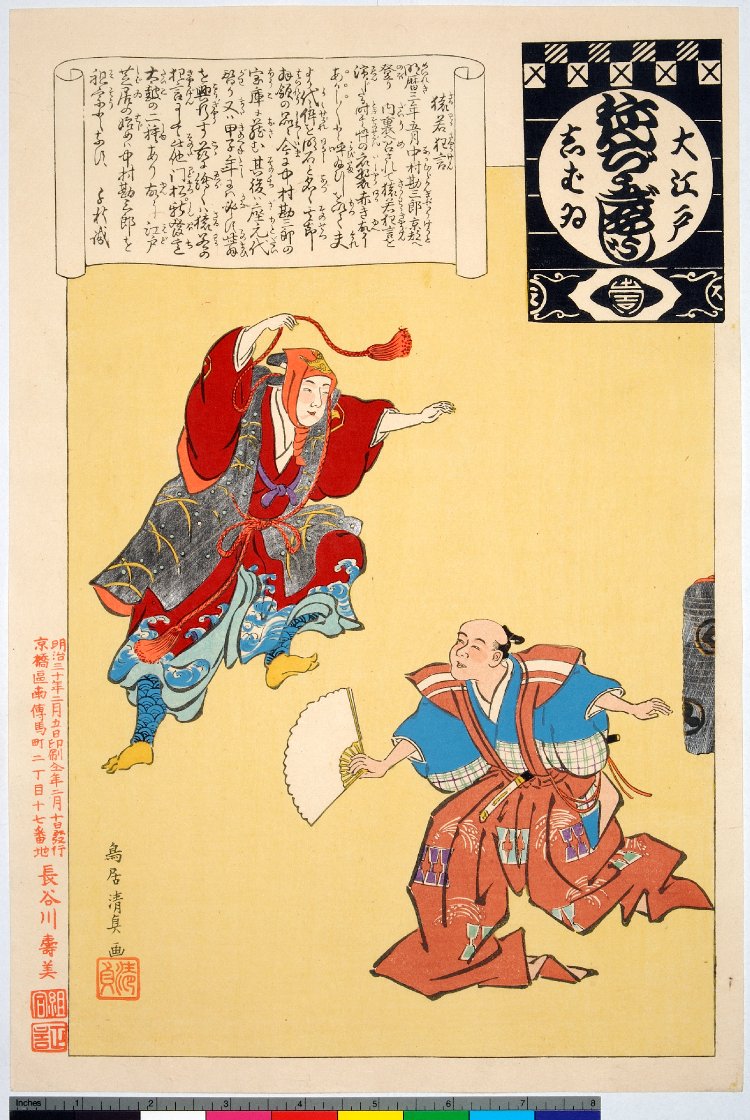
Saruwaka Kyōgen, from the series Annual Events of the Theater in Edo (Ōedo shibai nenjū-gyōji)
大江戸しばゐねんぢうぎやうじ 猿若狂言
1897
Woodblock print (nishiki-e); ink and color on paper
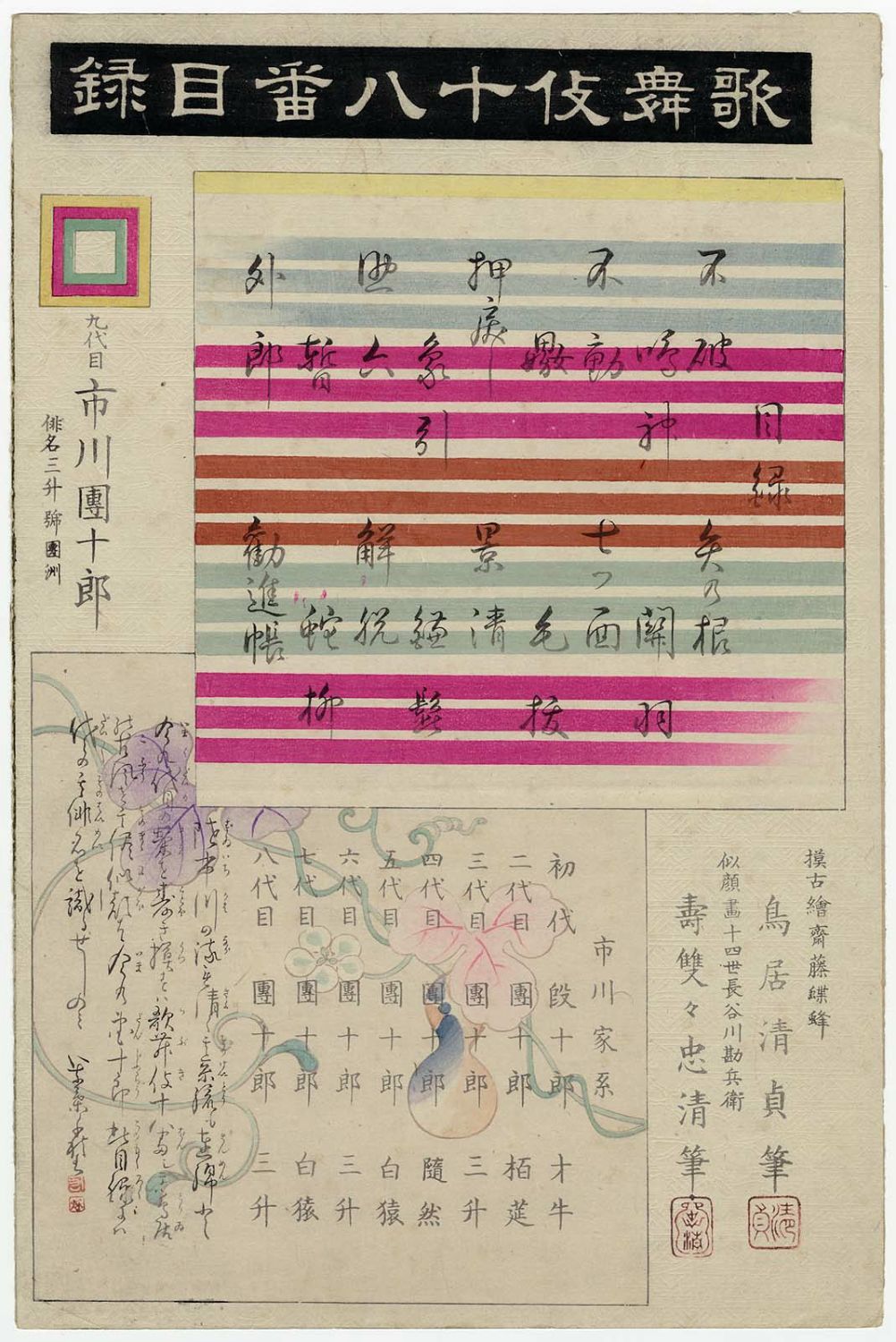
Title page (Mokuroku) for the series The Eighteen Great Kabuki Plays (Kabuki Jūhachi-ban)
歌舞伎十八番 目録
1895
Woodblock print (nishiki-e); ink and color on paper
Frequently Asked Questions
Okina-watashi, from the series Annual Events of the Theater in Edo (Ōedo shibai nenjū-gyōji) (大江戸しばゐねんぢうぎやうじ 翁渡し) was created by Torii Kiyosada (鳥居清貞) in 1897.