
Fujisawa, from the series "A Record of a Journey to Enoshima (Enoshima kiko)"
- Date:
- 1833
- Medium:
- Color woodblock print; shikishiban, surimono
- Source:
- Art Institute of Chicago
Description
Fujisawa is one of the station views in A Record of a Journey to Enoshima (Enoshima kiko), the celebrated surimono series Totoya Hokkei designed in 1833 for a kyoka poetry circle whose members took collective pleasure in retracing the famous pilgrimage route from Edo south to the island shrine of Benzaiten. Located along the Tokaido and at the gateway to the side road leading to Enoshima, Fujisawa was a natural choice for inclusion in the set, marking a transition between the major coastal highway and the final stretch of the journey. Hokkei's composition combines a low horizon, controlled placement of figures, and a careful balance of architectural and natural elements characteristic of his mature landscape practice. He learned this disciplined approach to space directly from Katsushika Hokusai, and his role within the Hokusai school was to extend such conventions into the more private and literary format of surimono. The inscribed kyoka verses above the image transform the station view into a poetic event, the patrons' contributions completing a printed object whose audience was the membership of the club itself. The deluxe production methods of surimono, including limited edition runs, metallic pigments, and embossing, made these sheets some of the most refined products of the Edo print industry, even though they were never sold publicly. The Art Institute of Chicago preserves this impression of Fujisawa under accession entry 80996, contributing to a wider corpus of surviving sheets from the set that document Totoya Hokkei's mediation between Hokusai school landscape vocabulary and the refined tastes of kyoka poets.
More Prints by Totoya Hokkei

Potted Plant (Ueki), from the series "Eighteen Illustrations of the Ladder of Ancient Words (Kogentei juhachiban tsuzuki)"
1831
Color woodblock print; shikishiban, surimono
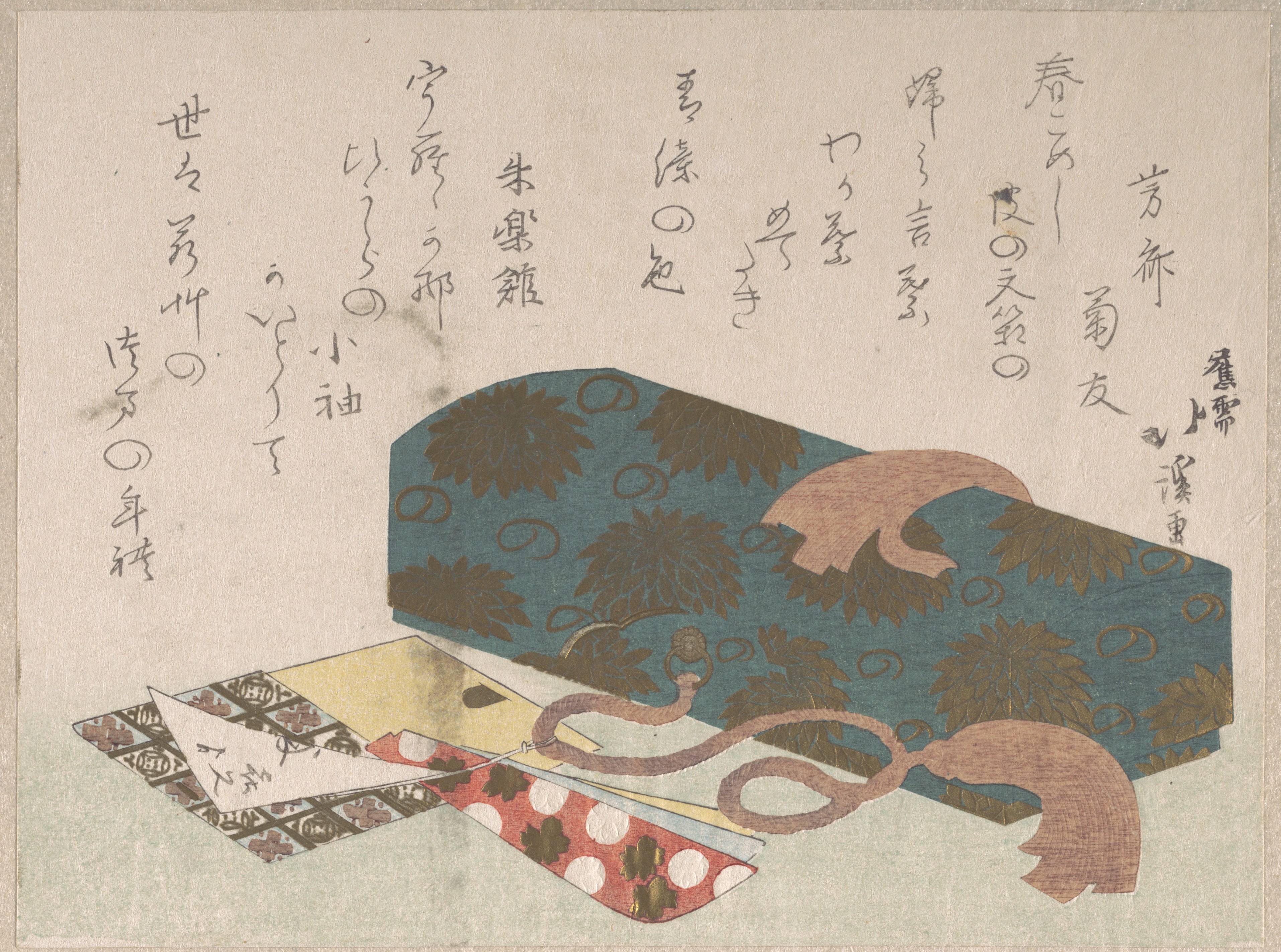
Letter-box and Toothpick Holders
19th century
Part of an album of woodblock prints (surimono); ink and color on paper

Illustration of a Chinese poem, from the series "Picture Book of Chinese Poems (Toshi gafu no uchi)"
c. 1830/44
Color woodblock print; chuban

Kyōka Verse Anthology of Elegant Friends (Kyōka gayū shū) 狂歌雅友集
1826 (Bunsei 9)
Woodblock printed book; ink and color on paper
More Mount Fuji Prints
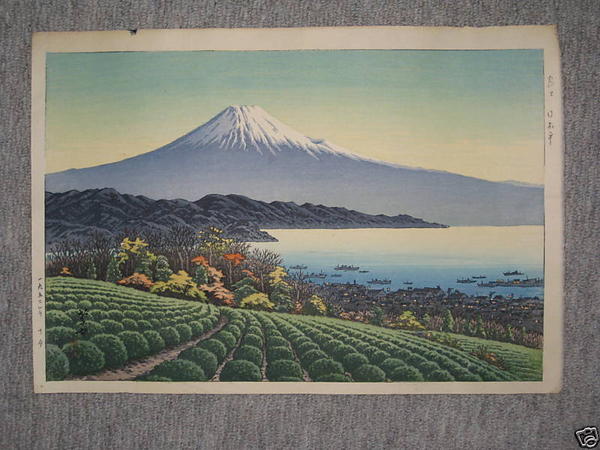
Fuji from tea farm
Woodblock print

Akasaka, Fujikawa, Okazaki, Chiryu, and Narumi, from the series "Famous Places on the Fifty-three Stations of the Tokaido, Five Stations (Tokaido gojusan eki goshuku meisho)"
c. 1830/35
Color woodblock print; oban
![Mount Fuji on a Moonlit Night, Kawai Bridge (Tsukiyo no Fuji [Kawaibashi]), from the series "Selection of Views of the Tokaido (Tokaido fukei senshu)" by Kawase Hasui](https://www.artic.edu/iiif/2/d0960668-1e73-339a-b182-fb995a54bff0/full/843,/0/default.jpg)
Mount Fuji on a Moonlit Night, Kawai Bridge (Tsukiyo no Fuji [Kawaibashi]), from the series "Selection of Views of the Tokaido (Tokaido fukei senshu)"
1947
Color woodblock print; oban

Mt. Fuji in Rain (Ame no Fuji)
n.d.
Color woodblock print
Featured in Collections
Curated cross-cuts that include this print.
Frequently Asked Questions
Fujisawa, from the series "A Record of a Journey to Enoshima (Enoshima kiko)" was created by Totoya Hokkei (魚屋北渓) in 1833.
Fujisawa, from the series "A Record of a Journey to Enoshima (Enoshima kiko)" depicts mount fuji.