
Madam Tang (Jp: To Fujin), from the series "Twenty-four Paragons of Filial Piety (Nijushiko)"
- Date:
- c. 1825
- Medium:
- Color woodblock print; shikishiban, surimono
- Source:
- Art Institute of Chicago
Description
Totoya Hokkei's surimono of Madam Tang (Jp: To Fujin), part of his series Twenty-four Paragons of Filial Piety (Nijushiko), is dated 1820 in the Art Institute of Chicago's catalogue. The Nijushiko cycle, drawn from a Chinese moral compendium widely known in Japan, offered Edo kyoka-e clubs a learned, classicizing framework for commissioning sets of surimono. Madam Tang is celebrated in this tradition for breastfeeding her infirm mother-in-law when the elder woman could no longer chew food, an act of devotion that became one of the cycle's most poignant exemplars. Hokkei, a senior pupil of the Hokusai school, was particularly suited to such a project: his careful figural drawing and his familiarity with Chinese subject matter, both inherited from Katsushika Hokusai's deep interest in continental sources, allowed him to render the paragons with appropriate gravity. Issuing the cycle as a surimono series would have given a kyoka club the opportunity to compose verses on each paragon and to circulate the prints among members and friends, who valued such sets for their literary and didactic content as much as for their visual refinement. The Art Institute of Chicago's impression preserves Hokkei's contribution to one of the most ambitious surimono series of its era, a model of how the Hokusai school engaged with the moralized history of East Asia within Edo kyoka-e culture.
More Prints by Totoya Hokkei

Potted Plant (Ueki), from the series "Eighteen Illustrations of the Ladder of Ancient Words (Kogentei juhachiban tsuzuki)"
1831
Color woodblock print; shikishiban, surimono
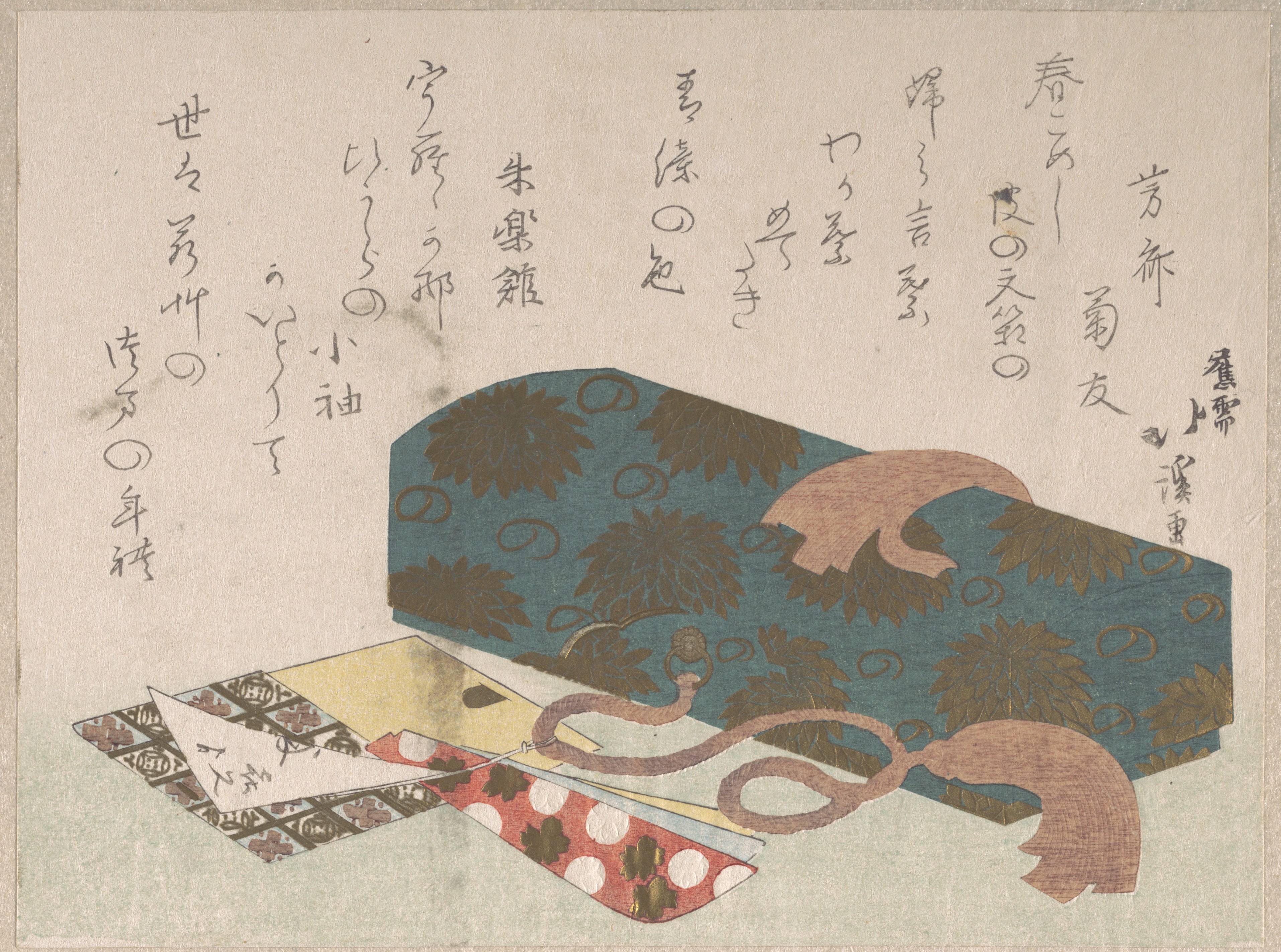
Letter-box and Toothpick Holders
19th century
Part of an album of woodblock prints (surimono); ink and color on paper

Illustration of a Chinese poem, from the series "Picture Book of Chinese Poems (Toshi gafu no uchi)"
c. 1830/44
Color woodblock print; chuban

Kyōka Verse Anthology of Elegant Friends (Kyōka gayū shū) 狂歌雅友集
1826 (Bunsei 9)
Woodblock printed book; ink and color on paper
More Mount Fuji Prints
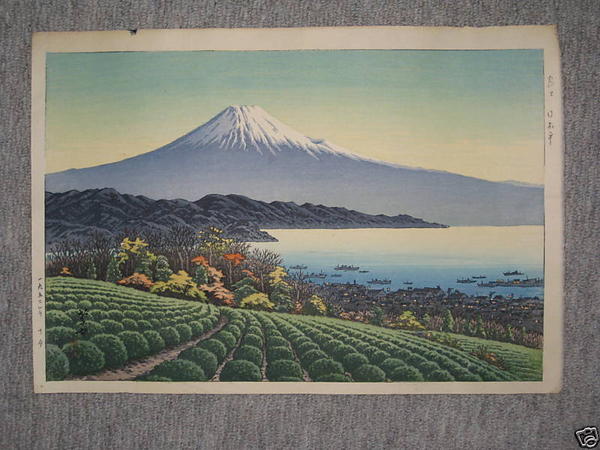
Fuji from tea farm
Woodblock print

Akasaka, Fujikawa, Okazaki, Chiryu, and Narumi, from the series "Famous Places on the Fifty-three Stations of the Tokaido, Five Stations (Tokaido gojusan eki goshuku meisho)"
c. 1830/35
Color woodblock print; oban
![Mount Fuji on a Moonlit Night, Kawai Bridge (Tsukiyo no Fuji [Kawaibashi]), from the series "Selection of Views of the Tokaido (Tokaido fukei senshu)" by Kawase Hasui](https://www.artic.edu/iiif/2/d0960668-1e73-339a-b182-fb995a54bff0/full/843,/0/default.jpg)
Mount Fuji on a Moonlit Night, Kawai Bridge (Tsukiyo no Fuji [Kawaibashi]), from the series "Selection of Views of the Tokaido (Tokaido fukei senshu)"
1947
Color woodblock print; oban

Mt. Fuji in Rain (Ame no Fuji)
n.d.
Color woodblock print
Featured in Collections
Curated cross-cuts that include this print.
Frequently Asked Questions
Madam Tang (Jp: To Fujin), from the series "Twenty-four Paragons of Filial Piety (Nijushiko)" was created by Totoya Hokkei (魚屋北渓) in c. 1825.
Madam Tang (Jp: To Fujin), from the series "Twenty-four Paragons of Filial Piety (Nijushiko)" depicts mount fuji.