
The Sumida River (Sumidagawa), from the series "View of Mount Fuji from Edo (Edo no Fuji)"
- Date:
- c. 1832
- Medium:
- Color woodblock print; shikishiban, surimono
- Source:
- Art Institute of Chicago
Description
Totoya Hokkei composed this surimono around 1827 as part of his series "View of Mount Fuji from Edo (Edo no Fuji)," depicting the Sumida River with Mount Fuji visible in the distance. The Sumida was one of Edo's defining waterways, and views of Fuji from points along its banks formed a cherished urban iconography for the city's residents. Hokkei renders the scene with the disciplined pictorial economy that characterized the Hokusai school, framing the distant volcanic cone against the riverside activity of boats and figures. The series participates in the great early nineteenth-century efflorescence of Fuji imagery that Hokkei's teacher Katsushika Hokusai had so spectacularly inaugurated with his "Thirty-Six Views of Mount Fuji," begun in the late 1820s. As a senior pupil of Hokusai and a leading member of the Hokusai school, Totoya Hokkei specialized in surimono, the privately commissioned deluxe prints used by kyoka poetry clubs to mark seasonal occasions. These prints combined striking imagery with kyoka comic verses on heavy paper enriched with metallic pigments and embossing. Hokkei's "View of Mount Fuji from Edo" series adapted the great landscape theme of his teacher's commercial Fuji series to the smaller scale and luxurious production of the surimono format. The Art Institute of Chicago, which preserves this impression, holds significant strength in early nineteenth-century Japanese prints, including substantial surimono holdings. The technical refinements visible in the work, the careful gradations of sky and water, the embossed details, the metallic pigments that suggest the sparkle of light on the river, all reflect the heightened production standards that distinguished surimono from ordinary commercial nishiki-e.
More Prints by Totoya Hokkei

Potted Plant (Ueki), from the series "Eighteen Illustrations of the Ladder of Ancient Words (Kogentei juhachiban tsuzuki)"
1831
Color woodblock print; shikishiban, surimono
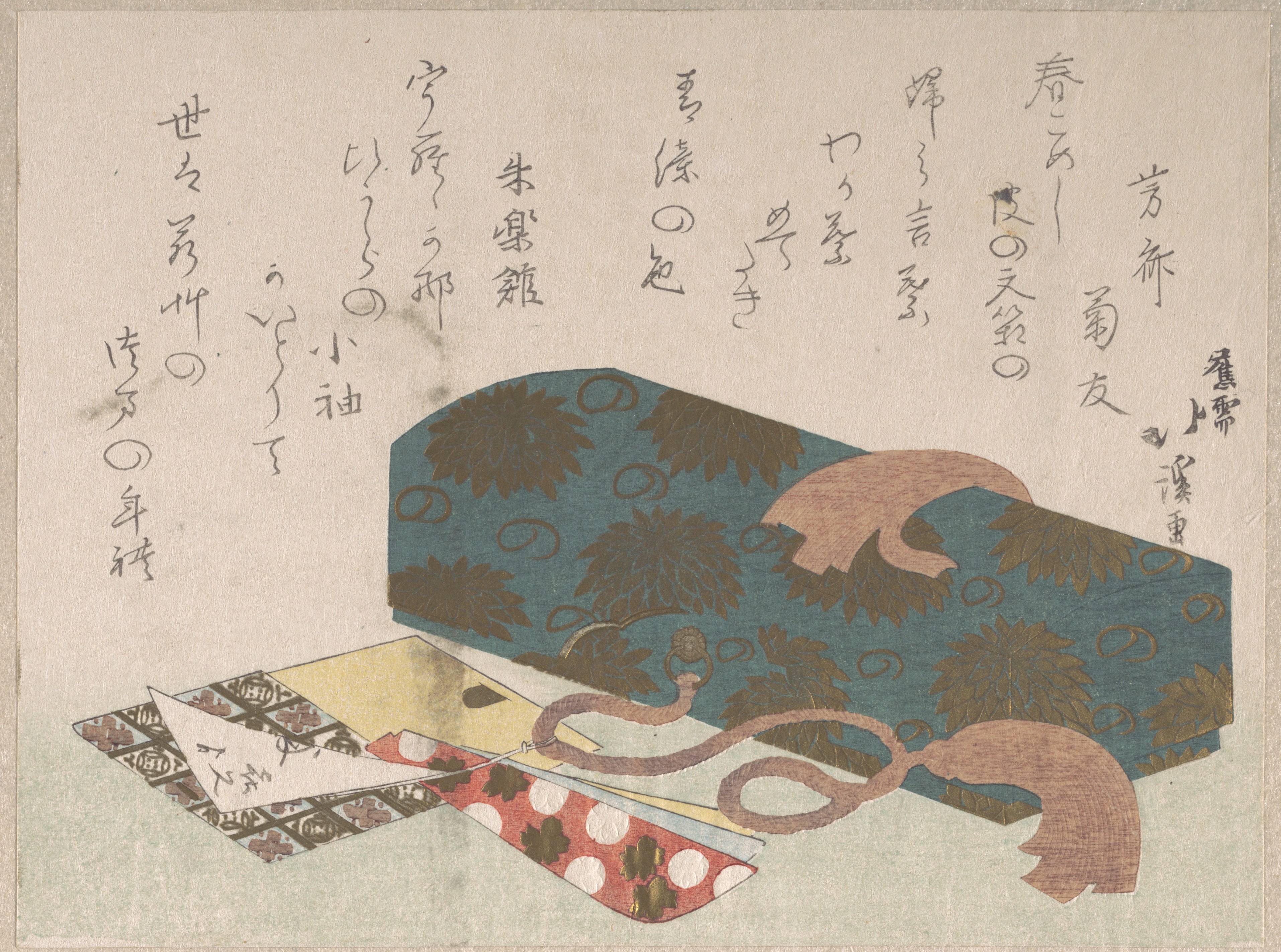
Letter-box and Toothpick Holders
19th century
Part of an album of woodblock prints (surimono); ink and color on paper

Illustration of a Chinese poem, from the series "Picture Book of Chinese Poems (Toshi gafu no uchi)"
c. 1830/44
Color woodblock print; chuban

Kyōka Verse Anthology of Elegant Friends (Kyōka gayū shū) 狂歌雅友集
1826 (Bunsei 9)
Woodblock printed book; ink and color on paper
More Mount Fuji Prints
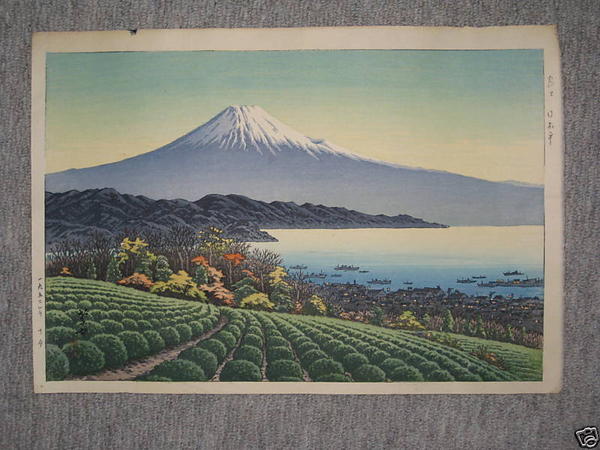
Fuji from tea farm
Woodblock print

Akasaka, Fujikawa, Okazaki, Chiryu, and Narumi, from the series "Famous Places on the Fifty-three Stations of the Tokaido, Five Stations (Tokaido gojusan eki goshuku meisho)"
c. 1830/35
Color woodblock print; oban
![Mount Fuji on a Moonlit Night, Kawai Bridge (Tsukiyo no Fuji [Kawaibashi]), from the series "Selection of Views of the Tokaido (Tokaido fukei senshu)" by Kawase Hasui](https://www.artic.edu/iiif/2/d0960668-1e73-339a-b182-fb995a54bff0/full/843,/0/default.jpg)
Mount Fuji on a Moonlit Night, Kawai Bridge (Tsukiyo no Fuji [Kawaibashi]), from the series "Selection of Views of the Tokaido (Tokaido fukei senshu)"
1947
Color woodblock print; oban

Mt. Fuji in Rain (Ame no Fuji)
n.d.
Color woodblock print
Featured in Collections
Curated cross-cuts that include this print.
Frequently Asked Questions
The Sumida River (Sumidagawa), from the series "View of Mount Fuji from Edo (Edo no Fuji)" was created by Totoya Hokkei (魚屋北渓) in c. 1832.
The Sumida River (Sumidagawa), from the series "View of Mount Fuji from Edo (Edo no Fuji)" depicts mount fuji.