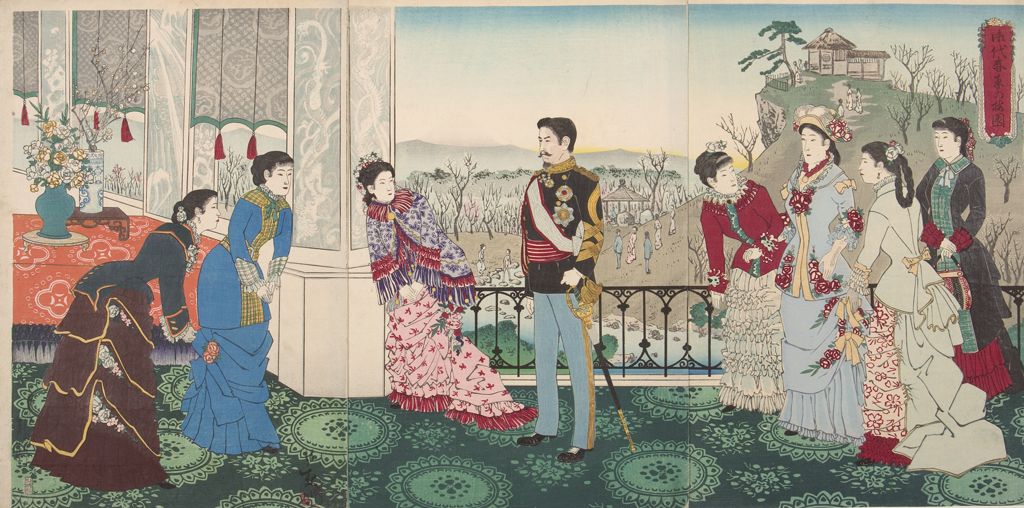
"Triptych: Emperor Meiji and His Consort in the Plum Garden (Miyo shun'e no baien), Meiji period, dated 1887"
- Medium:
- Woodblock print
- Source:
- Harvard Art Museum
- Image courtesy of
- Harvard Art Museum
Description
This three-sheet triptych from 1887 depicts Emperor Meiji and Empress Shōken in a plum garden, a setting that carries deep classical resonance in Japanese visual culture — plum blossoms (ume) signifying endurance and refinement. Triptych compositions in the nishiki-e tradition allowed artists to construct panoramic scenes impossible on a single oban sheet, and Kiyochika uses the expanded format to situate the imperial couple within an architecturally ordered garden space. The 1880s marked a period when official imagery of the Emperor was becoming standardized and politically freighted; this print participates in the emerging visual culture of imperial reverence during the Meiji state's consolidation. Kiyochika's Western-influenced treatment of light and spatial depth — qualities absorbed through his study of Westernized painting techniques — would distinguish such ceremonial imagery from the flatter decorative registers of earlier imperial iconography.
More Prints by Kobayashi Kiyochika
More Gardens Prints
![[Garden of] Taj Mahal, No. 1 (Taji Maharu no niwa, dai ichi) by Hiroshi Yoshida](https://www.artic.edu/iiif/2/230993a7-d4f0-c979-c267-127d48e1ef1c/full/843,/0/default.jpg)
[Garden of] Taj Mahal, No. 1 (Taji Maharu no niwa, dai ichi)
Taji Maharu no niwa, dai ichi
1931
Color woodblock print; oban

Kiyozumi Garden in Moonlight
January 1938
Woodblock print, ink and color on paper

Moon over Kiyosumi Garden (Tsuki no Kiyosumien)
1938
Color woodblock print; oban
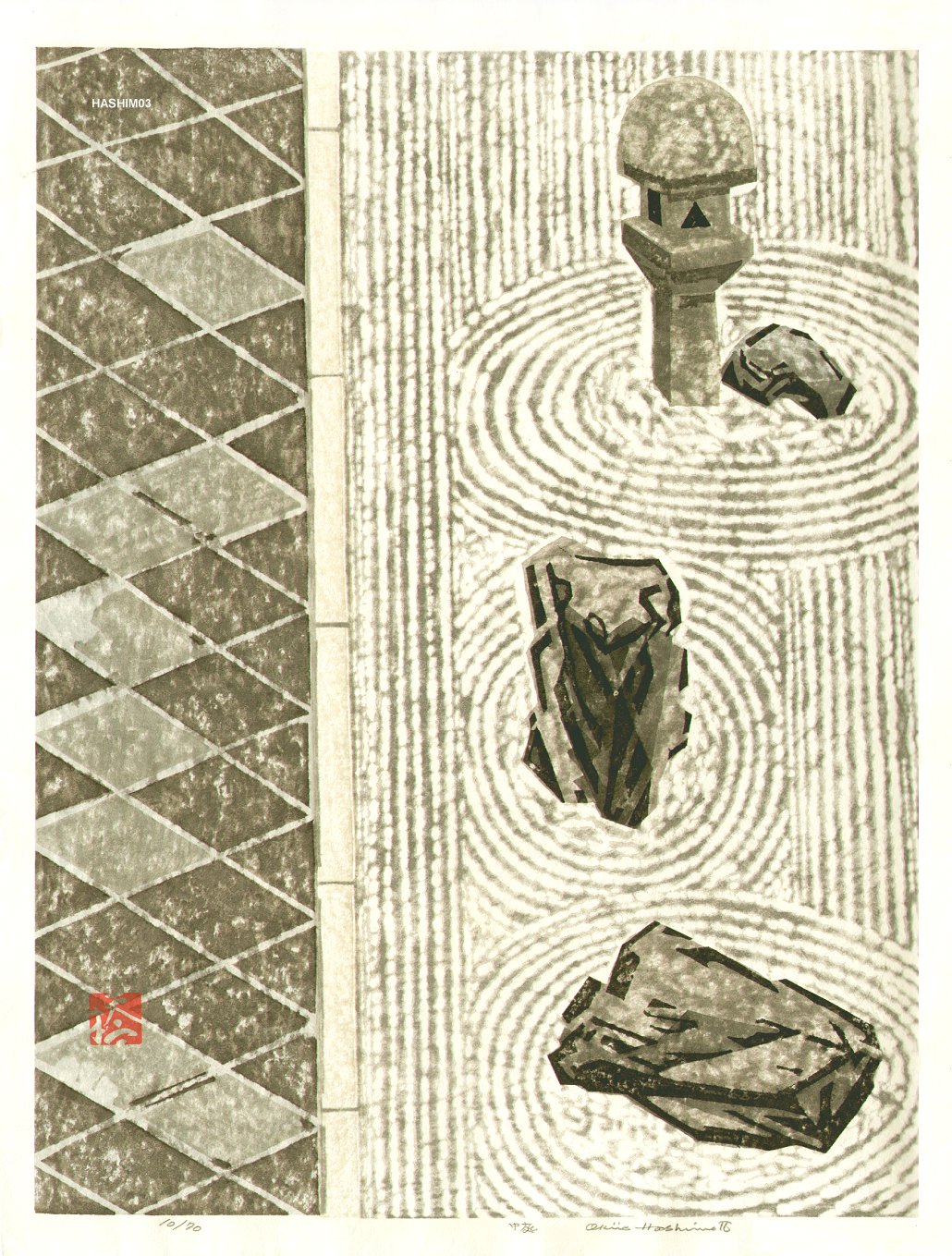
Rock garden
10/70, 1966
Woodblock print
Frequently Asked Questions
"Triptych: Emperor Meiji and His Consort in the Plum Garden (Miyo shun'e no baien), Meiji period, dated 1887" was created by Kobayashi Kiyochika (小林清親).
"Triptych: Emperor Meiji and His Consort in the Plum Garden (Miyo shun'e no baien), Meiji period, dated 1887" depicts gardens and food & drink.