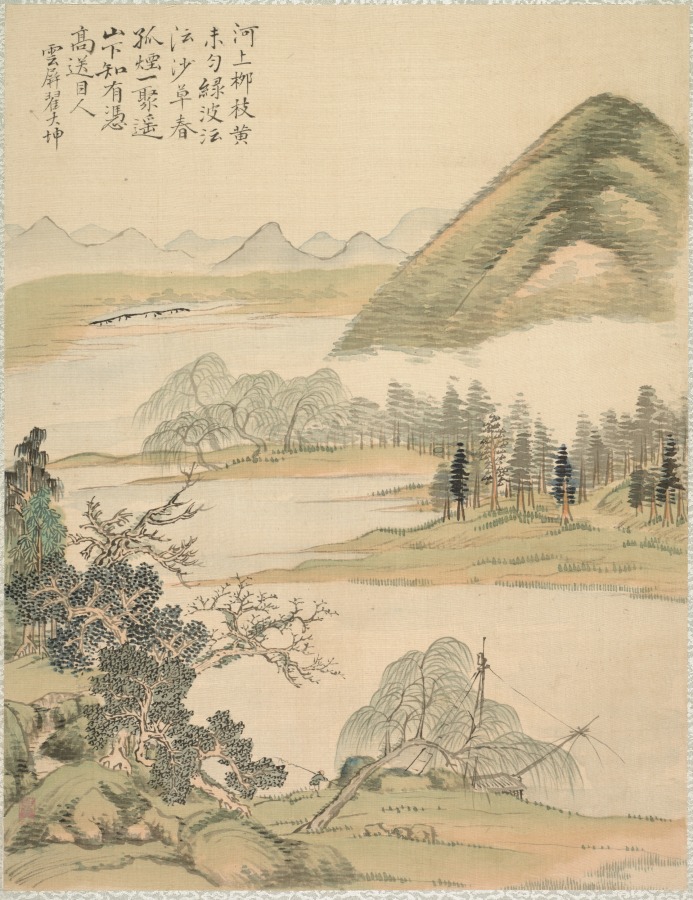
Willow Branches in Spring
- Date:
- 1847
- Medium:
- Album leaf; ink and color on silk
- Source:
- Cleveland Museum of Art
Description
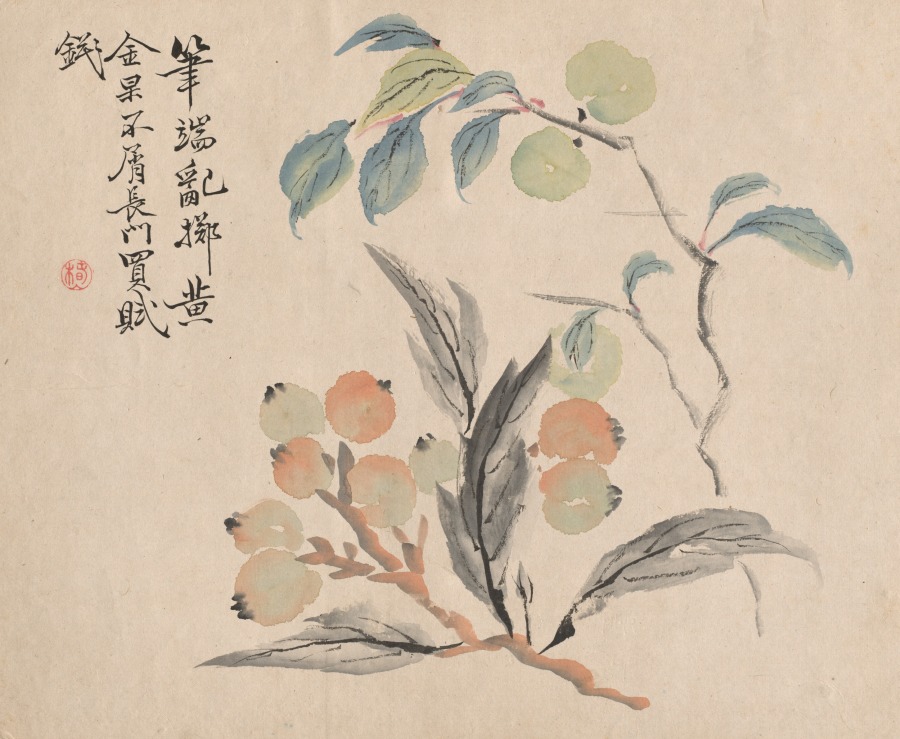
Willow Branches in Spring, dated 1847, is an ink-and-color leaf by Tsubaki Chinzan (椿椿山, 1801-1854) in the Cleveland Museum of Art (accession 1985.251.3; https://www.clevelandart.org/art/1985.251.3), part of the related 1847 ensemble (accessions 1985.251.1-10). The willow in early spring — its slender new branches hanging soft and pale before the leaves fully set — is one of the most familiar of literati seasonal subjects, with a long lineage in Chinese poetry and painting as a figure of parting, of returning warmth, and of the renewing year. From the Tang onward the willow was associated with the rituals of farewell at the bridges and gates of cities, and through countless poems in the Chinese tradition it became a charged seasonal emblem that Edo bunjin readers and painters absorbed alongside their study of Chinese verse. As Watanabe Kazan's pupil and a member of the Tani Bunchō circle that defined late-Edo bunjinga, Chinzan inherited this iconography along with the brushwork tradition that carried it: long, drawn-out, gently weighted strokes for the pendulous withes, modulated washes for the implied air and ground, restrained color suited to the muted palette of early spring before full foliage. The leaf format invited concentrated demonstrations of literati brush idiom, and willow in spring was a subject Chinzan and his contemporaries returned to as an exercise in seasonal sensibility as much as botanical observation. The 1847 date situates the sheet within Chinzan's mature post-Kazan production, when he was carrying the nanga lineage of his late teacher forward through the Cleveland-grouped album and similar ensembles. The Cleveland catalogue confirms attribution, date, and grouping.
More Prints by Tsubaki Chinzan
More Spring Prints

Frequently Asked Questions
Willow Branches in Spring was created by Tsubaki Chinzan (椿椿山) in 1847.
Willow Branches in Spring depicts spring.