Tsubaki Chinzan
椿椿山
1801–1854
Japan
Biography
Tsubaki Chinzan (椿椿山, 1801-1854) was a late-Edo period nanga (bunjinga, or literati) painter active in Edo during the final decades of the Tokugawa cultural order. He was born in 1801 in the Koishikawa district of Edo into a samurai family that served the shogunate; his father was a shogunal retainer who held a post in the Spear Corps but died when Chinzan was only seven. Following the hereditary system the boy was trained in martial arts and horsemanship, but he turned increasingly to painting — in part to supplement the family's meager income — and eventually set his samurai duties aside in favor of his artistic vocation. He took the artist name Chinzan (椿山, 'camellia mountain'), a play on his surname Tsubaki, itself the Japanese word for camellia, together with studio names such as Kyūan and Takukadō. By the time of his death at the age of fifty-three he had become one of the leading nanga painters of his generation in Edo and the foremost follower of his master Watanabe Kazan.
Chinzan first studied painting under Kaneko Kinryō, a specialist in bird-and-flower subjects, and then under Tani Bunchō, the leading Edo nanga master of the day, before entering, at the age of seventeen, the studio of Watanabe Kazan (1793-1841). Kazan — the senior retainer-painter of the Tahara domain, whose synthesis of Chinese literati ink painting with subtle Western shading techniques was reshaping the Edo nanga tradition — became Chinzan's lifelong teacher, and Chinzan his most devoted pupil. The bond between the two men extended well beyond the conventional master-disciple relationship. When Kazan was caught up in 1839 in the Bansha no Goku, the purge of scholars suspected of Dutch-studies sympathies, Chinzan was among those who worked to aid him; and after Kazan's politically forced suicide in 1841 he took responsibility for his late master's family, helping to raise Kazan's son Shōka and giving him painting lessons, while preserving and transmitting Kazan's artistic legacy to the next generation.
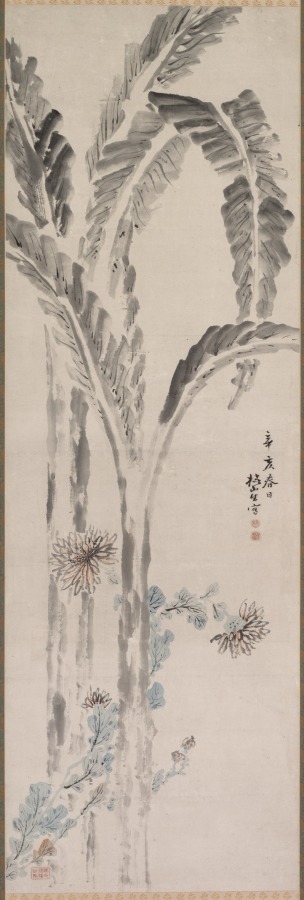
As a painter Chinzan worked across the nanga repertoire — landscape, portraiture, and above all the kachō-ga (bird-and-flower) genre in which his reputation was made. His engagement with Chinese sources is nowhere clearer than in the 1847 album now in the Cleveland Museum of Art, his copy of Zhai Dakun's Landscapes in the Styles of Old Masters, in which he reworked compositions after the Qing-dynasty painter Zhai Dakun (active c. 1770-1804), copying not only Zhai's landscapes but the inscriptions that accompanied them. Executed in ink and color on silk, the leaves move through the canonical literati subjects — folded hills and layered peaks, scholars drifting in boats, willow-fringed waterfalls, bamboo groves in mist and rain, and reclusive dwellings amid trees. Chinzan's brushwork here is supple and economical, with washes of soft color laid over confident ink contours, embodying the literati ideal of unforced spontaneity disciplined by long study. His bird-and-flower compositions, by contrast, lean more openly on the observational naturalism he had absorbed from Kazan: hanging scrolls and album leaves of subjects such as banana plants and chrysanthemums, loquat branches, and frosted branches with dwarf bamboo, in which close botanical observation and lightly modulated washes bring a quasi-scientific eye to the traditional Chinese kachō themes.
Chinzan was also a poet and calligrapher in the literati manner, and his social world was that of the late-Edo bunjin — the loose network of scholars, painters, poets, and Sinophile intellectuals who circulated through Edo, Kyoto, and the provincial towns sharing tea, ink, and learning. His identification was firmly with the nanga ideal: the painter as scholar-amateur, the painting as the unmediated expression of cultivated character. His own son, who painted under the name Kakoku, was a gifted painter but died young, at twenty-six, before his father; and Chinzan's own death in 1854 — on the eve of the political upheavals that would end the Tokugawa order — closed one of the last great chapters of the Edo nanga tradition.
For collectors and museum visitors today, Chinzan's work is well represented in North America by the Cleveland Museum of Art, which holds his 1847 landscape album after Zhai Dakun along with other of his paintings. His work appears less frequently than that of the woodblock print masters of his era because, like other nanga painters, he worked almost exclusively in unique paintings on silk or paper rather than in editioned prints; but his place in the history of Japanese painting — as the closest follower of Watanabe Kazan and as a synthesizer of Chinese literati and Japanese observational traditions — is secure.
Key Facts
- Active Period
- 1801–1854
- Nationality
- 🇯🇵Japan
- Works Indexed
- 11
Frequently Asked Questions
Tsubaki Chinzan (椿椿山, 1801-1854) was a late-Edo period nanga (bunjinga, or literati) painter active in Edo during the final decades of the Tokugawa cultural order. He was born in 1801 in the Koishikawa district of Edo into a samurai family that served the shogunate; his father was a shogunal retainer who held a post in the Spear Corps but died when Chinzan was only seven. Following the hereditary system the boy was trained in martial arts and horsemanship, but he turned increasingly to painting — in part to supplement the family's meager income — and eventually set his samurai duties aside in favor of his artistic vocation. He took the artist name Chinzan (椿山, 'camellia mountain'), a play on his surname Tsubaki, itself the Japanese word for camellia, together with studio names such as Kyūan and Takukadō. By the time of his death at the age of fifty-three he had become one of the leading nanga painters of his generation in Edo and the foremost follower of his master Watanabe Kazan.
Tsubaki Chinzan was active from 1801 to 1854.
Tsubaki Chinzan's prints frequently feature autumn foliage, waterfalls, spring, rain.
Original prints by Tsubaki Chinzan can be found in collections including Cleveland Museum of Art.
Woodblock Prints by Tsubaki Chinzan (11)
Banana Plant and Chrysanthemum
c. 1820–54
Hanging scroll; ink and color on paper
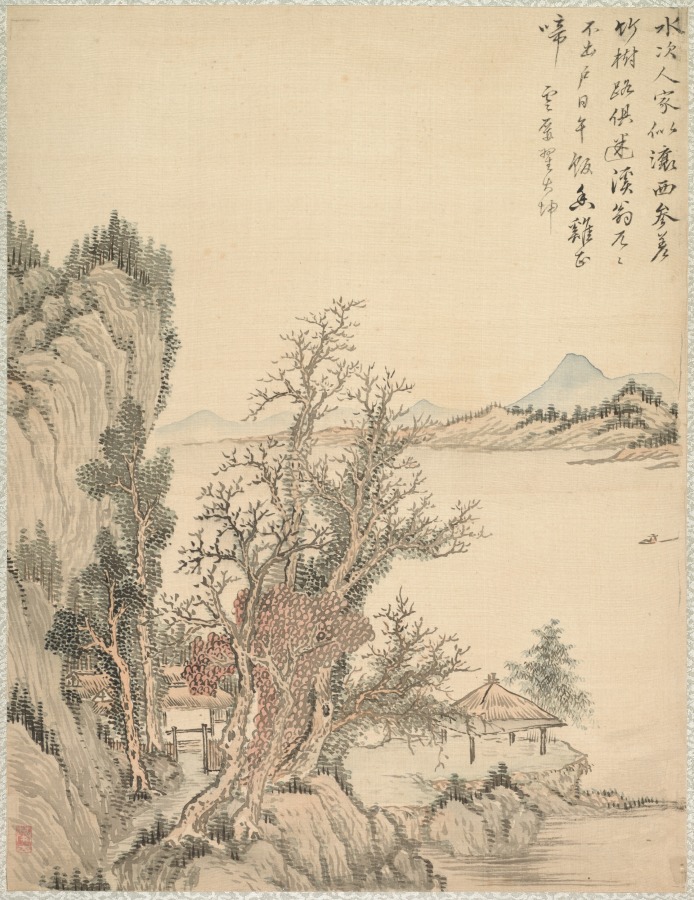
Dwelling by the Shore
1847
Album leaf; ink and color on silk
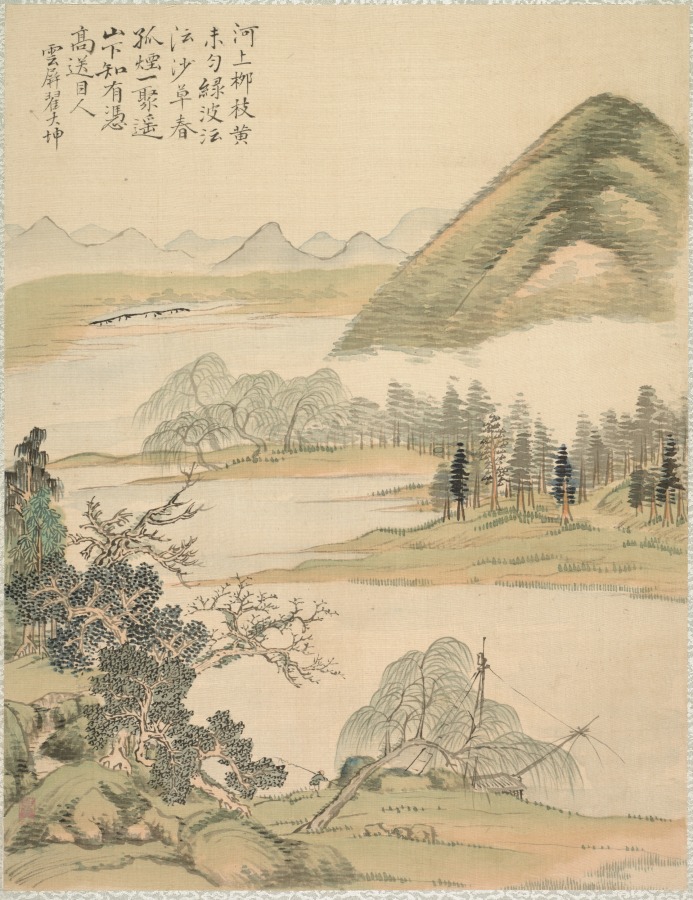
Willow Branches in Spring
1847
Album leaf; ink and color on silk
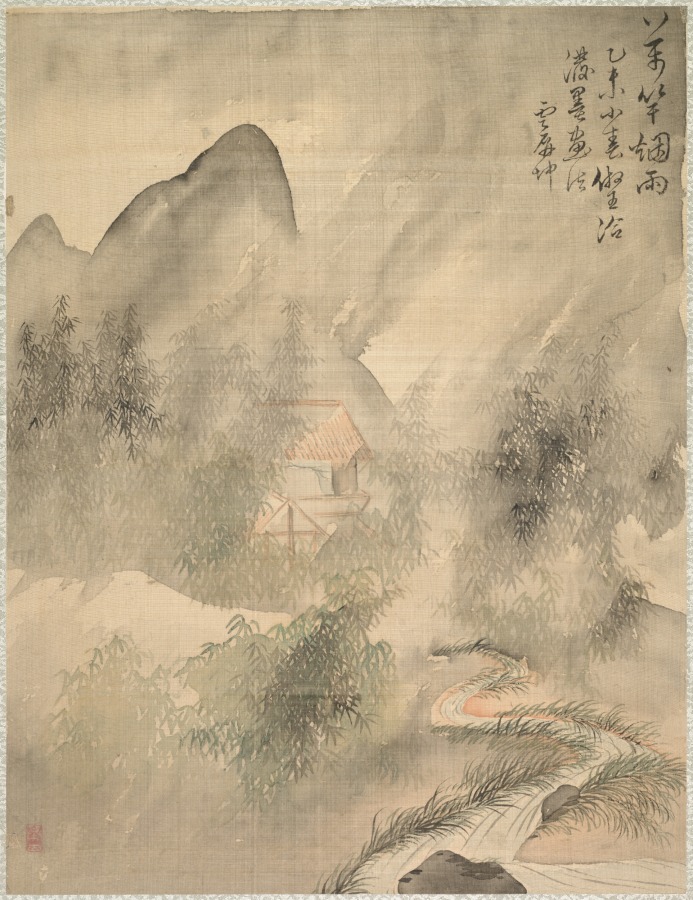
Ten Thousand Bamboos in the Mist and Rain
1847
Album leaf; ink and color on silk
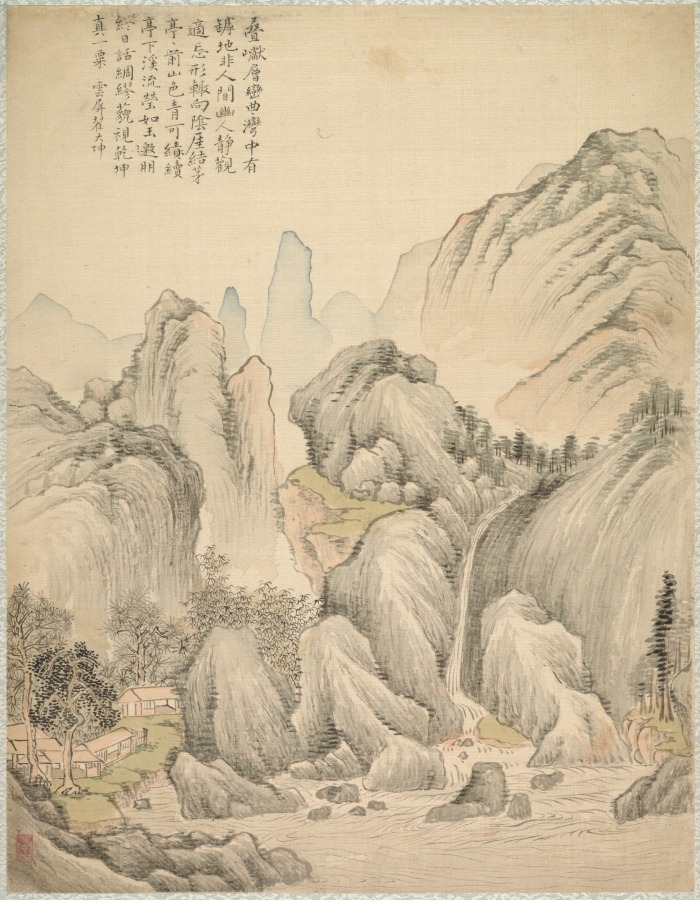
Folded Hills and Layered Peaks
1847
Album leaf; ink and color on silk
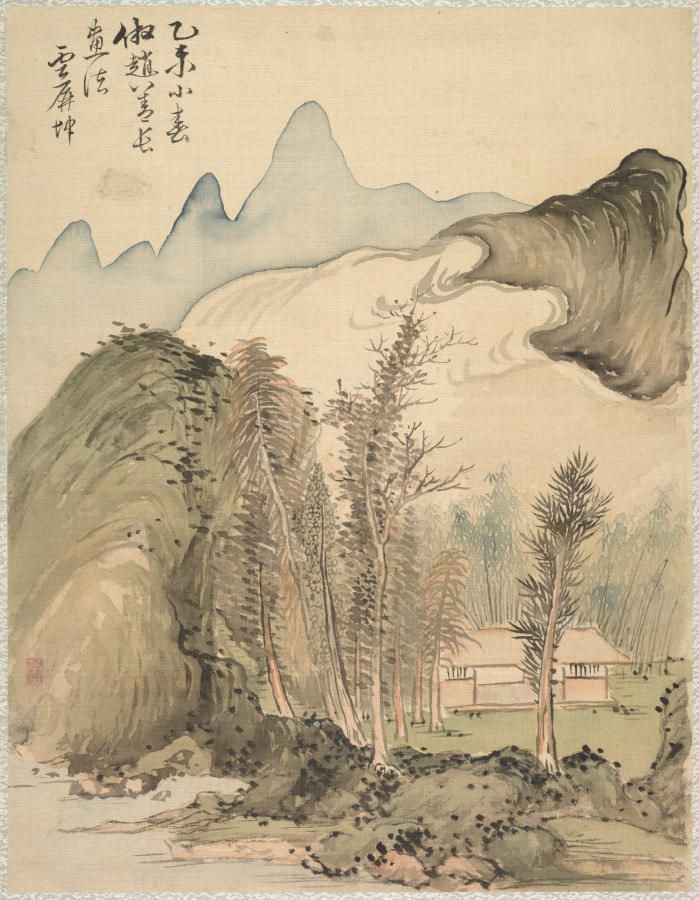
Hut Amidst the Trees
1847
Album leaf; ink and color on silk
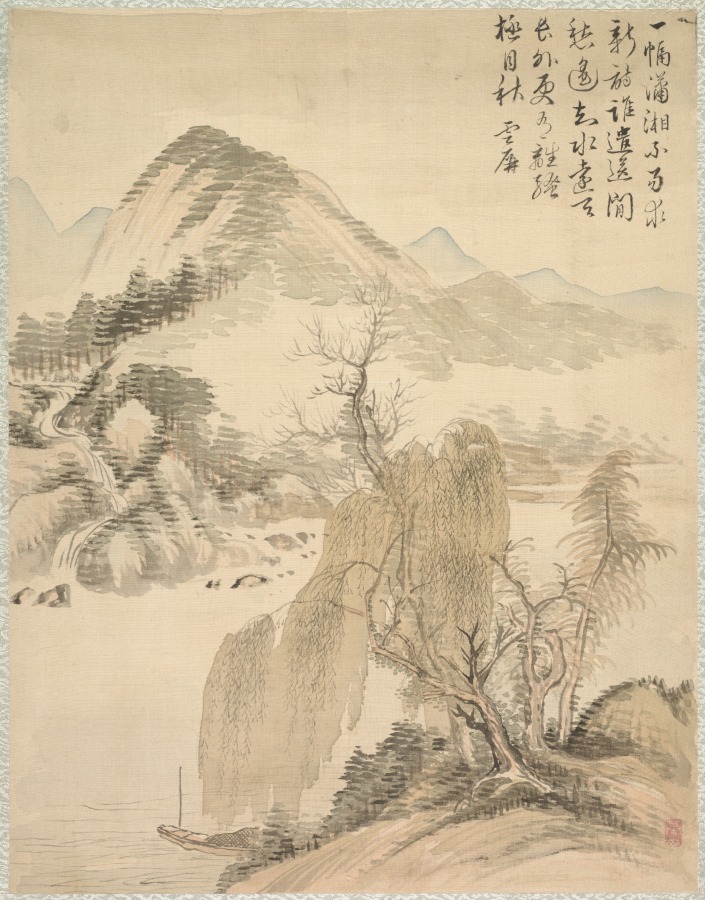
Willow and Waterfall
1847
Album leaf; ink and color on silk
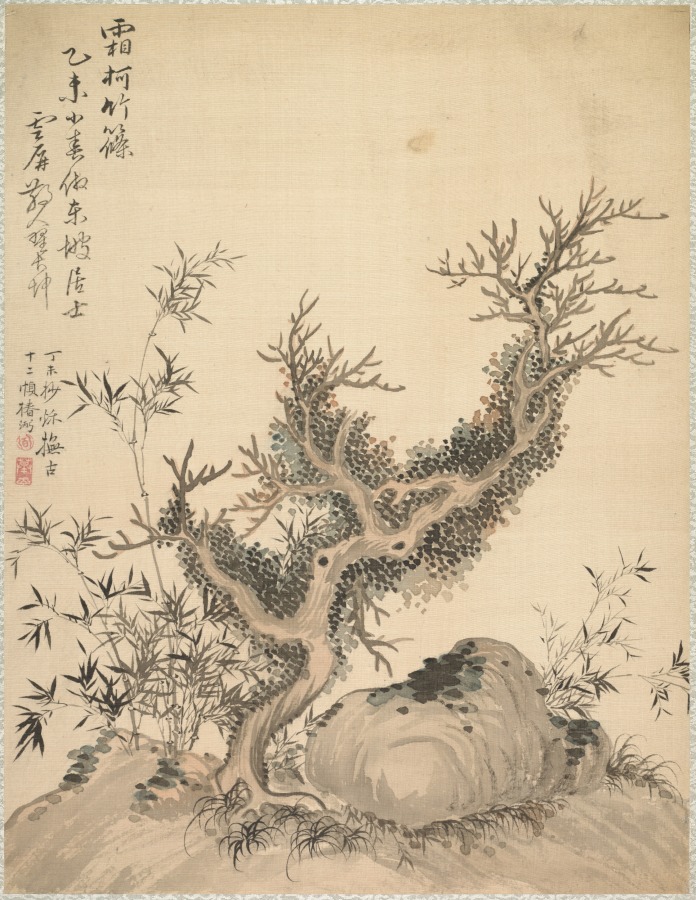
Frosted Branches and Dwarf Bamboo
1847
Album leaf; ink and color on silk
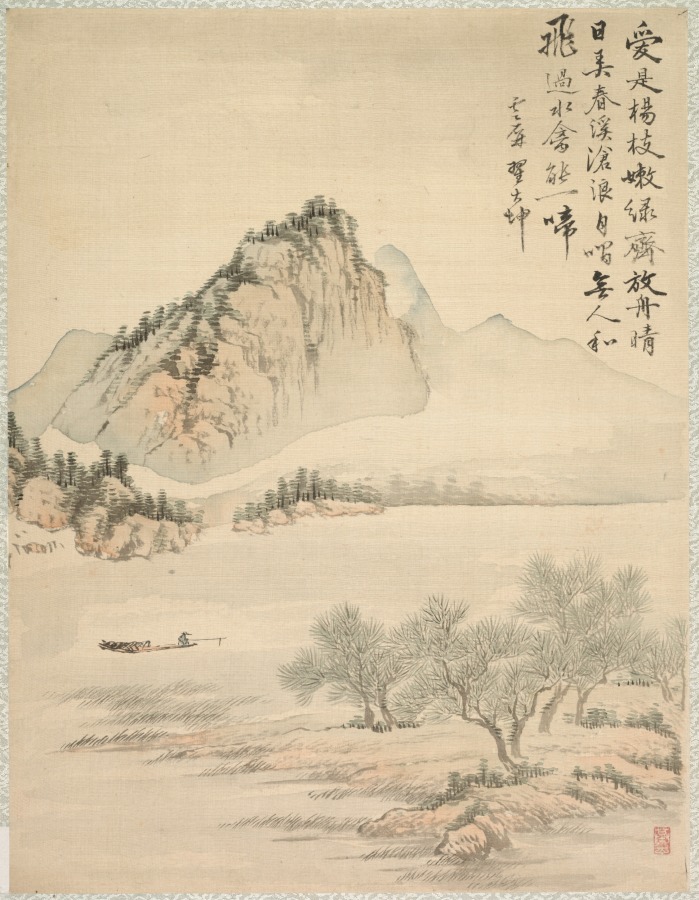
Drifting in a Boat
1847
Album leaf; ink and color on silk
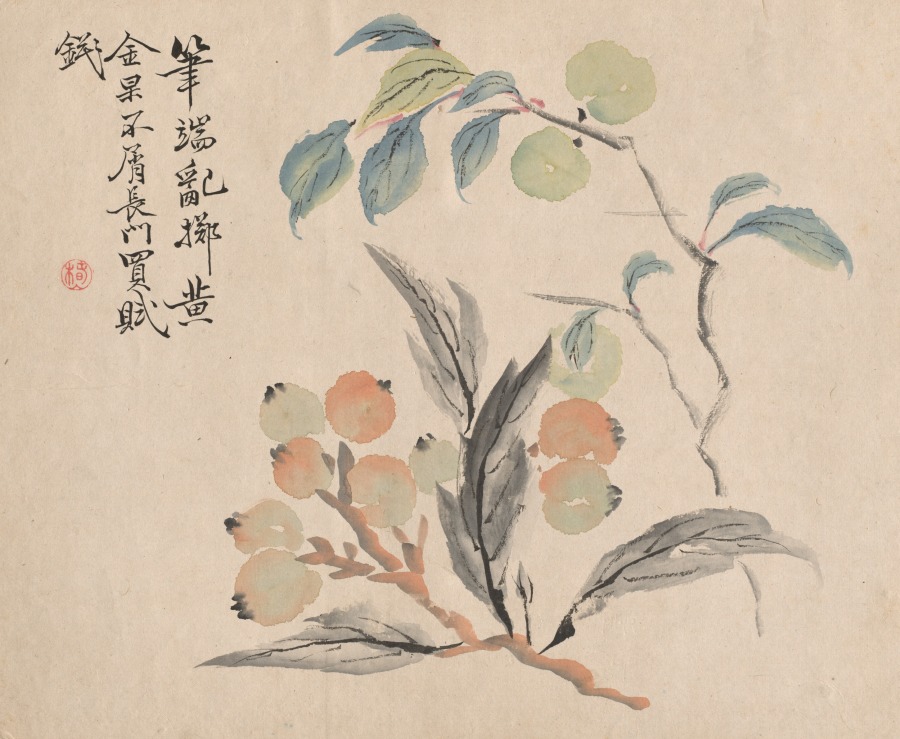
Loquat Tree of Japan
c. 1845–54
Ink and color on paper
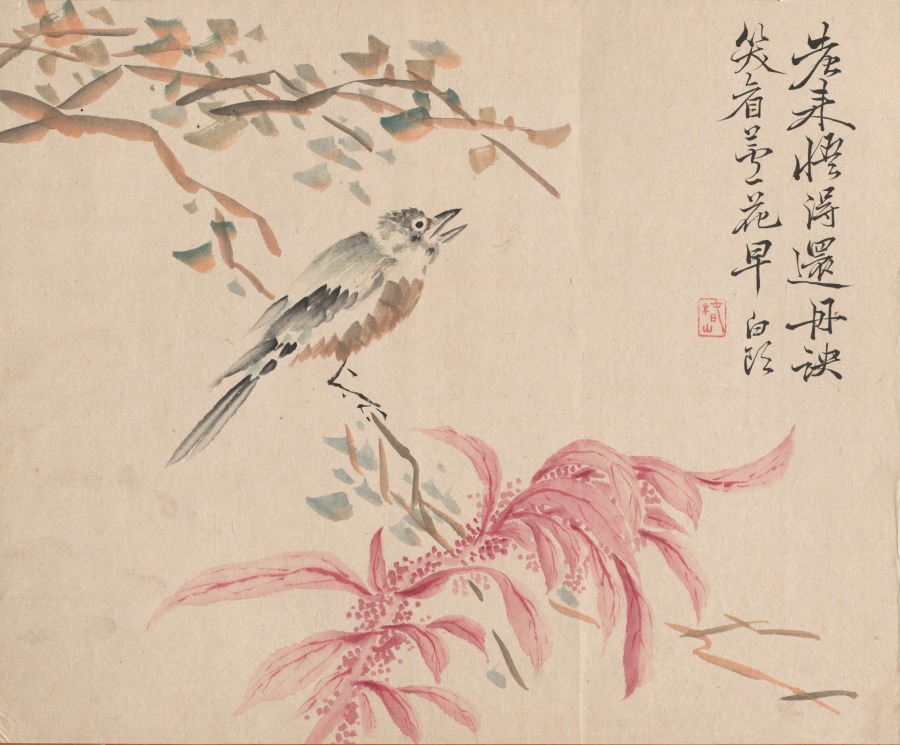
Strawberry Spinach and Nightingale
c. 1845–54
Ink and color on paper