
Stone Buddha's at Usuki, Kyûshû
- Medium:
- Mokuhanga (Japanese woodblock)
- Image courtesy of
- Saru Gallery
Description
The Usuki Sekibutsu, a group of more than sixty Buddhist images carved directly into the volcanic tuff cliffs of Usuki in Oita Prefecture, date from the late Heian to early Kamakura periods and were designated National Treasures in 1995. The weathered stone heads of Dainichi Nyorai and the surrounding figures are notable examples of Japanese stone Buddhist sculpture. Hiratsuka, who devoted a substantial portion of his oeuvre to Buddhist temples, sculptures, and religious sites across Japan, would have rendered the carved figures in his signature high-contrast black-and-white mokuhanga. His approach typically translates volumetric sculpture into a flattened, graphic register, where the carving knife on the cherry block echoes the chisel work of the original stone carvers. The subject also reflects the wider sosaku-hanga interest in Japan's pre-modern artisanal heritage as a vehicle through which to assert a distinctly Japanese modernist printmaking.
More Prints by Hiratsuka Un'ichi


More Religious Prints

The Great Buddha, Kamakura (Kamakura Daibutsu)
Kamakura Daibutsu
1930
Color woodblock print

Hall of the Great Buddha (Nara Daibutsuden)
1950
Color woodblock print
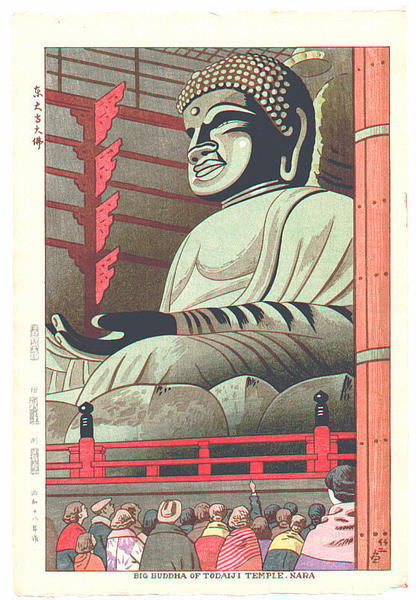
Great Buddha
大仏
Woodblock print

Clearing after a Snowfall at the Kannon Temple in Asakusa (Asakusa Kannon no yukibare), from the series "Twenty Views of Tokyo (Tokyo nijukkei)"
1926
Color woodblock print; oban
Featured in Collections
Curated cross-cuts that include this print.
Frequently Asked Questions
Stone Buddha's at Usuki, Kyûshû was created by Hiratsuka Un'ichi (平塚運一).
Stone Buddha's at Usuki, Kyûshû depicts religious.