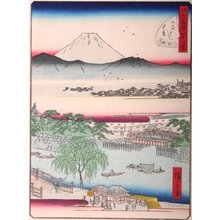
Issekibashi
- Medium:
- Woodblock print
- Source:
- Art Gallery of Greater Victoria
- Image courtesy of
- Art Gallery of Greater Victoria
Description
Issekibashi, a bridge spanning one of Edo's many urban waterways, is rendered here as a site of everyday commercial and civic life. Hiroshige's bridge compositions typically organize the pictorial space around the arc or horizontal thrust of the span itself, with canal banks, moored cargo vessels, and warehouse rooflines framing the middle distance. The flatness of the Edo lowlands and the density of its waterway network made bridges natural compositional anchors, their geometry contrasting with the organic forms of water and trees. Traffic—workers, merchants, pack horses—may animate the crossing, grounding the scene in the rhythms of the city rather than idealized nature. The surrounding architecture, likely including storehouses with characteristic white plaster walls, would have been recognizable to Edo viewers as a specific neighborhood.
More Prints by Utagawa Hiroshige


More Urban Scenes Prints
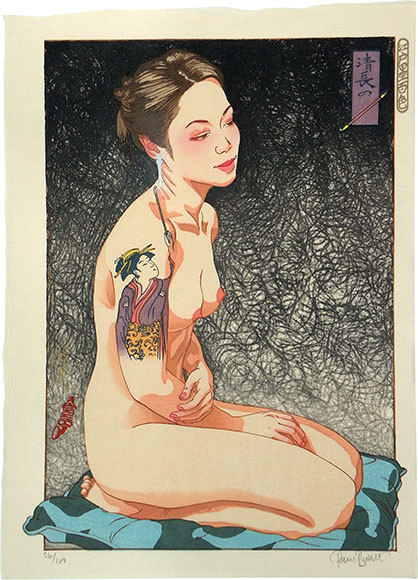
A Hundred Shades of Ink of Edo: Kiyonaga's Pipe (Edo zumi hyaku shoku: Kiyonaga no kiseru)
Woodblock print

View of Kabuki Theater from Matsuya (Ginza Matsuya yori Kabukiza), no. 3 from the series "Pictures of Ginza, First Series (Gashu Ginza dai isshu)"
1928
Color lithograph

Distant View of Mitsukoshi Movie Theater in Shinjuku from the Sixth Floor of Hoteiya (Hoteiya rokkai kara Shinjuku Mitsukoshi Musashi no kan enbo zu), no. 1 from the series "Scenery of Shinjuku (Gashu Shinjuku fukei)"
1930
Color lithograph
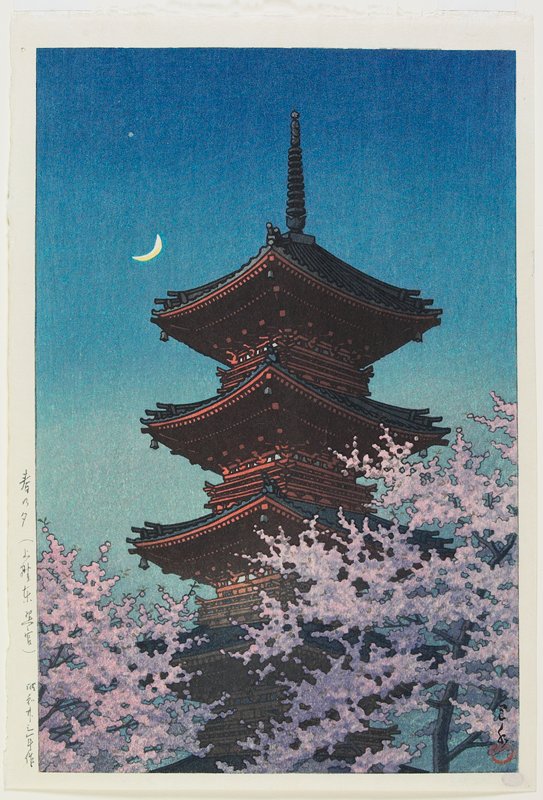
Spring Dusk at the Tōshō Shrine in Ueno
1948
Woodblock print, ink and color on paper
Frequently Asked Questions
Issekibashi was created by Utagawa Hiroshige (歌川広重).
Issekibashi depicts urban scenes and bridges.