
Komagata Temple & Azuma Bridge
- Source:
- ukiyo-e.org
Description
Komagata Temple and Azuma Bridge by Utagawa Hiroshige is an Edo riverfront landscape print in which two beloved landmarks anchor the composition: Komagata-do, the small Kannon hall on the western bank of the Sumida, and Azumabashi, the bridge a short distance upstream that connected the Asakusa side of the river to the eastern districts. Together the two sites formed one of the most photographed -- in the woodblock sense -- corners of the city. Hiroshige treats them as elements of an organized urban view, with the dark silhouette of the hall set against open sky, the bridge thrown across the river in a long horizontal, and boats moving across the water in the middle distance. As Edo ukiyo-e of the late Tokugawa period, the print exhibits his characteristic devices: gradations of imported indigo across sky and water, careful drawing of architectural detail, and small figures whose movement gives the city a sense of inhabited life. The Audrey and Harry Hahn Gift impression at the Art Gallery of Greater Victoria, indexed on ukiyo-e.org, complements his more famous treatments of the same area in One Hundred Famous Views of Edo, and confirms how often he returned to the Sumida riverbank to develop new compositions of bridge, temple, and boat -- one of the recurring matrices of his landscape print career.
More Prints by Utagawa Hiroshige

More Landscapes Prints

Lake Kugushi in Wakasa Province (Wakasa Kugushiko), from the series Souvenirs of Travel I (Tabi miyage dai isshu)"
Wakasa Kugushiko
1920
Color woodblock print; oban
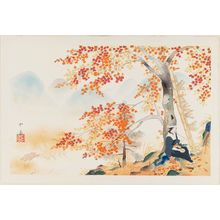
Autumn Maple Leaves at Takao, from the album Eight Views of Kyoto (Kyôto hakkei)
Woodblock print

The Beach at Kaiganji in Sanuki Province (Sanuki Kaiganji no hama), from the series "Collection of Views of Japan II, Kansai Edition (Nihon fukei shu II Kansai hen)"
1934
Color woodblock print; oban

Tea Kettle, section of a sheet from the series "Mirror of Stone Rubbings of Views of the Provinces" (Kohon meihitsu ishizuri kagami)
n.d.
Woodblock print; ishizuri-e, section of harimaze sheet
Featured in Collections
Curated cross-cuts that include this print.
Frequently Asked Questions
Komagata Temple & Azuma Bridge was created by Utagawa Hiroshige (歌川広重).
Komagata Temple & Azuma Bridge depicts landscapes and bridges.