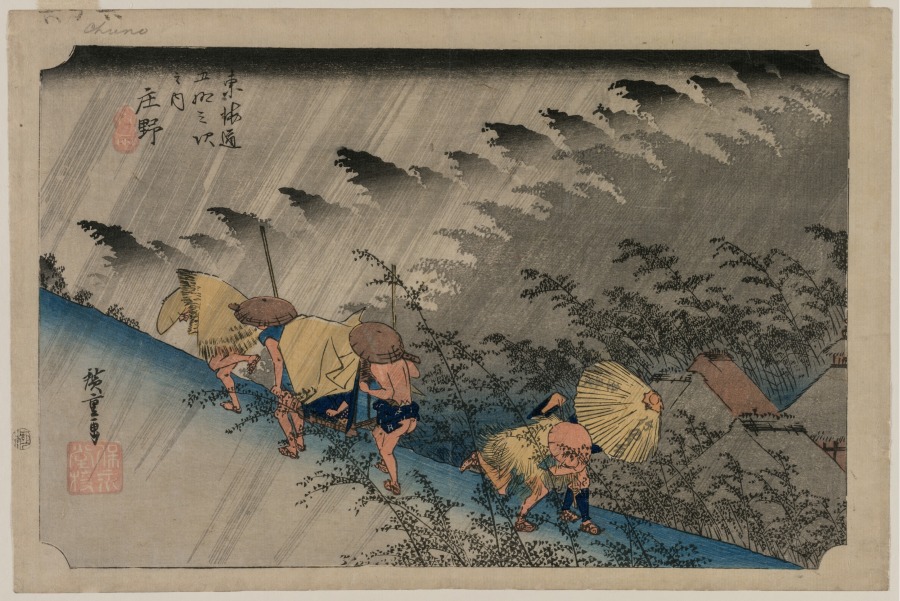
Driving Rain at Shōno, from Fifty-Three Stations of the Tokaidō
- Date:
- 1833
- Medium:
- color woodblock print
- Source:
- Cleveland Museum of Art
Description
Driving Rain at Shono is one of the most famous Japanese prints of any period, the forty-fifth station design from Utagawa Hiroshige's breakthrough series Fifty-three Stations of the Tokaido, published around 1833 by Hoeido. A sudden mountain rainstorm pours down across the bare slopes outside the Shono station on the road from Edo to Kyoto. Travellers are caught mid-stride: a palanquin bearer bends low and runs up the path with passengers inside, two figures bring an umbrella over their heads, and bamboo and pine groves along the ridge are bent toward the wind. Hiroshige renders the rain itself with fine parallel lines printed directly across the entire composition, producing a sheet of weather rather than a sheet showing weather. Different blocks supply different angles of rain, and the bokashi gradation of sky moves between black and dark grey in patches, giving the storm structure as well as movement. As an Edo ukiyo-e landscape print, Shono compresses figure, weather, and topography into a single dramatic event with a directness that would prove enormously influential for later printmakers in Japan and Europe. The Cleveland Museum of Art preserves an impression of the design within its strong holdings of nineteenth-century Japanese prints. Together with Kambara and Hakone, Shono is one of the three or four absolutely essential designs from the Hoeido Tokaido for serious collectors.
More Prints by Utagawa Hiroshige

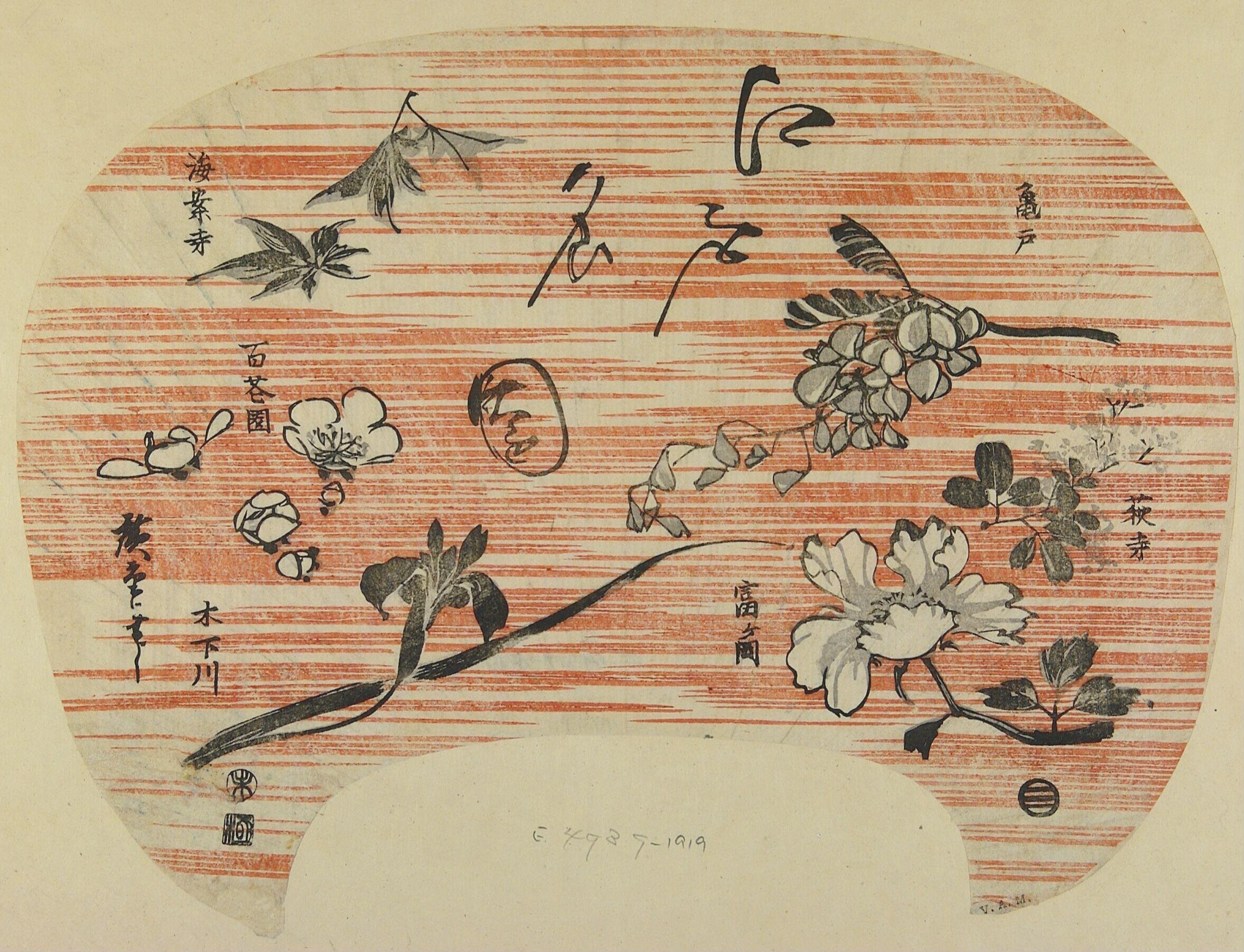


More Landscapes Prints

Lake Kugushi in Wakasa Province (Wakasa Kugushiko), from the series Souvenirs of Travel I (Tabi miyage dai isshu)"
Wakasa Kugushiko
1920
Color woodblock print; oban
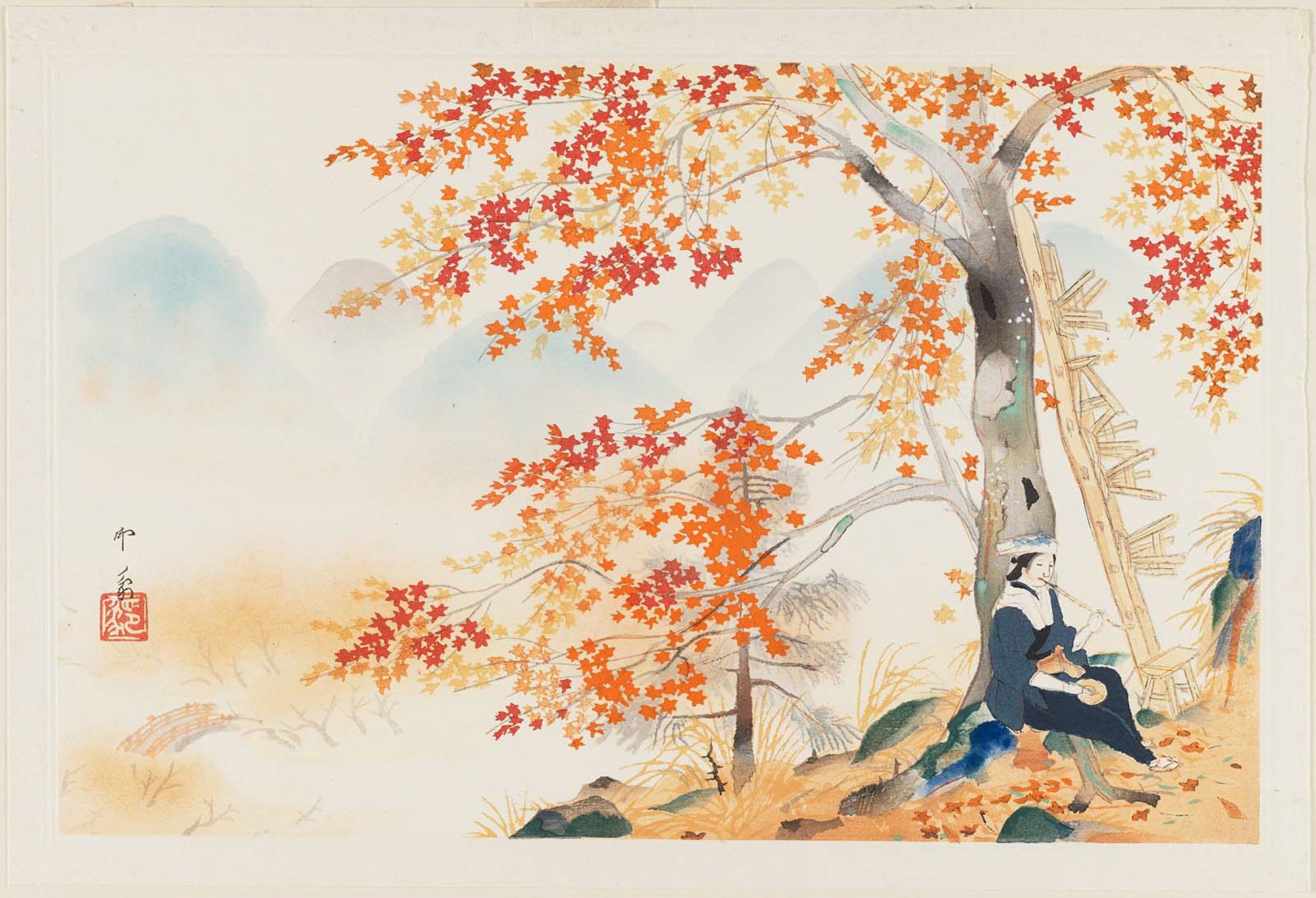
Autumn Maple Leaves at Takao, from the album Eight Views of Kyoto (Kyôto hakkei)
Woodblock print

The Beach at Kaiganji in Sanuki Province (Sanuki Kaiganji no hama), from the series "Collection of Views of Japan II, Kansai Edition (Nihon fukei shu II Kansai hen)"
1934
Color woodblock print; oban

Tea Kettle, section of a sheet from the series "Mirror of Stone Rubbings of Views of the Provinces" (Kohon meihitsu ishizuri kagami)
n.d.
Woodblock print; ishizuri-e, section of harimaze sheet
Featured in Collections
Curated cross-cuts that include this print.
Frequently Asked Questions
Driving Rain at Shōno, from Fifty-Three Stations of the Tokaidō was created by Utagawa Hiroshige (歌川広重) in 1833.
Driving Rain at Shōno, from Fifty-Three Stations of the Tokaidō depicts landscapes and rain.