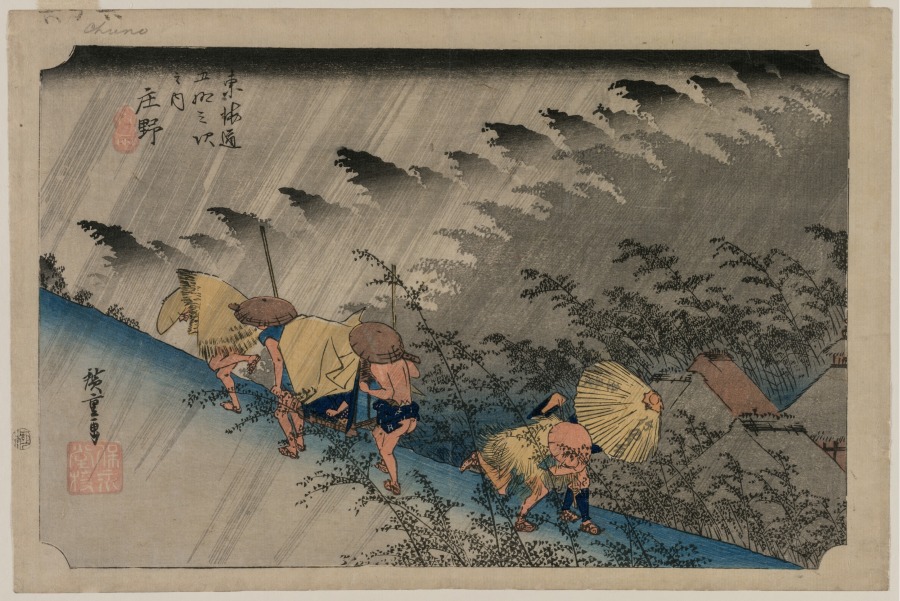
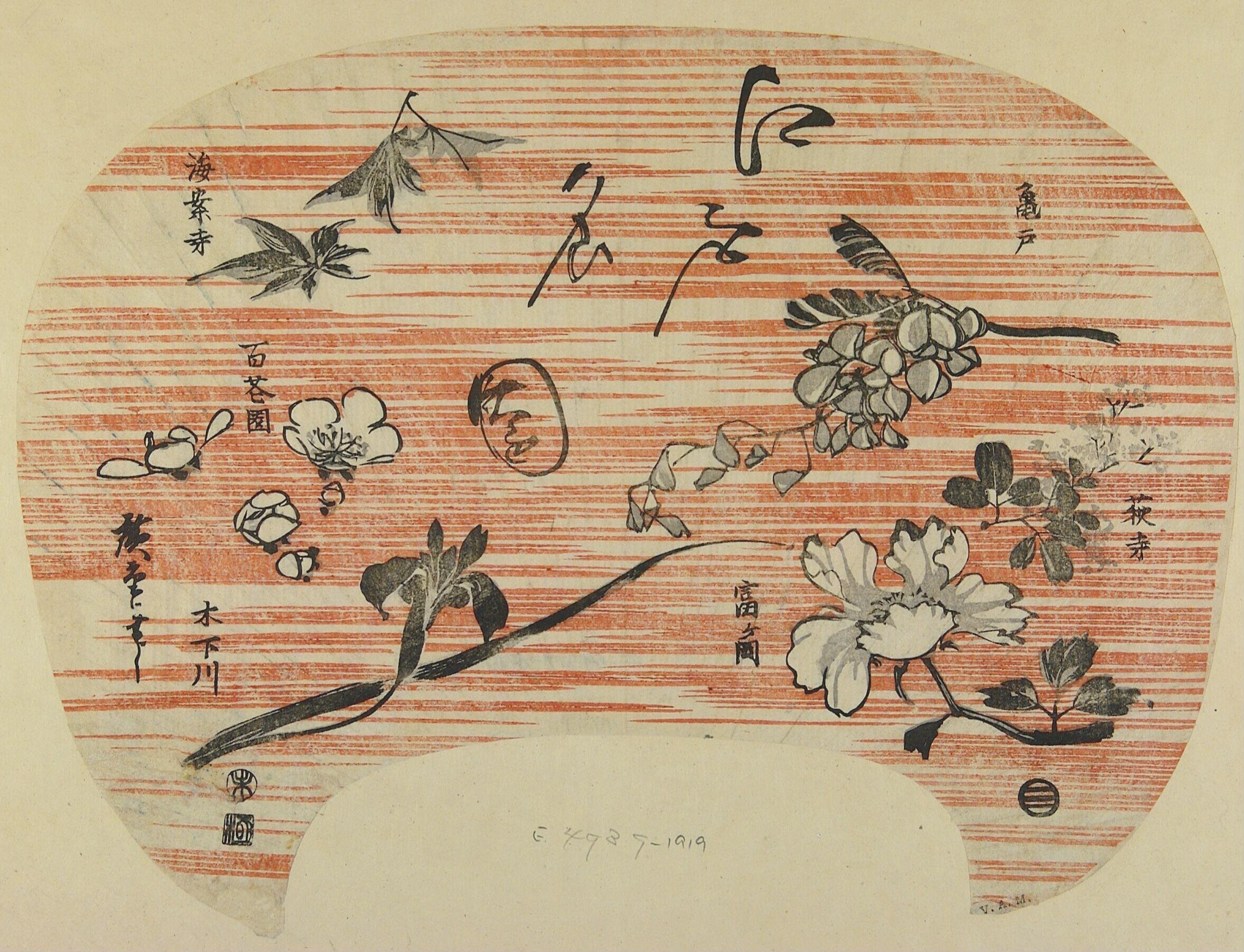
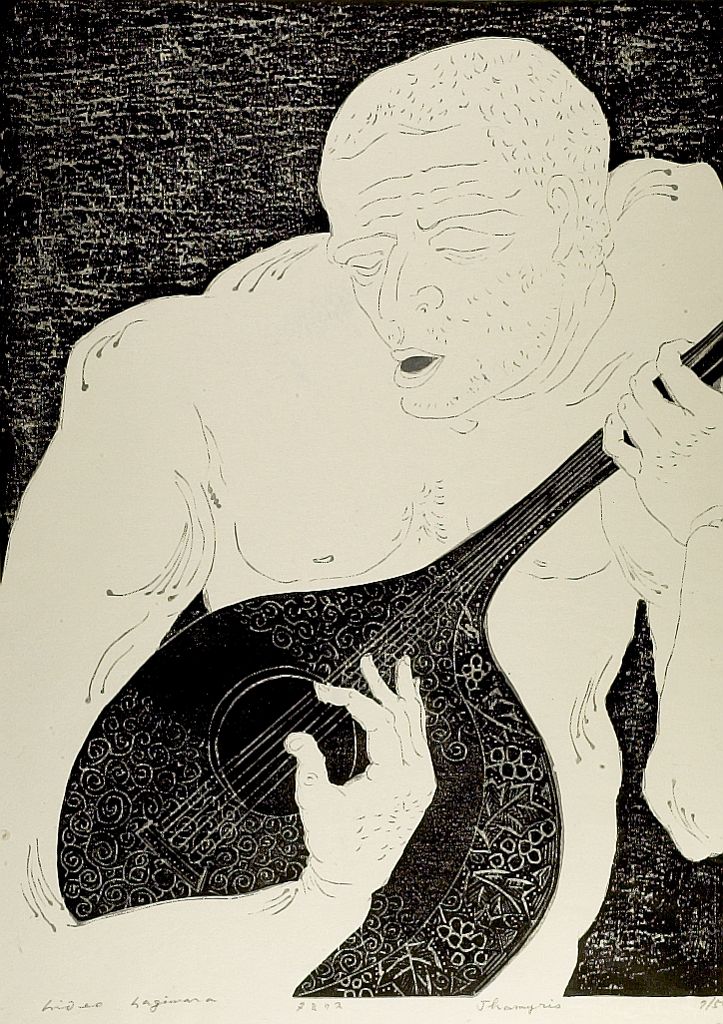
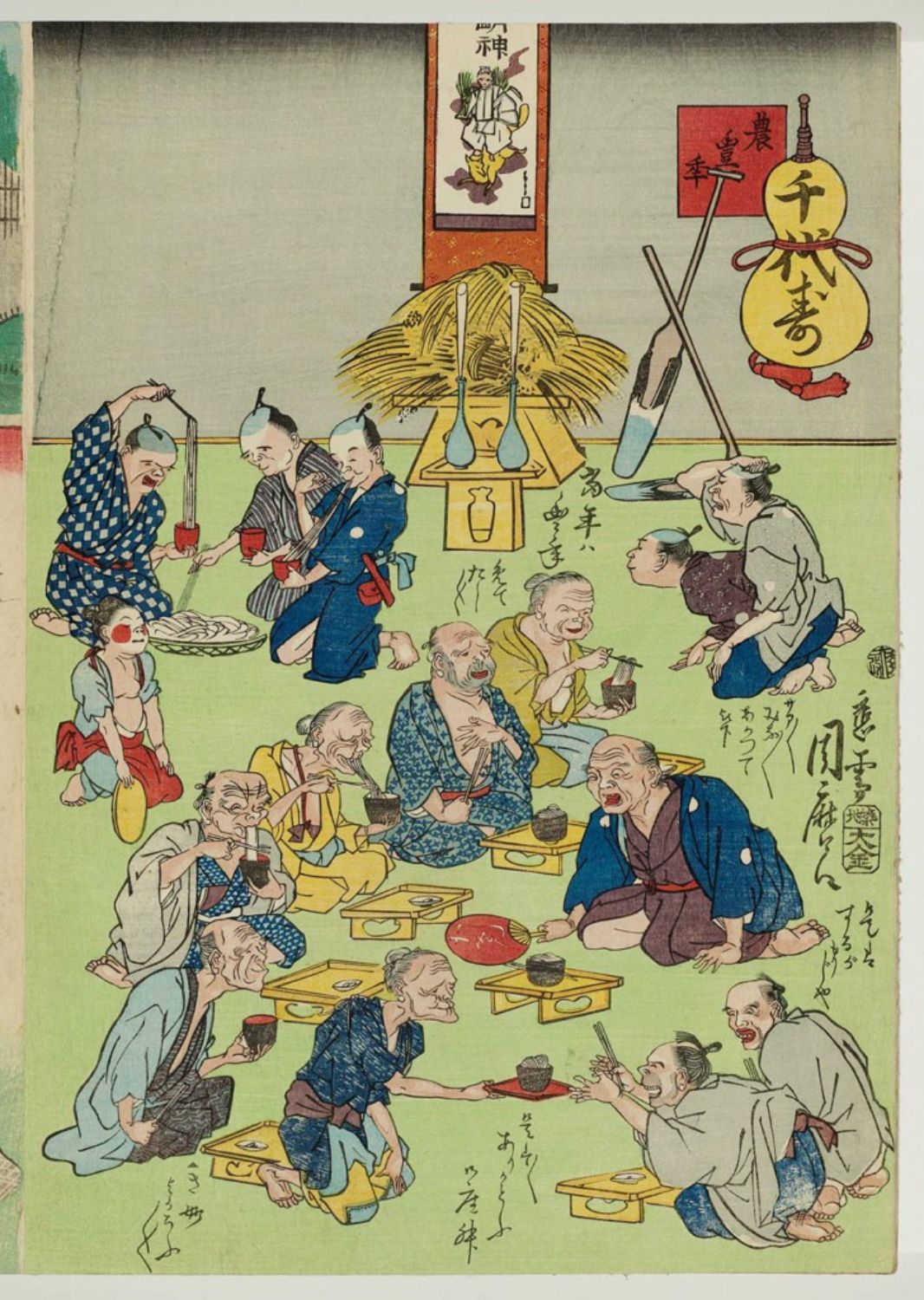
Sojo Henjo, from the series "One Hundred Satirical Poems (Kyoka neboke hyakushu)"
- Date:
- 19th century
- Medium:
- Color woodblock print; chutanzaku

Hiroshige produced an estimated 8,000 designs over his 40-year career, making him one of the most prolific masters of ukiyo-e. His market has strengthened significantly in recent years, with the 2025 Sotheby's Paris record of $2.4M and growing international collector interest.
"Sojo Henjo" is a [ukiyo-e](/glossary/ukiyo-e) print by Utagawa Hiroshige, created during the late Edo period. This abstract work reflects the artist's exploration of form, color, and texture through the woodblock medium.
Utagawa Hiroshige approaches abstraction through the unique constraints and possibilities of woodblock printing, where the grain of the wood, the pressure of the [baren](/glossary/baren), and the interaction of pigment and paper all contribute to the final image. His work influenced Van Gogh and other Impressionists.
As a [sosaku-hanga](/glossary/sosaku-hanga) work — designed, carved, and printed entirely by the artist's own hand — this print embodies the creative philosophy that the printmaker's personal expression should permeate every stage of production, from concept to finished impression.
This print represents Utagawa Hiroshige's contribution to the ukiyo-e tradition during the late Edo period. As with all works by this artist, it reflects both individual artistic vision and the broader cultural moment in which it was created. For collectors and admirers of Japanese printmaking, it offers a window into the sophisticated aesthetic world that produced some of the most beloved images in art history.
Sojo Henjo, from the series "One Hundred Satirical Poems (Kyoka neboke hyakushu)" was created by Utagawa Hiroshige (歌川広重) in 19th century.
Yes — Sojo Henjo, from the series "One Hundred Satirical Poems (Kyoka neboke hyakushu)" is part of the One Hundred Satirical Poems (Kyoka neboke hyakushu) series by Utagawa Hiroshige.
Sojo Henjo, from the series "One Hundred Satirical Poems (Kyoka neboke hyakushu)" depicts figures and portraits.