
Kinryūzan Temple in Asakusa
- Date:
- 1856, 7th month
- Medium:
- Woodblock print (nishiki-e), ink and color on paper
- Source:
- Art Institute of Chicago
Description
Kinryuzan Temple in Asakusa is a vertical Edo ukiyo-e landscape print by Utagawa Hiroshige, dated 1856 and belonging to his late masterwork series One Hundred Famous Views of Edo (Meisho Edo hyakkei). The composition is one of the most reproduced images of the city in any medium. Snow falls heavily over the Senso-ji precinct, blanketing the great gate and the lanterns of the entrance, and the famous red Kaminarimon paper lantern dominates the foreground in striking saturated vermilion. Beyond, the pagoda rises in muted greys, and a few figures cross the courtyard in the soft white light of winter. Hiroshige uses the compositional vocabulary refined throughout the One Hundred Famous Views: a single dramatic foreground object close to the viewer, a deep middle ground filled with the substance of the city, and a quieter distance. The colour relationship between the dominant red of the lantern and the blue-grey snowfall is among the most studied chromatic decisions in nineteenth-century Japanese printmaking. The sheet was issued by publisher Sakanaya Eikichi during the most productive late phase of Hiroshige's career. An impression of this celebrated landscape print is held by the Art Institute of Chicago, where it sits at the heart of the museum's nineteenth-century Japanese prints holdings, and where its condition allows the snow gradations and Kaminarimon vermilion to be assessed at the level of detail collectors expect.
More Prints by Utagawa Hiroshige


More Landscapes Prints

Lake Kugushi in Wakasa Province (Wakasa Kugushiko), from the series Souvenirs of Travel I (Tabi miyage dai isshu)"
Wakasa Kugushiko
1920
Color woodblock print; oban
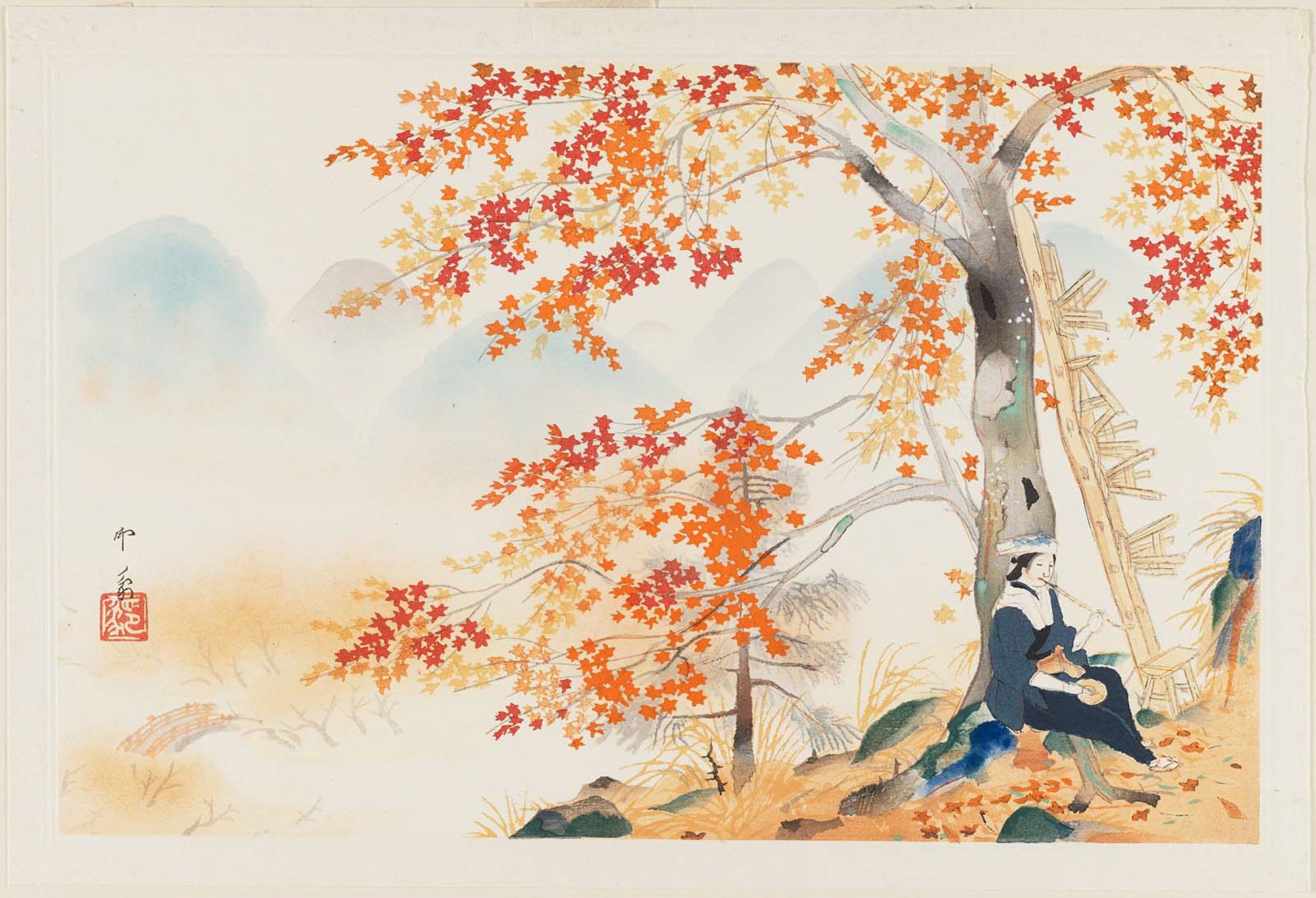
Autumn Maple Leaves at Takao, from the album Eight Views of Kyoto (Kyôto hakkei)
Woodblock print

The Beach at Kaiganji in Sanuki Province (Sanuki Kaiganji no hama), from the series "Collection of Views of Japan II, Kansai Edition (Nihon fukei shu II Kansai hen)"
1934
Color woodblock print; oban

Tea Kettle, section of a sheet from the series "Mirror of Stone Rubbings of Views of the Provinces" (Kohon meihitsu ishizuri kagami)
n.d.
Woodblock print; ishizuri-e, section of harimaze sheet
Featured in Collections
Curated cross-cuts that include this print.
Frequently Asked Questions
Kinryūzan Temple in Asakusa was created by Utagawa Hiroshige (歌川広重) in 1856, 7th month.
Kinryūzan Temple in Asakusa depicts landscapes.