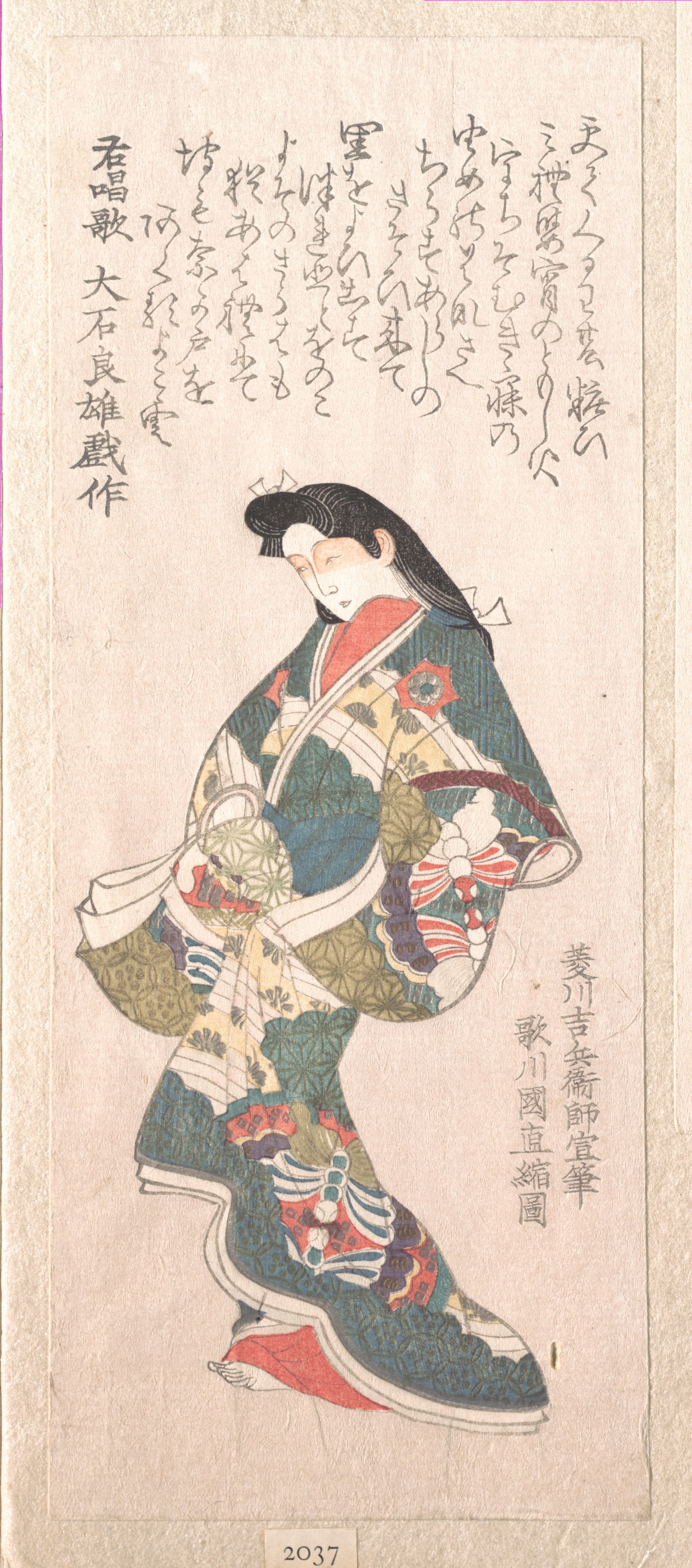
Spring Rain Collection (Harusame shū), vol. 1: Genroku-style Courtesan
- Date:
- probably 1810s
- Medium:
- Privately published woodblock prints (surimono) mounted in an album; ink and color on paper
- Source:
- Metropolitan Museum of Art
Description
Utagawa Kuninao's contribution to the Spring Rain Collection (Harusame shū), a luxury surimono album of probably the 1810s held at the Metropolitan Museum of Art. The print depicts a courtesan in deliberately archaising Genroku-period (1688-1704) dress, a subject that allowed Kuninao to display his command of historical costume conventions a century after the fact. Genroku-style courtesans were a recurring nostalgic subject for late-Edo surimono designers, who used them as a vehicle for the kind of careful historical-research drawing that the surimono format and its educated poet-patron audience rewarded. The taller, narrower kimono silhouette of the early eighteenth century - with the obi tied at the front, longer sleeves, and the elaborate piled-up hair that preceded later styles - supplied designers with a visibly different female figure from the contemporary 1810s Edo woman. Surimono - privately commissioned by poetry clubs for distribution at New Year and other seasonal occasions, typically inscribed with kyōka verse and printed with metallic pigments, blind embossing, and other deluxe techniques - was one of the most refined formats of late-Edo printmaking. Kuninao, who had trained in the Utagawa workshop under Toyokuni I and would in the early 1820s also work with Hokusai, was a prolific surimono designer, and the Harusame shū album captures his early-career manner. The Met preserves a substantial Edo-period surimono collection of which the Harusame shū is a part.
More Prints by Utagawa Kuninao
More Spring Prints

Frequently Asked Questions
Spring Rain Collection (Harusame shū), vol. 1: Genroku-style Courtesan was created by Utagawa Kuninao (歌川国直) in probably 1810s.
Spring Rain Collection (Harusame shū), vol. 1: Genroku-style Courtesan depicts spring and rain.