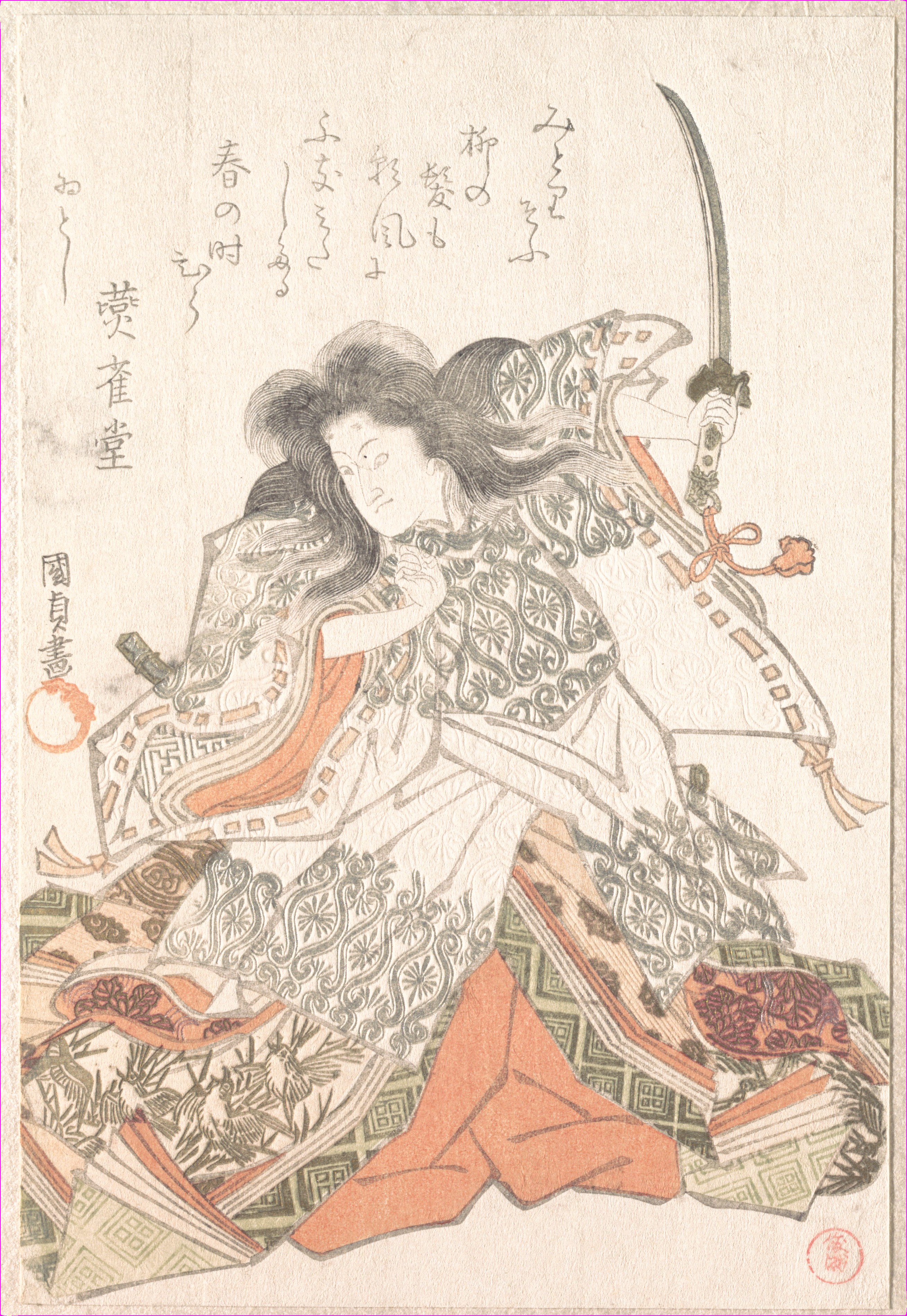
Actor as Tokihira
- Date:
- probably 1815
- Medium:
- Woodblock print (surimono); ink and color on paper
- Source:
- Metropolitan Museum of Art
Description
Designed in 1815, this Utagawa Kunisada yakusha-e presents an Edo kabuki actor in the role of Fujiwara no Tokihira, the historical statesman and villain of the Sugawara play cycle. Tokihira is the political adversary of the deified scholar Sugawara no Michizane and one of the great masculine antagonist roles in kabuki, requiring an aristocratic costume, an elaborately tied wig, and a calm, even sinister stage presence. The role appears most famously in "Sugawara Denju Tenarai Kagami," one of the three great history plays of Edo and Osaka kabuki, and Kunisada's print captures the actor in the formal court robes that signaled Tokihira's rank. As a pupil of Toyokuni I working in the second decade of the nineteenth century, Kunisada was in the early phase of consolidating his own pictorial style for Edo ukiyo-e yakusha-e: the figure here retains some of the relatively youthful elongation he favored before 1820, while the facial likeness already shows the characteristic Kunisada interest in slightly exaggerated brow and jawline. The print is also instructive for what it reveals about the staging conventions of the Sugawara plays, the court colors, the conspicuous courtly headgear, and the controlled, frontal stance that signaled high rank in Edo theatrical iconography. The Metropolitan Museum of Art preserves this impression as a useful document of Kunisada's pre-Toyokuni-III career, demonstrating how early he had already mastered the conventions on which his half-century dominance of yakusha-e would rest.
More Prints by Utagawa Kunisada

The actors Ichikawa Danjuro VII as Takamoto no kitsune and Segawa Kikunojo V as Izumi no Chieda-gitsune
1818
Color woodblock print; shikishiban, surimono

Basketry Work: By the Craftsman Ichida Shōshichirō of Naniwa (Kagozaiku Naniwa saikunin Ichida Shōshichirō)
1819
Woodblock print; ink and color on paper
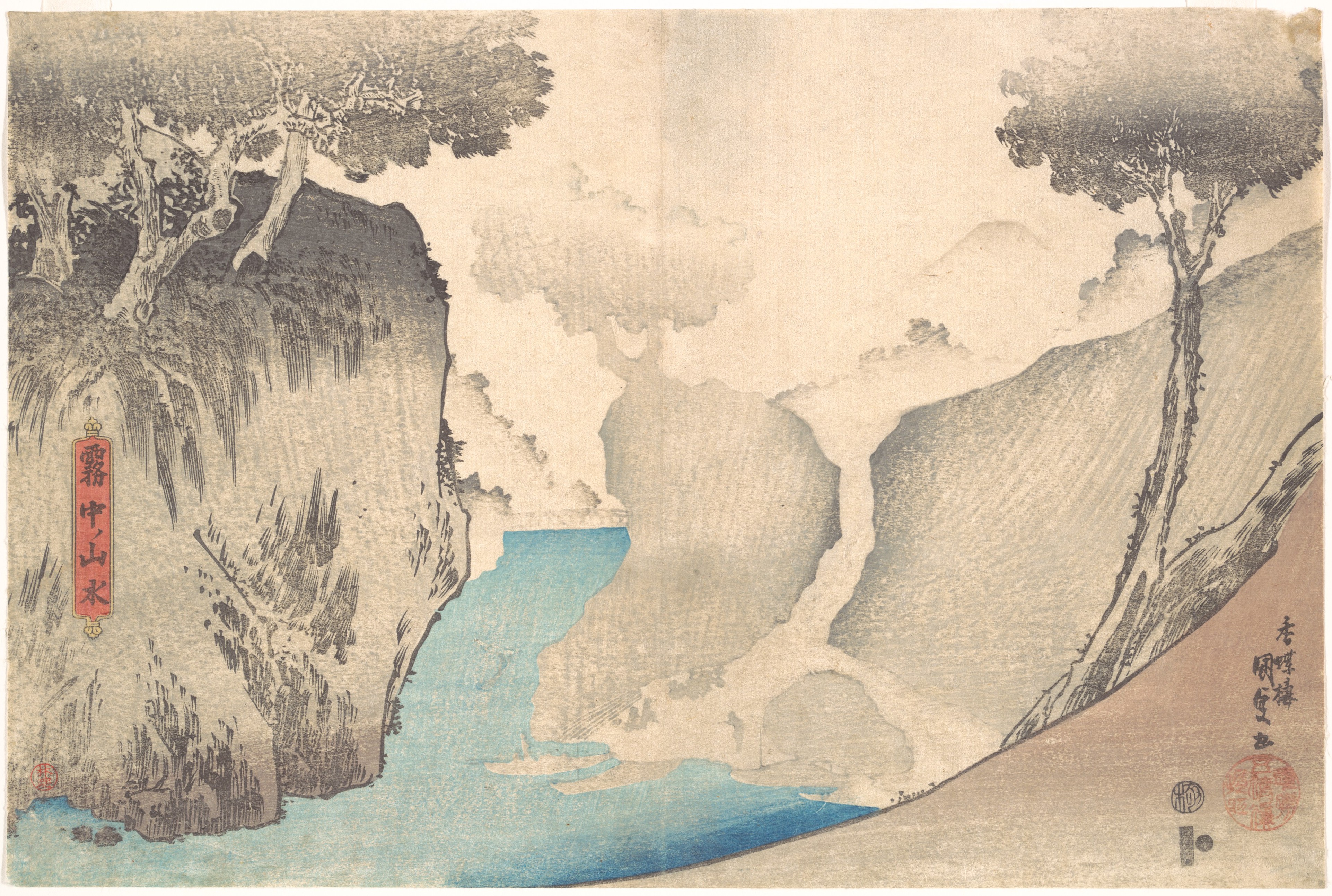
Ochanomizu in the Mist
mid-19th century
Woodblock print; ink and color on paper
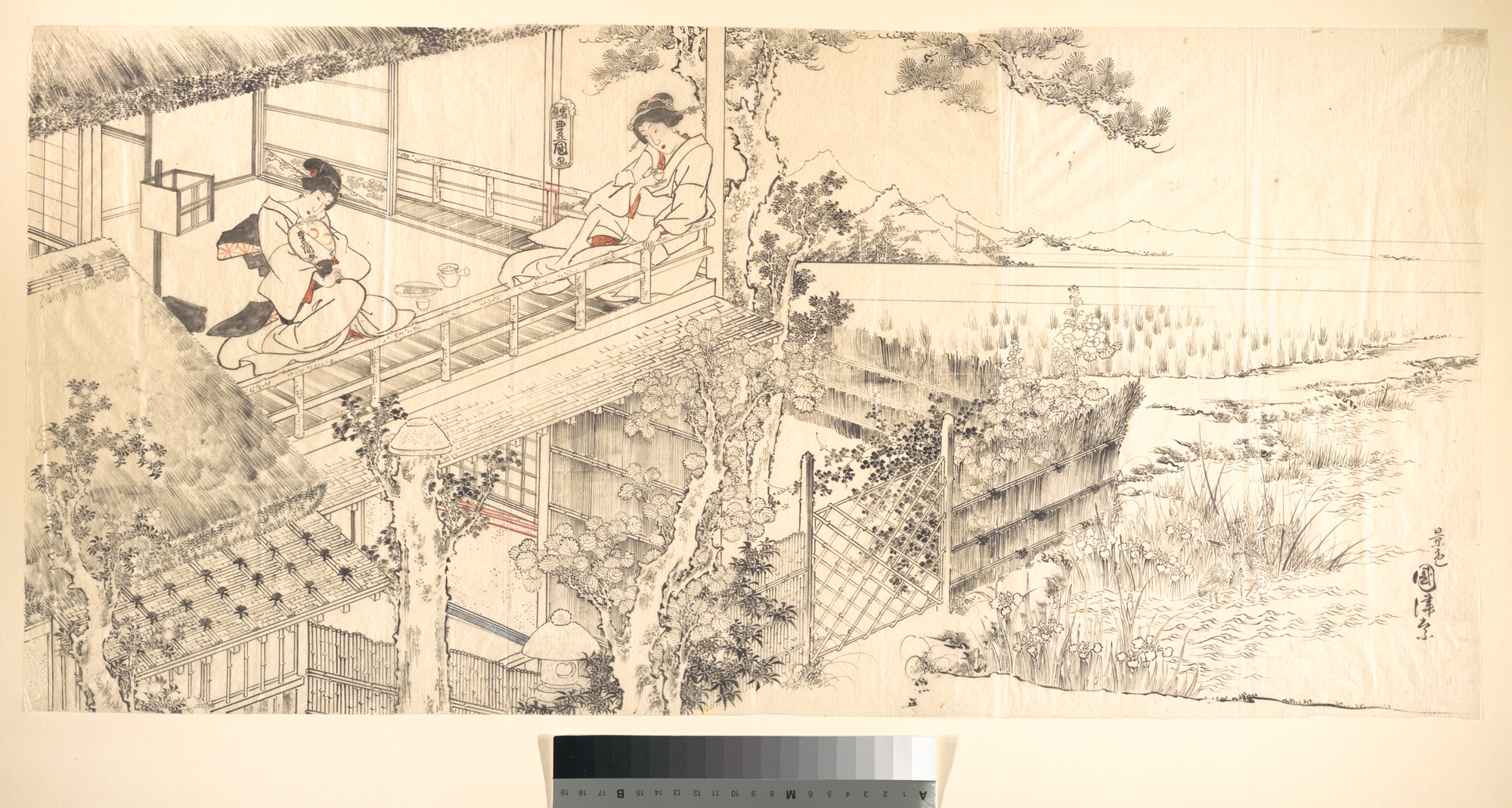
Two Courtesans Enjoying the View from a Teahouse
after 1844
Drawings intended as design for woodblock prints (triptych); ink and color on paper
Frequently Asked Questions
Actor as Tokihira was created by Utagawa Kunisada (歌川国貞) in probably 1815.