
The actors Ichikawa Danjuro VII as Takamoto no kitsune and Segawa Kikunojo V as Izumi no Chieda-gitsune
- Date:
- 1818
- Medium:
- Color woodblock print; shikishiban, surimono
- Source:
- Art Institute of Chicago
Description
This 1818 shikishiban-format surimono by Utagawa Kunisada portrays Ichikawa Danjuro VII as Takamoto no kitsune (the Takamoto fox) and Segawa Kikunojo V as Izumi no Chieda-gitsune (the Izumi fox-spirit), in what is likely a fox-magic transformation scene from one of the kabuki plays drawing on the rich Japanese tradition of supernatural fox imagery. Fox transformations are among the most beloved supernatural subjects in Japanese theater: foxes (kitsune) are shape-shifting tricksters and divine messengers, and the dance and reveal of their true identity furnished spectacular stage moments for both tachiyaku and onnagata. Kunisada's design probably uses costume elements such as white fur, fox-tail decorations, and pointed gestures to suggest the supernatural identity of the human-form actors. As a surimono, the print was commissioned privately, likely by a poetry club celebrating both actors, and would have been printed in a small edition with luxury effects: metallic and pearlescent pigments, blind embossing for the texture of fur and snow, and refined color modulation. Ichikawa Danjuro VII and Segawa Kikunojo V were two of the leading kabuki stars of late-Bunka and Bunsei Edo, and their joint appearance in a fox-themed surimono is a particularly desirable subject. The Art Institute of Chicago's impression preserves the print as a document of Kunisada's early-career surimono virtuosity.
More Prints by Utagawa Kunisada

Basketry Work: By the Craftsman Ichida Shōshichirō of Naniwa (Kagozaiku Naniwa saikunin Ichida Shōshichirō)
1819
Woodblock print; ink and color on paper
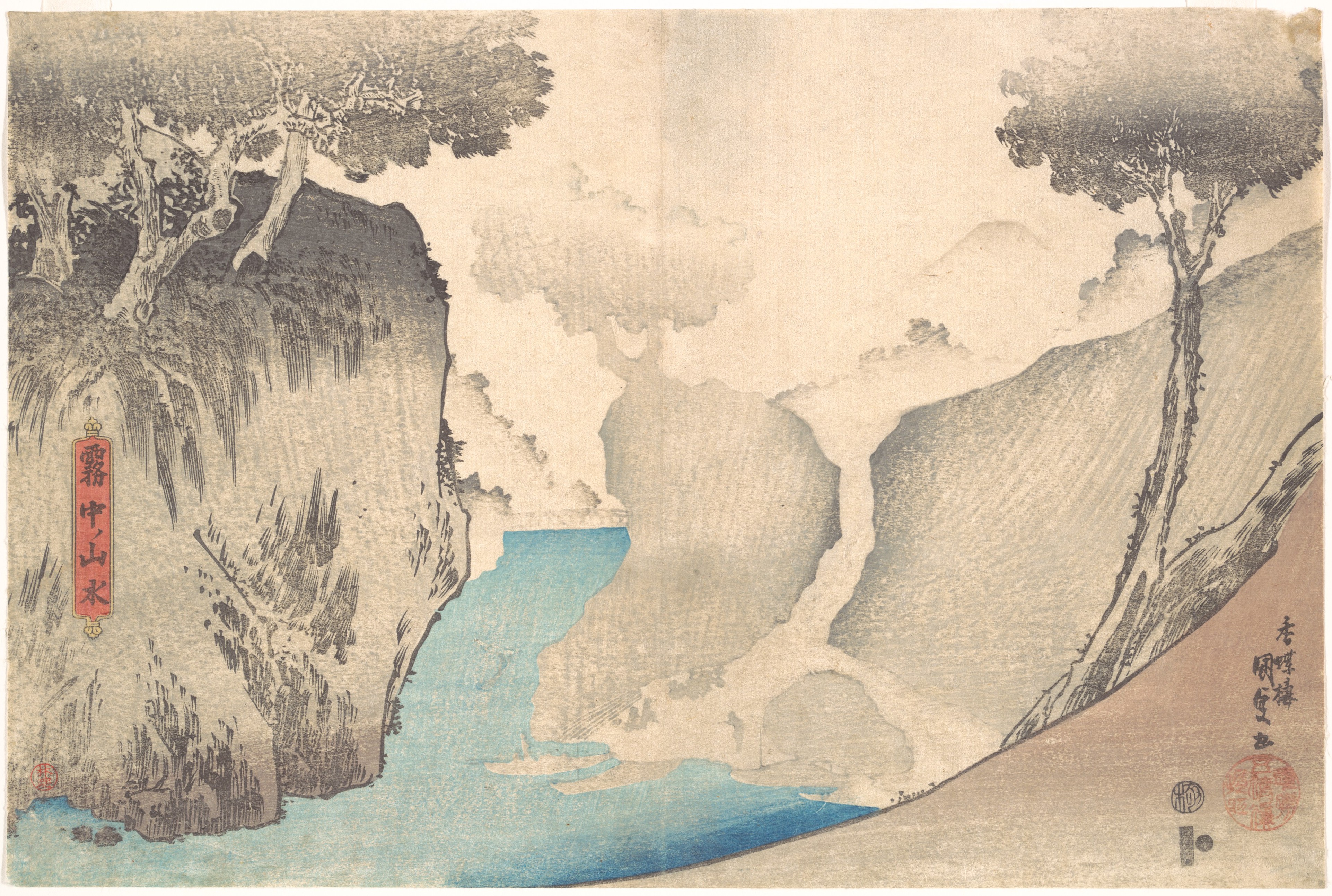
Ochanomizu in the Mist
mid-19th century
Woodblock print; ink and color on paper
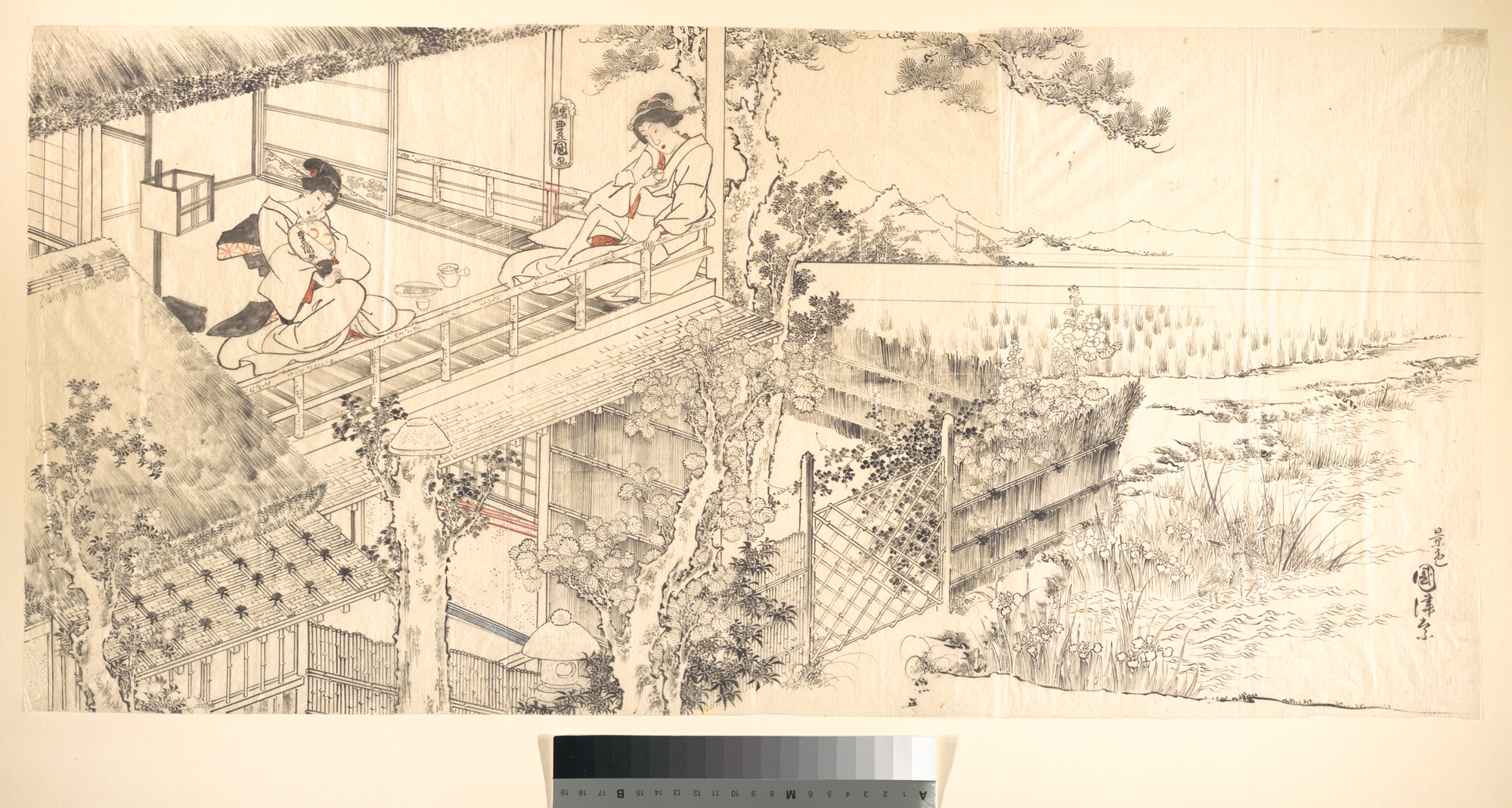
Two Courtesans Enjoying the View from a Teahouse
after 1844
Drawings intended as design for woodblock prints (triptych); ink and color on paper
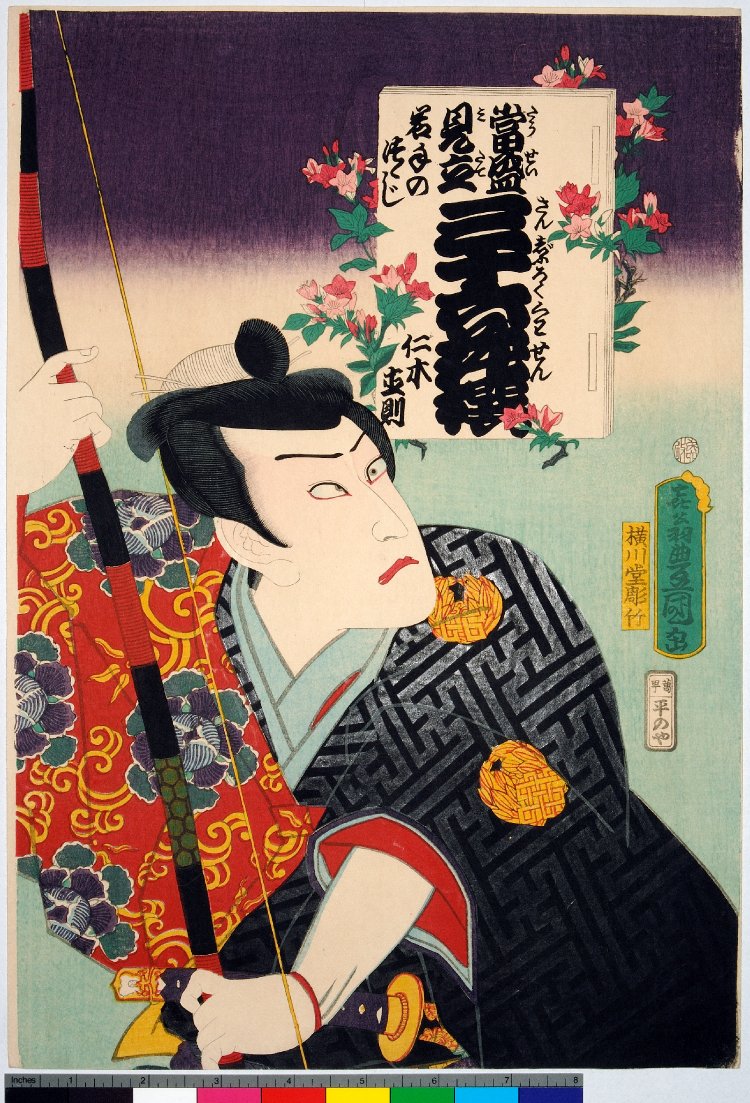
Niki Naonori, Iwate no tsutsuji (Niki Naonori, Azalea) / Tosei mitate sanju-rokkasen 當盛見立 三十六花撰 (Contemporary Kabuki Actors Likened to Thirty-Six Flowers (Immortals of Poetry))
Frequently Asked Questions
The actors Ichikawa Danjuro VII as Takamoto no kitsune and Segawa Kikunojo V as Izumi no Chieda-gitsune was created by Utagawa Kunisada (歌川国貞) in 1818.