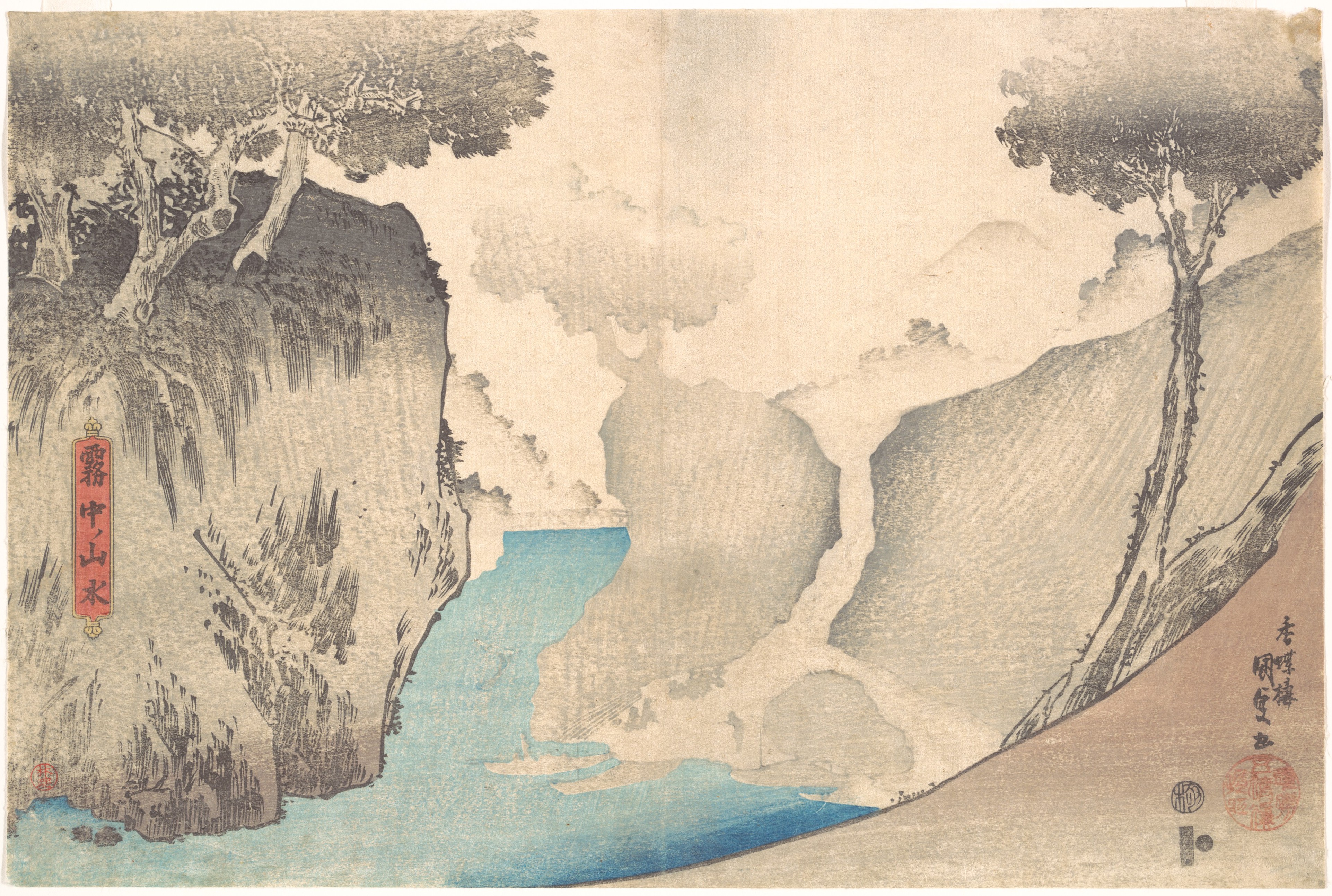
Ochanomizu in the Mist
- Date:
- mid-19th century
- Medium:
- Woodblock print; ink and color on paper
- Source:
- Metropolitan Museum of Art
Description
"Ochanomizu in the Mist," held by the Metropolitan Museum of Art (accession 56679) and dated 1834, captures the Ochanomizu district north of Edo Castle, a place famed for the canalized Kanda River whose name ("tea water") referenced a stream once used to draw water for the shogun's tea. Although Utagawa Kunisada is best known for yakusha-e, he produced landscape and meisho-e (famous places) designs throughout the 1830s, often in conversation with contemporaries such as Hiroshige. Treating Ochanomizu in mist allowed Kunisada to exploit the soft graduated printing (bokashi) that late Edo woodblock workshops had refined, suggesting humid summer air or autumnal haze through tonal washes rather than line. The print sits at the intersection of urban topography and atmospheric mood that animated much landscape ukiyo-e of the period. As a record of Edo's geography, it documents one of the city's signature scenic stretches; as a piece of Edo ukiyo-e craftsmanship, it demonstrates Kunisada's range beyond the stage, his ability to render place with the same compositional discipline he brought to actor portraits. The Met's impression preserves the design within a broader institutional context that contextualizes Kunisada alongside his peers.
More Prints by Utagawa Kunisada

The actors Ichikawa Danjuro VII as Takamoto no kitsune and Segawa Kikunojo V as Izumi no Chieda-gitsune
1818
Color woodblock print; shikishiban, surimono

Basketry Work: By the Craftsman Ichida Shōshichirō of Naniwa (Kagozaiku Naniwa saikunin Ichida Shōshichirō)
1819
Woodblock print; ink and color on paper
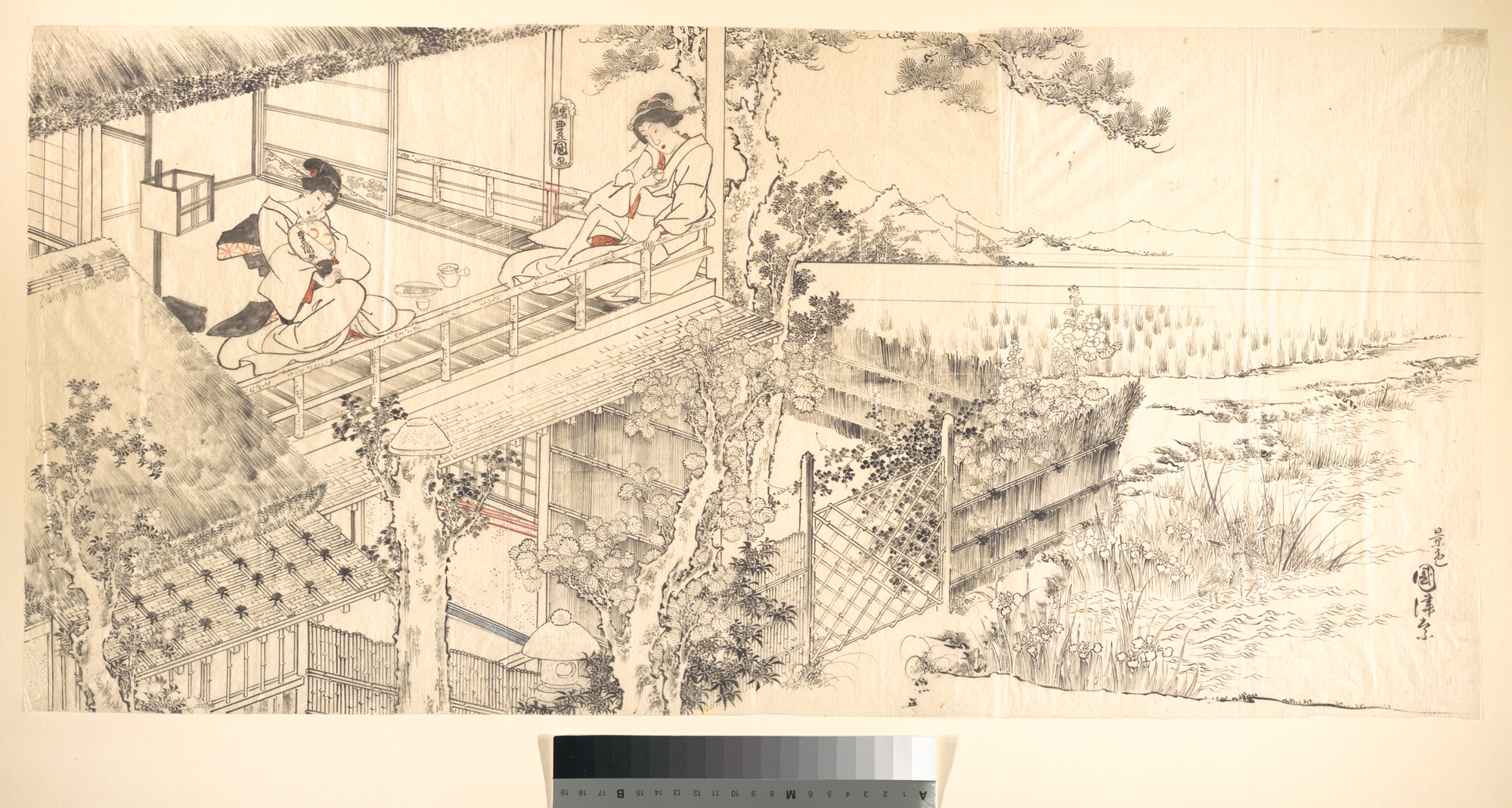
Two Courtesans Enjoying the View from a Teahouse
after 1844
Drawings intended as design for woodblock prints (triptych); ink and color on paper
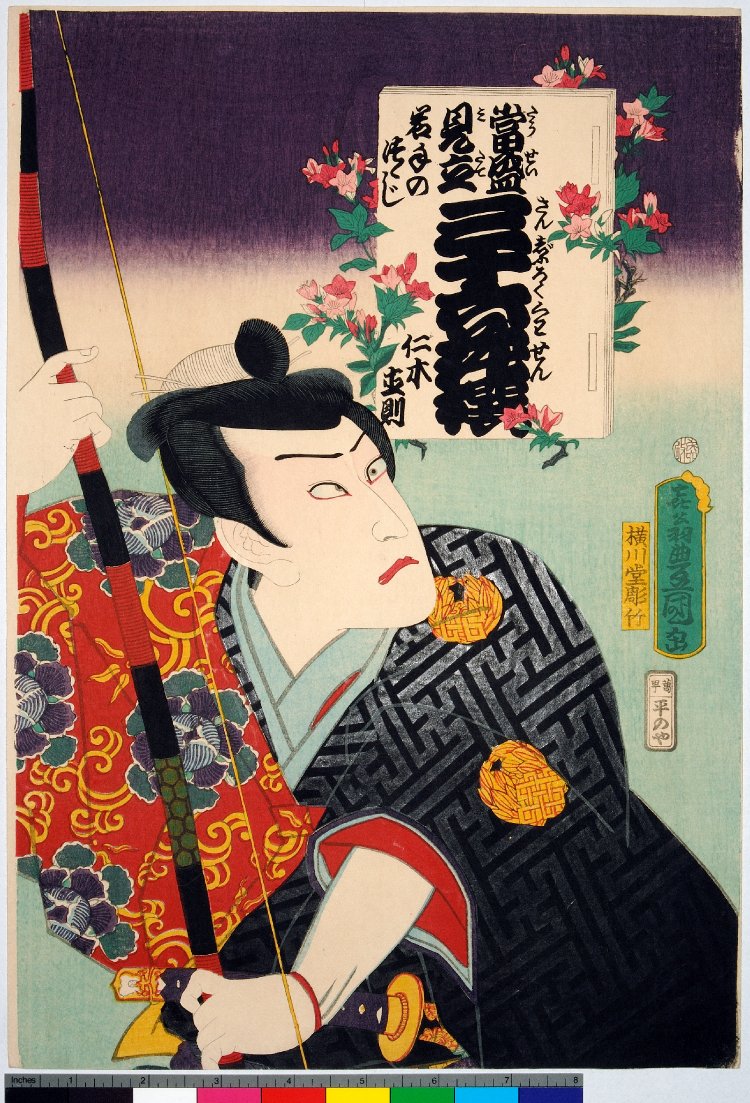
Niki Naonori, Iwate no tsutsuji (Niki Naonori, Azalea) / Tosei mitate sanju-rokkasen 當盛見立 三十六花撰 (Contemporary Kabuki Actors Likened to Thirty-Six Flowers (Immortals of Poetry))
Frequently Asked Questions
Ochanomizu in the Mist was created by Utagawa Kunisada (歌川国貞) in mid-19th century.