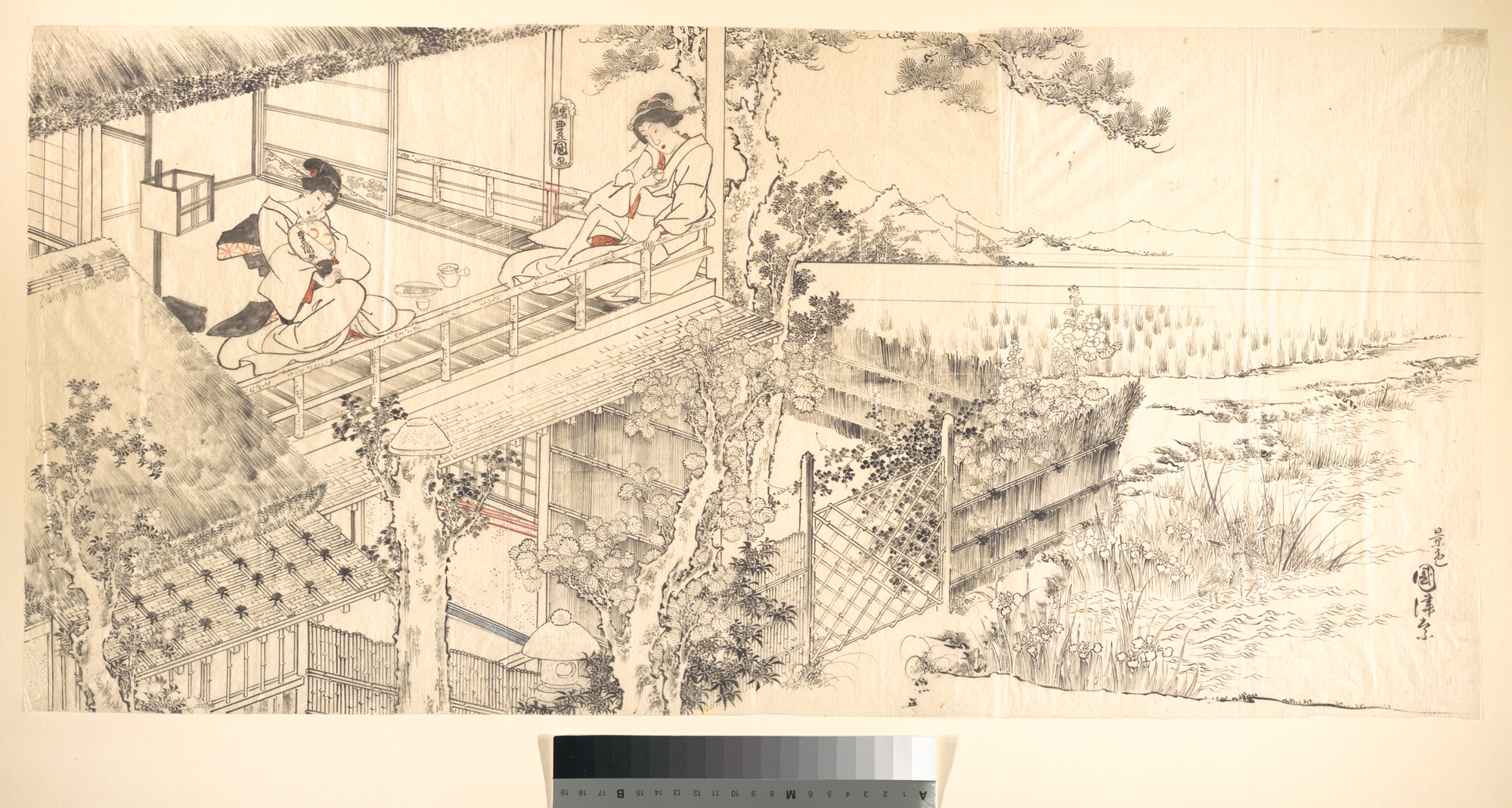
Two Courtesans Enjoying the View from a Teahouse
- Date:
- after 1844
- Medium:
- Drawings intended as design for woodblock prints (triptych); ink and color on paper
- Source:
- Metropolitan Museum of Art
Description
Dated 1844 and preserved at the Metropolitan Museum of Art (accession 57019), "Two Courtesans Enjoying the View from a Teahouse" by Utagawa Kunisada is a characteristic mid-career bijin-ga that pairs the courtesan figure - one of Edo ukiyo-e's defining subjects - with a teahouse setting overlooking a scenic vista. The design takes advantage of the elevated, framed view to combine bijin and meisho-e (famous places) idioms in a single composition. The early 1840s context is significant: the Tenpō Reforms (1841-1843) had imposed restrictions on luxurious ukiyo-e, particularly portraits of named Yoshiwara courtesans and kabuki actors, and designers responded by shifting toward more generic figures and landscape-integrated settings. A teahouse scene with two anonymous courtesans fits that adjusted register exactly - elegant, stylish, but cautious about overt celebrity. Kunisada, by then signing as Toyokuni III, navigated the post-reform environment with practiced commercial instinct. The Met's impression illustrates how Edo ukiyo-e absorbed regulatory pressure and continued to deliver beauty and atmosphere to its audience, with Kunisada's workshop adjusting its iconography to keep producing the bijin-ga and theatrical work that anchored the Edo print market.
More Prints by Utagawa Kunisada

The actors Ichikawa Danjuro VII as Takamoto no kitsune and Segawa Kikunojo V as Izumi no Chieda-gitsune
1818
Color woodblock print; shikishiban, surimono

Basketry Work: By the Craftsman Ichida Shōshichirō of Naniwa (Kagozaiku Naniwa saikunin Ichida Shōshichirō)
1819
Woodblock print; ink and color on paper
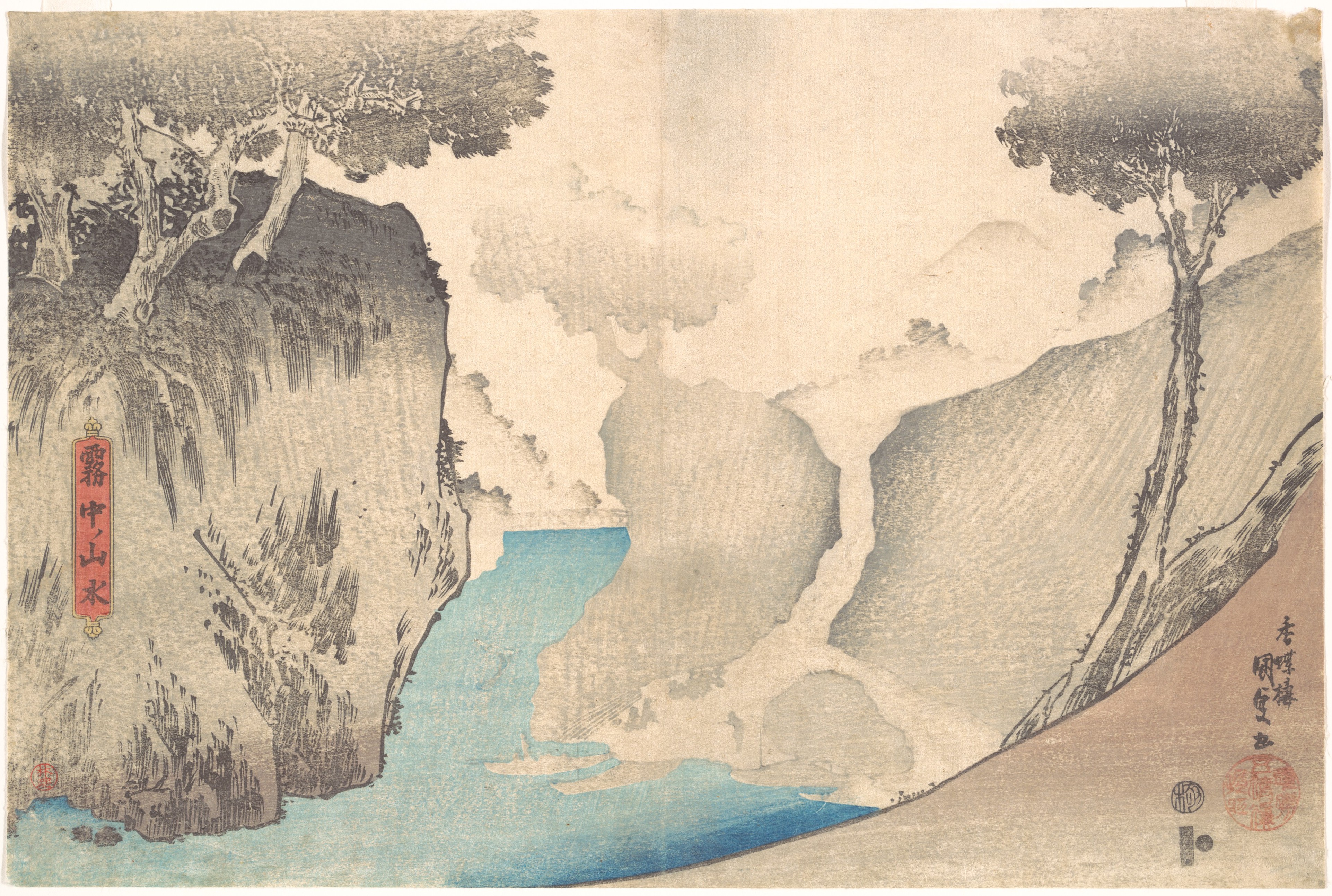
Ochanomizu in the Mist
mid-19th century
Woodblock print; ink and color on paper
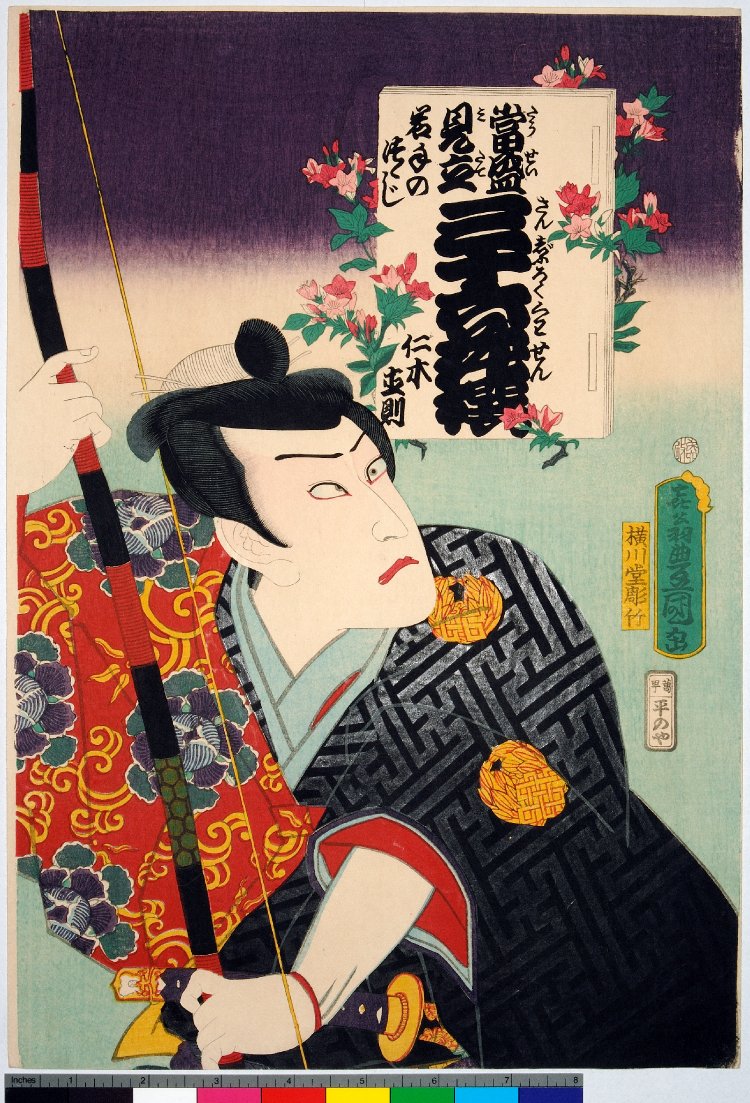
Niki Naonori, Iwate no tsutsuji (Niki Naonori, Azalea) / Tosei mitate sanju-rokkasen 當盛見立 三十六花撰 (Contemporary Kabuki Actors Likened to Thirty-Six Flowers (Immortals of Poetry))
Frequently Asked Questions
Two Courtesans Enjoying the View from a Teahouse was created by Utagawa Kunisada (歌川国貞) in after 1844.