
Actor Ichikawa Danjûrô VII
- Date:
- c. 1821
- Medium:
- Woodblock print (nishiki-e), ink and color on paper
- Source:
- Art Institute of Chicago
Description
This color woodblock print of about 1821 by Utagawa Kunisada is a portrait of Ichikawa Danjuro VII (1791-1859), the dominant tachiyaku (leading male) actor of his generation and the most influential kabuki actor of the first half of the nineteenth century. As head of the Ichikawa Danjuro lineage, the most prestigious of all kabuki acting families, Danjuro VII commanded a theatrical empire that included signature roles in the Aragoto (rough-style) repertoire, the codification of the Kabuki Juhachiban (Eighteen Great Plays) in 1840, and the patronage of countless print designers including Kunisada. Their professional relationship lasted nearly four decades; Kunisada designed innumerable prints of Danjuro VII over the actor's career, documenting his roles from the late 1810s to the 1850s. The 1821 dating places this print in Kunisada's early phase, before his major commercial expansion, and the work is signed in his earlier Kunisada manner rather than as Toyokuni III. The single-figure format invites close attention to the actor's facial likeness and costume; Danjuro VII's broad forehead, prominent jaw, and slightly heavy-lidded eyes were instantly recognizable to Edo audiences, and Kunisada conveyed them through the standardized but personal facial conventions of the Utagawa school. The Art Institute of Chicago's holding preserves an excellent early example of Kunisada's pictorial chronicle of the Danjuro VII era.
More Prints by Utagawa Kunisada

The actors Ichikawa Danjuro VII as Takamoto no kitsune and Segawa Kikunojo V as Izumi no Chieda-gitsune
1818
Color woodblock print; shikishiban, surimono

Basketry Work: By the Craftsman Ichida Shōshichirō of Naniwa (Kagozaiku Naniwa saikunin Ichida Shōshichirō)
1819
Woodblock print; ink and color on paper
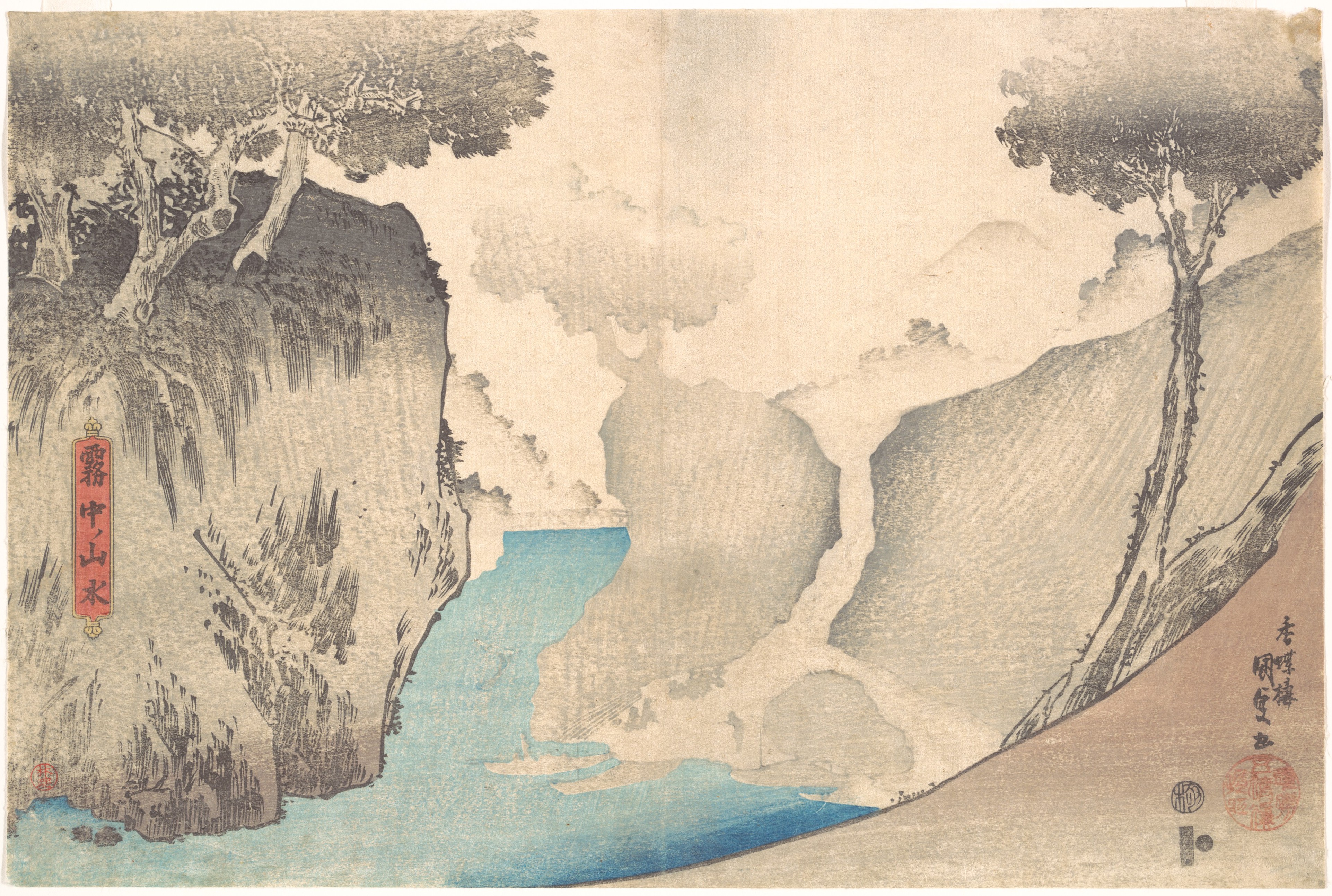
Ochanomizu in the Mist
mid-19th century
Woodblock print; ink and color on paper
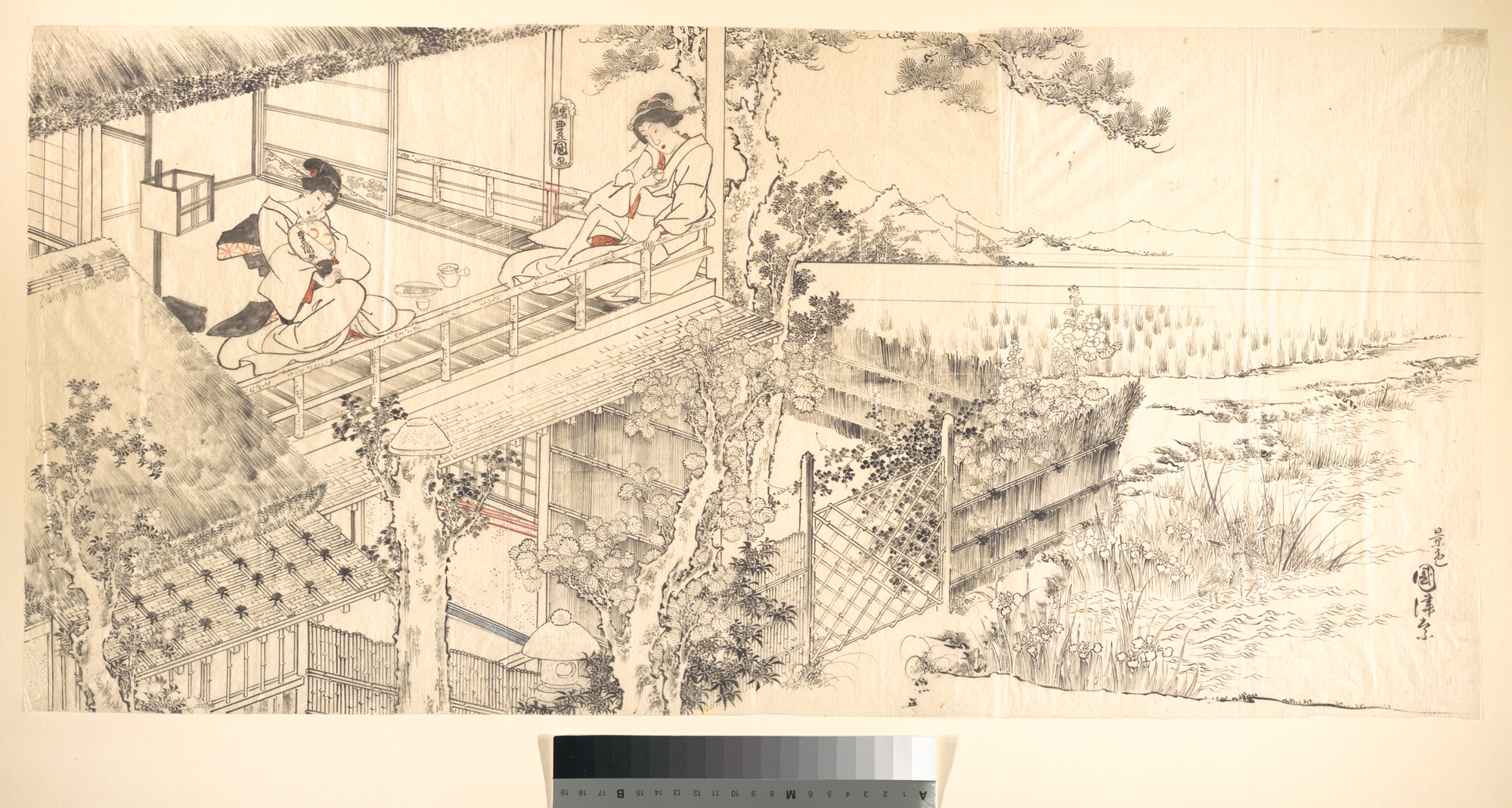
Two Courtesans Enjoying the View from a Teahouse
after 1844
Drawings intended as design for woodblock prints (triptych); ink and color on paper
Frequently Asked Questions
Actor Ichikawa Danjûrô VII was created by Utagawa Kunisada (歌川国貞) in c. 1821.