
Actors as Fukashichi and Omiwa from the play "Imoseyama," from an untitled series of half-block images of kabuki scenes
- Date:
- 1852
- Medium:
- Color woodblock print; chuban
- Source:
- Art Institute of Chicago
Description
This 1852 print by Utagawa Kunisada captures a charged confrontation from the Edo ukiyo-e tradition of yakusha-e, depicting actors in the roles of Fukashichi and the maiden Omiwa from the celebrated play "Imoseyama Onna Teikin." The scene belongs to the deeply tragic story of love, jealousy, and political intrigue set against the rivalry of the Soga and Fujiwara clans, a perennial favorite of Edo theatergoers. Kunisada was the dominant designer of actor prints during the late Edo period, and his treatment of "Imoseyama" subjects allowed him to deploy the expressive vocabulary of mie poses, exaggerated mask-like physiognomies, and richly patterned costume that defined mid-nineteenth-century yakusha-e. This sheet comes from an untitled series of half-block kabuki scenes, an economical format that allowed publishers to circulate compact souvenirs of celebrated performances in volume. The compressed compositional field forced Kunisada to distill each play to a single dramatic exchange, sharpening the legibility of gesture and glance. The print also reflects the visual culture of the immediate post-Tenpo period, when sumptuary restrictions on actor portraiture had loosened and publishers were again free to identify performers by name in their cartouches. Kunisada's line is confident and economical here, with the costume textiles given the densely worked treatment for which his late style is known. Edo ukiyo-e collectors prized such half-block formats for their portability, and surviving impressions are valued today for the way they document Kunisada's productive engagement with kabuki repertory in the final decade of his career. This impression is held in the Art Institute of Chicago, an essential reference collection for late Edo ukiyo-e theatrical prints.
More Prints by Utagawa Kunisada

The actors Ichikawa Danjuro VII as Takamoto no kitsune and Segawa Kikunojo V as Izumi no Chieda-gitsune
1818
Color woodblock print; shikishiban, surimono

Basketry Work: By the Craftsman Ichida Shōshichirō of Naniwa (Kagozaiku Naniwa saikunin Ichida Shōshichirō)
1819
Woodblock print; ink and color on paper
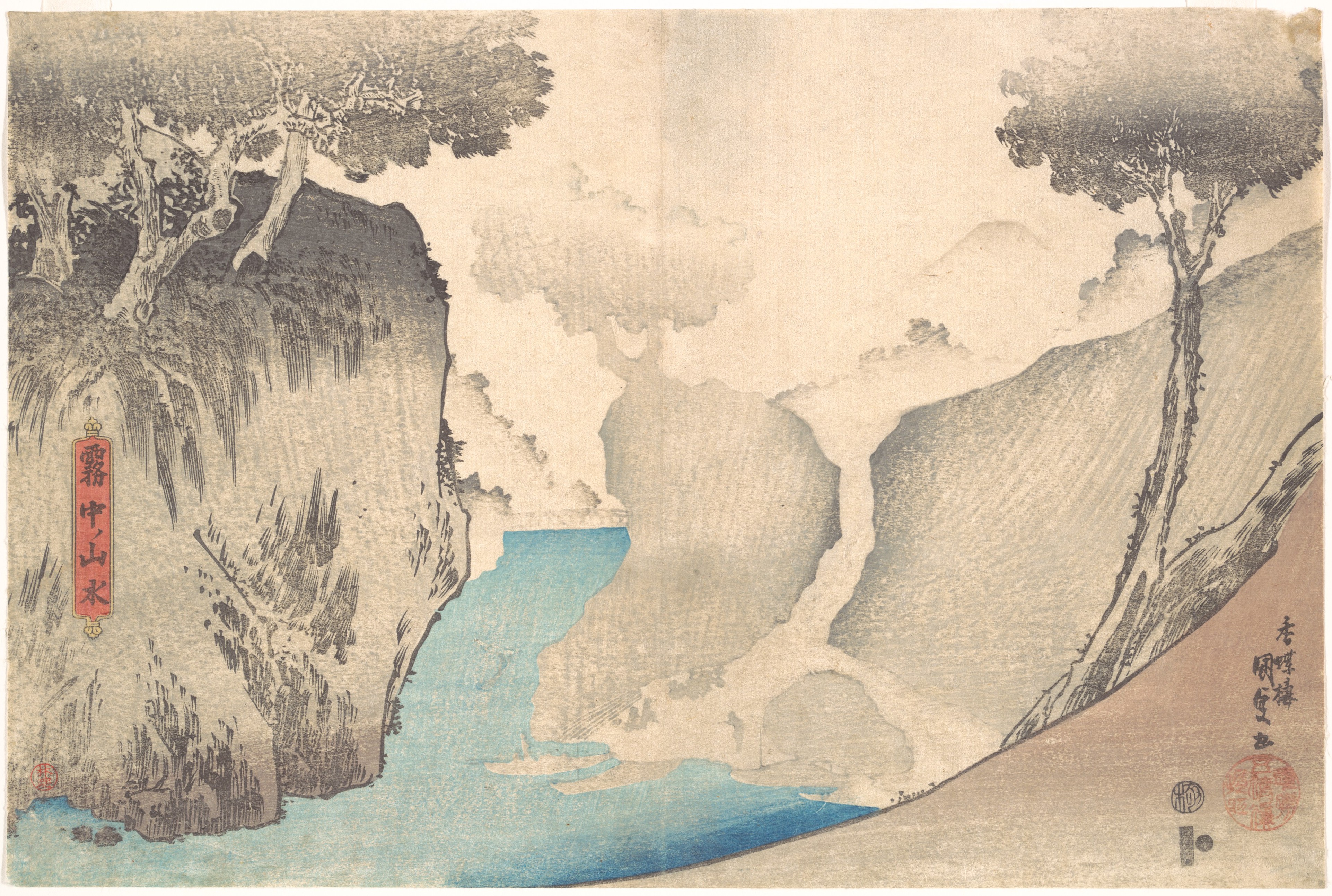
Ochanomizu in the Mist
mid-19th century
Woodblock print; ink and color on paper
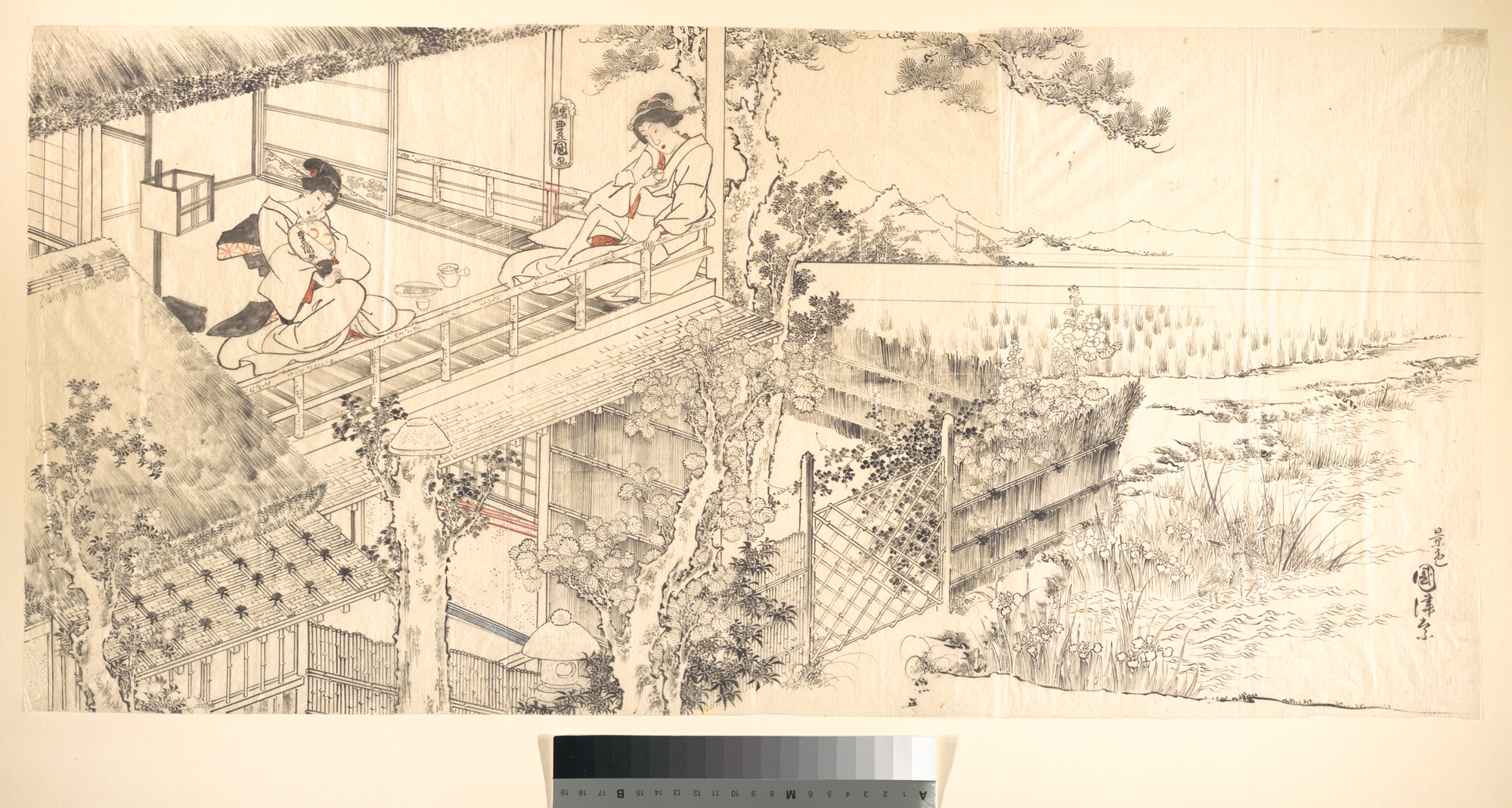
Two Courtesans Enjoying the View from a Teahouse
after 1844
Drawings intended as design for woodblock prints (triptych); ink and color on paper
Frequently Asked Questions
Actors as Fukashichi and Omiwa from the play "Imoseyama," from an untitled series of half-block images of kabuki scenes was created by Utagawa Kunisada (歌川国貞) in 1852.