
Akizuki no musume, Miyuki, Shoga no asagao (Miyuki, daughter of Akizuki, Morning glory) / Tosei mitate sanju-rokkasen 當盛見立 三十六花撰 (Contemporary Kabuki Actors Likened to Thirty-Six Flowers (Immortals of Poetry))
- Source:
- ukiyo-e.org
Description
This sheet from Tosei mitate sanju-rokkasen, or Contemporary Kabuki Actors Likened to Thirty-Six Flowers (Immortals of Poetry), pairs the character Miyuki, daughter of Akizuki, with the morning glory (asagao), one of the most beloved seasonal motifs in Japanese visual culture. The design is documented through the British Museum's holdings as cataloged on ukiyo-e.org and represents Utagawa Kunisada's mature engagement with the mitate, or analogical, mode that allowed Edo ukiyo-e designers to fold literary, classical, and floral references into the celebrity culture of kabuki actor prints. The Thirty-Six Immortals of Poetry was a canonical grouping of waka poets established in the Heian period, and ukiyo-e artists repeatedly repurposed it as a numbering device for series of women, actors, or warriors. Kunisada's contribution converts the classical conceit into yakusha-e, pairing each actor-role with a single flower whose seasonal and emotional associations comment on the dramatic moment. Miyuki belongs to the celebrated kabuki play Asagao nikki, the Diary of a Morning Glory, in which the heroine's love for the man she calls Asagao is mirrored in the flower's fragile beauty and morning bloom; depicting her with morning glory blossoms is therefore a closed iconographic circuit, with the flower naming both the character's signature poem and the play's title. The print's elaborate cartouches, costume patterning, and confident facial type are characteristic of Kunisada's late-career studio practice. As a single sheet from a broader set, it rewards collectors who appreciate how Edo ukiyo-e bound theater, poetry, and botany into a single decorative language.
More Prints by Utagawa Kunisada

The actors Ichikawa Danjuro VII as Takamoto no kitsune and Segawa Kikunojo V as Izumi no Chieda-gitsune
1818
Color woodblock print; shikishiban, surimono

Basketry Work: By the Craftsman Ichida Shōshichirō of Naniwa (Kagozaiku Naniwa saikunin Ichida Shōshichirō)
1819
Woodblock print; ink and color on paper
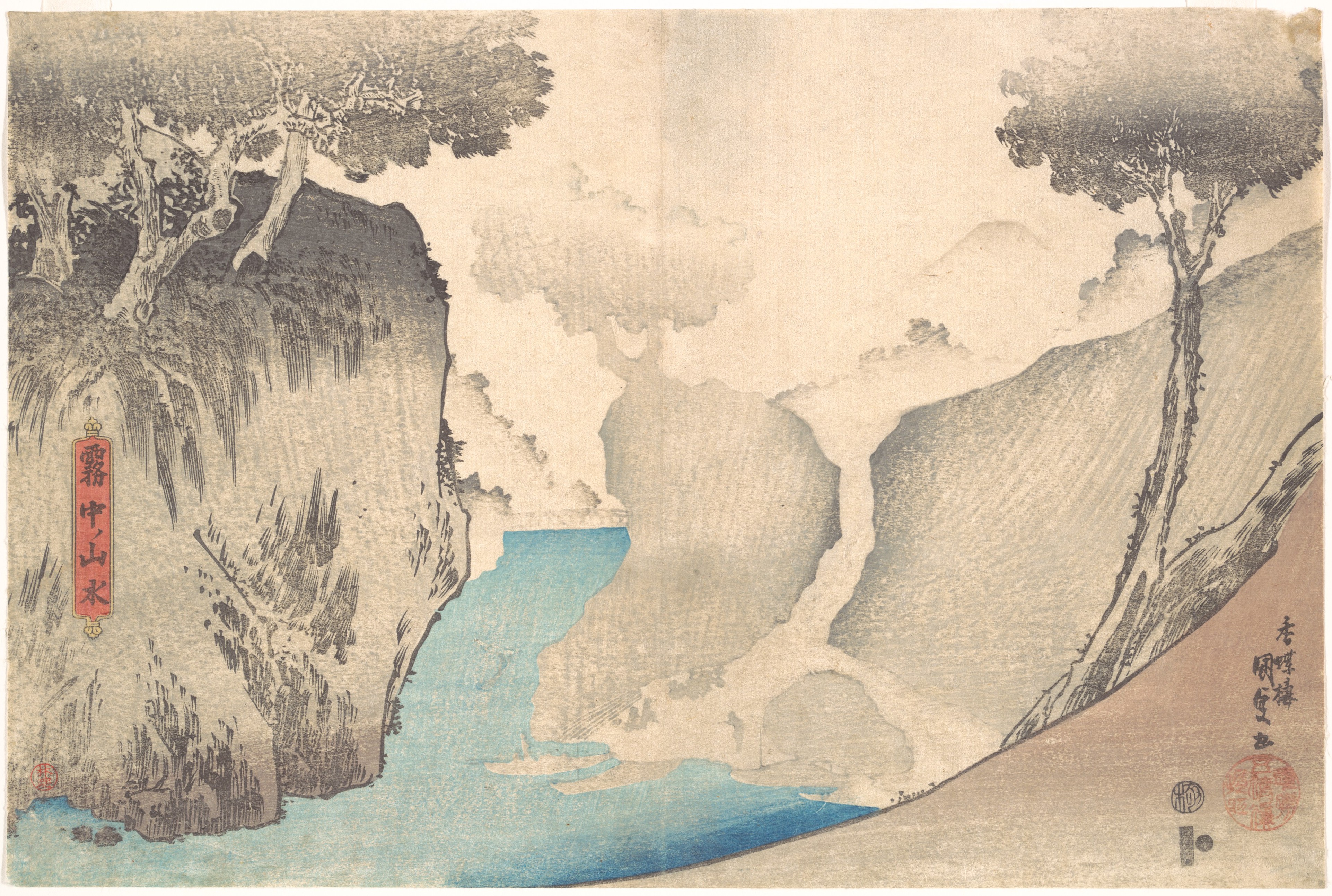
Ochanomizu in the Mist
mid-19th century
Woodblock print; ink and color on paper
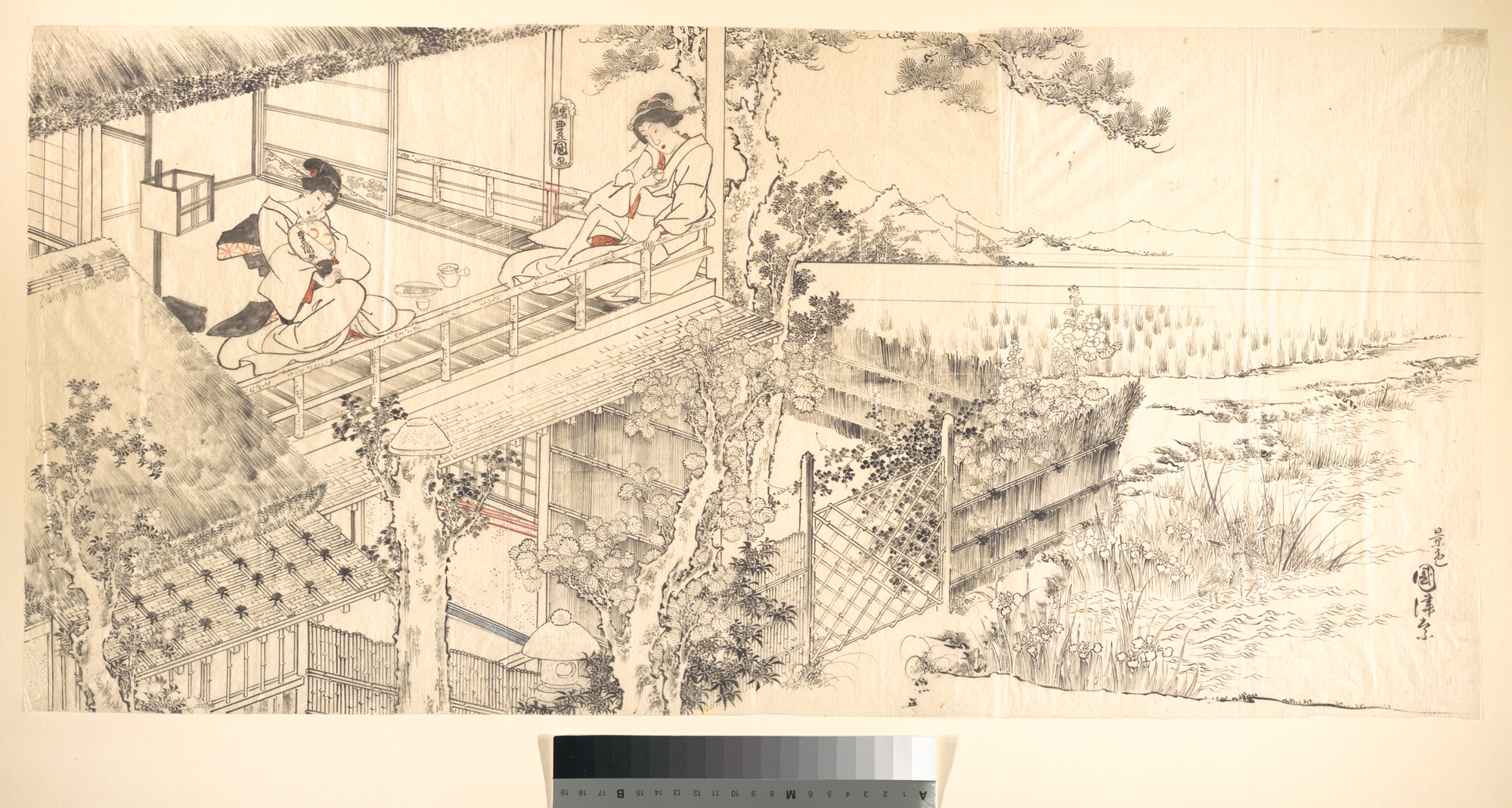
Two Courtesans Enjoying the View from a Teahouse
after 1844
Drawings intended as design for woodblock prints (triptych); ink and color on paper
More Birds & Flowers Prints
Frequently Asked Questions
Akizuki no musume, Miyuki, Shoga no asagao (Miyuki, daughter of Akizuki, Morning glory) / Tosei mitate sanju-rokkasen 當盛見立 三十六花撰 (Contemporary Kabuki Actors Likened to Thirty-Six Flowers (Immortals of Poetry)) was created by Utagawa Kunisada (歌川国貞).
Akizuki no musume, Miyuki, Shoga no asagao (Miyuki, daughter of Akizuki, Morning glory) / Tosei mitate sanju-rokkasen 當盛見立 三十六花撰 (Contemporary Kabuki Actors Likened to Thirty-Six Flowers (Immortals of Poetry)) depicts birds & flowers.