
Ama Shogetsu nochini Oryu no kata, Takano no sazanka (Nun Shogetsu, later Oryu no kata, Sasanqua) / Tosei mitate sanju-rokkasen 當盛見立 三十六花撰 (Contemporary Kabuki Actors Likened to Thirty-Six Flowers (Immortals of Poetry))
- Source:
- ukiyo-e.org
Description
This sheet from Tosei mitate sanju-rokkasen, Contemporary Kabuki Actors Likened to Thirty-Six Flowers (Immortals of Poetry), pairs the nun Shogetsu, later Oryu no kata, with the winter-blooming sasanqua camellia (sazanka), in a Utagawa Kunisada design documented through the British Museum holdings as cataloged on ukiyo-e.org. The character belongs to the historical and dramatic world of the Toyotomi succession, in which Oryu no kata is associated with Toyotomi Hideyori and the dramatic events surrounding the fall of Osaka castle; her appearance under the religious name Shogetsu denotes a later stage in her life. The sasanqua, blooming in winter when little else flowers, is a fitting emblem for a figure who survives the political collapse of her household. The mitate, or analogical, structure of the series uses the classical Thirty-Six Immortals of Poetry as a numerical template into which Edo ukiyo-e designers could slot contemporary kabuki actors and roles, each paired with a flower whose seasonal and symbolic resonance comments on the dramatic situation. Kunisada's late-career hand is recognizable in the firm outlines, the disciplined cartouche placement, the costume patterning, and the recognizable facial type used to identify the actor. As a yakusha-e sheet that integrates kabuki, history, and botanical symbolism, this print is a strong representative of Utagawa school practice.
More Prints by Utagawa Kunisada

The actors Ichikawa Danjuro VII as Takamoto no kitsune and Segawa Kikunojo V as Izumi no Chieda-gitsune
1818
Color woodblock print; shikishiban, surimono

Basketry Work: By the Craftsman Ichida Shōshichirō of Naniwa (Kagozaiku Naniwa saikunin Ichida Shōshichirō)
1819
Woodblock print; ink and color on paper
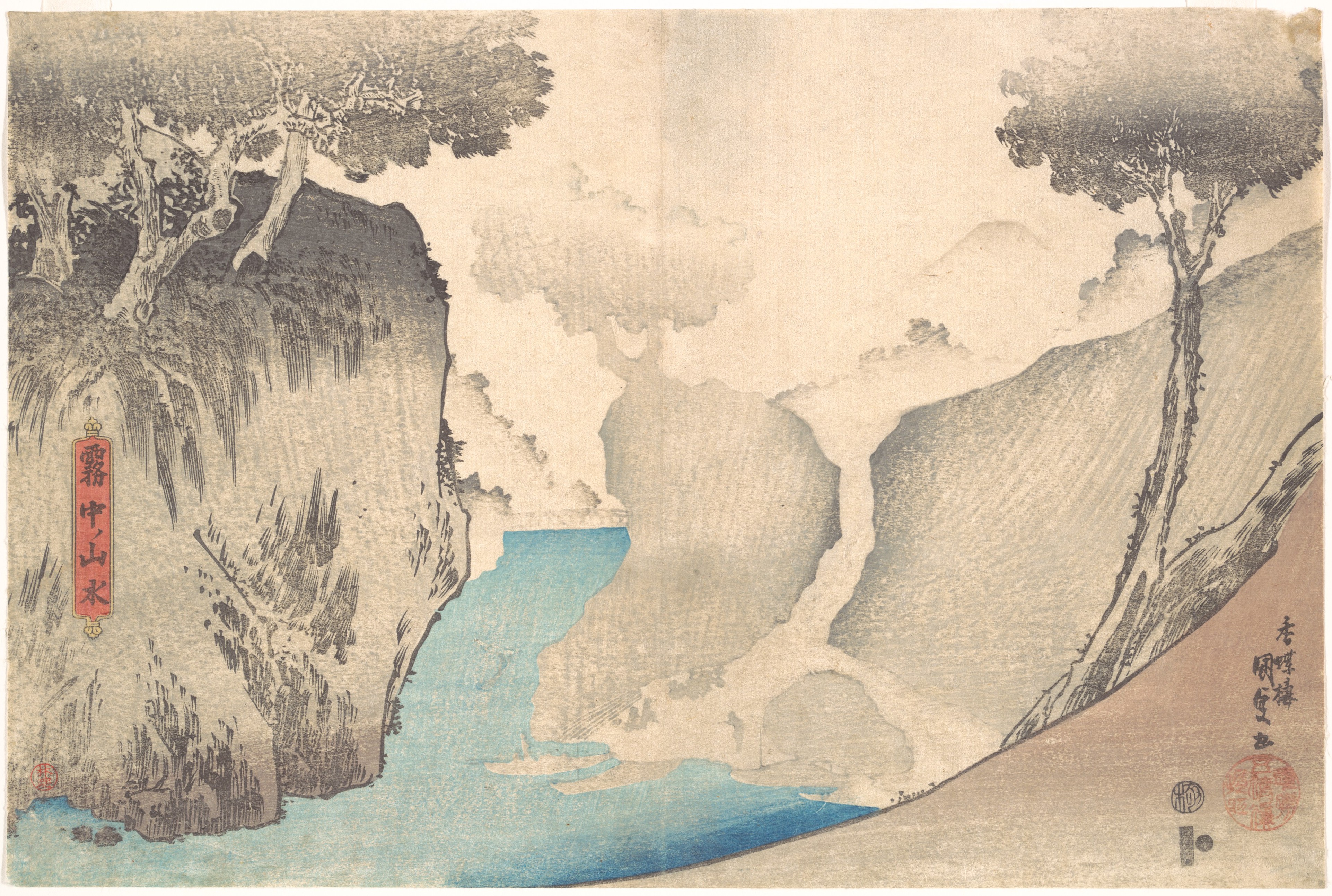
Ochanomizu in the Mist
mid-19th century
Woodblock print; ink and color on paper
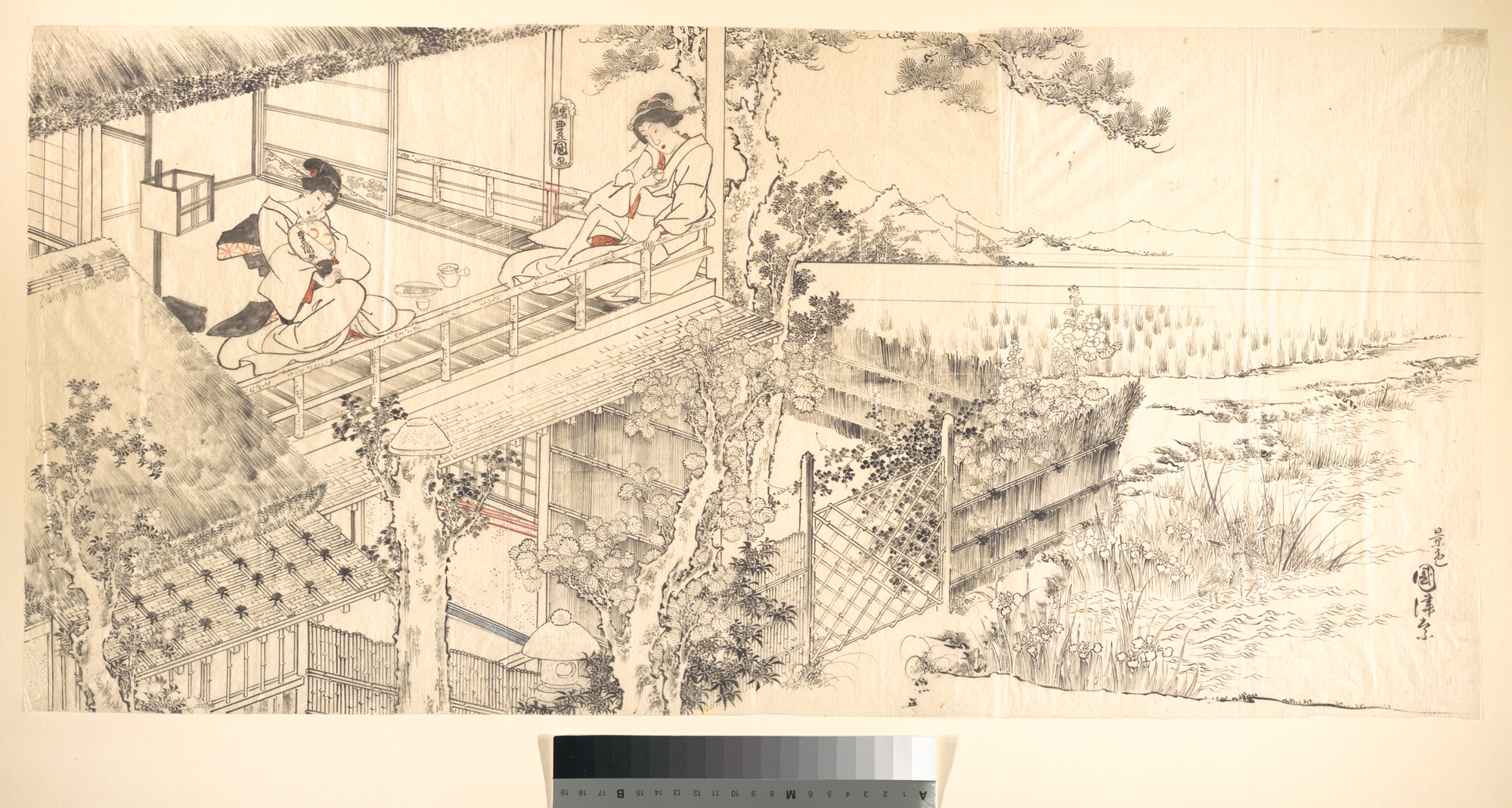
Two Courtesans Enjoying the View from a Teahouse
after 1844
Drawings intended as design for woodblock prints (triptych); ink and color on paper
More Birds & Flowers Prints
Frequently Asked Questions
Ama Shogetsu nochini Oryu no kata, Takano no sazanka (Nun Shogetsu, later Oryu no kata, Sasanqua) / Tosei mitate sanju-rokkasen 當盛見立 三十六花撰 (Contemporary Kabuki Actors Likened to Thirty-Six Flowers (Immortals of Poetry)) was created by Utagawa Kunisada (歌川国貞).
Ama Shogetsu nochini Oryu no kata, Takano no sazanka (Nun Shogetsu, later Oryu no kata, Sasanqua) / Tosei mitate sanju-rokkasen 當盛見立 三十六花撰 (Contemporary Kabuki Actors Likened to Thirty-Six Flowers (Immortals of Poetry)) depicts birds & flowers.