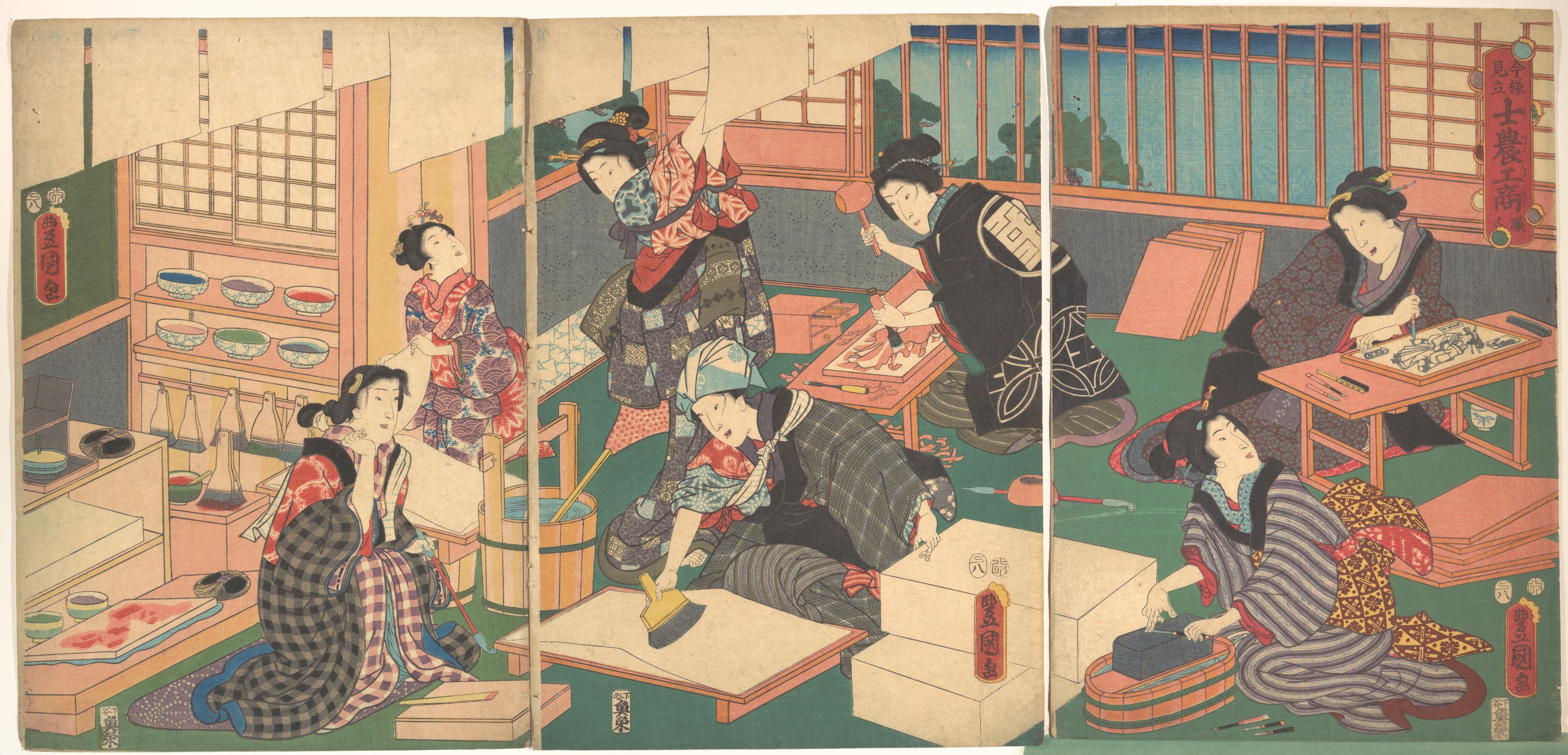
Artisans, from the series "An Up-to-Date Parody of the Four Classes"
- Date:
- 19th century
- Medium:
- Triptych of woodblock prints; ink and color on paper
- Source:
- Metropolitan Museum of Art
Description
"Artisans, from the series 'An Up-to-Date Parody of the Four Classes,'" preserved in the Metropolitan Museum of Art (accession 55723), is attributed to Utagawa Kunisada and dated by the Met to 1800. The series riffs on the Confucian fourfold social order - samurai, farmers, artisans, merchants - that nominally structured Tokugawa society, treating each class as the basis for a witty contemporary mitate (parody). Such parodic series were a favored Edo ukiyo-e device, allowing designers to flatter their townspeople audience by recasting hierarchical categories through stylish beauties or stage references rather than literal social documentation. The Met's 1800 date is unusually early for Kunisada, whose career conventionally accelerated in the 1810s, and viewers may wish to treat the year as approximate. As a young Utagawa-school designer working in the orbit of Toyokuni I, Kunisada would have been steeped in exactly the parodic and theatrical vocabulary that this series deploys. Whether read as an artisan in literal trade dress or as a beauty figured as artisan through fashion cues, the sheet sits within the Edo ukiyo-e tradition of social commentary served light - more interested in style and recognition games than in any direct critique of class.
More Prints by Utagawa Kunisada

The actors Ichikawa Danjuro VII as Takamoto no kitsune and Segawa Kikunojo V as Izumi no Chieda-gitsune
1818
Color woodblock print; shikishiban, surimono

Basketry Work: By the Craftsman Ichida Shōshichirō of Naniwa (Kagozaiku Naniwa saikunin Ichida Shōshichirō)
1819
Woodblock print; ink and color on paper
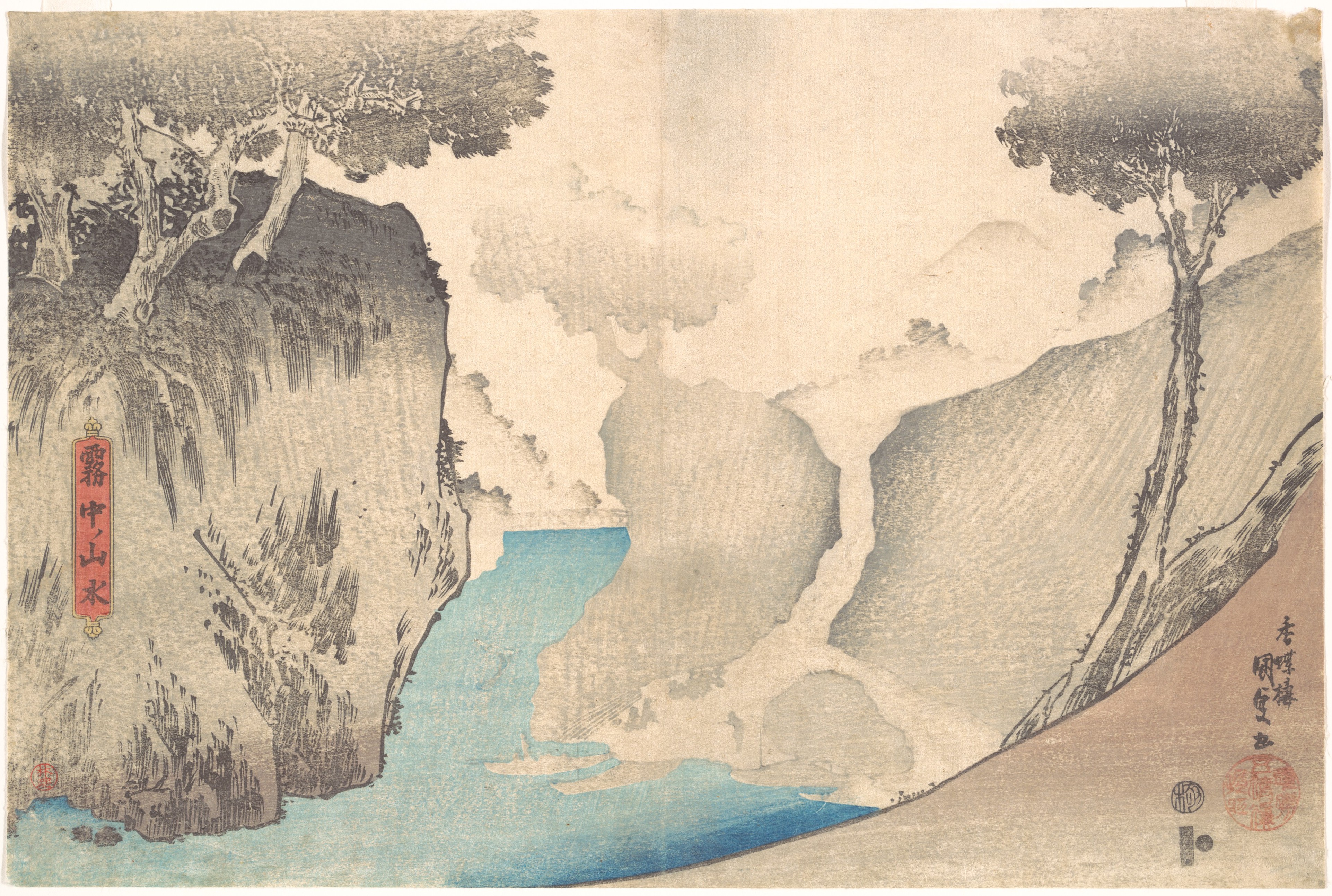
Ochanomizu in the Mist
mid-19th century
Woodblock print; ink and color on paper
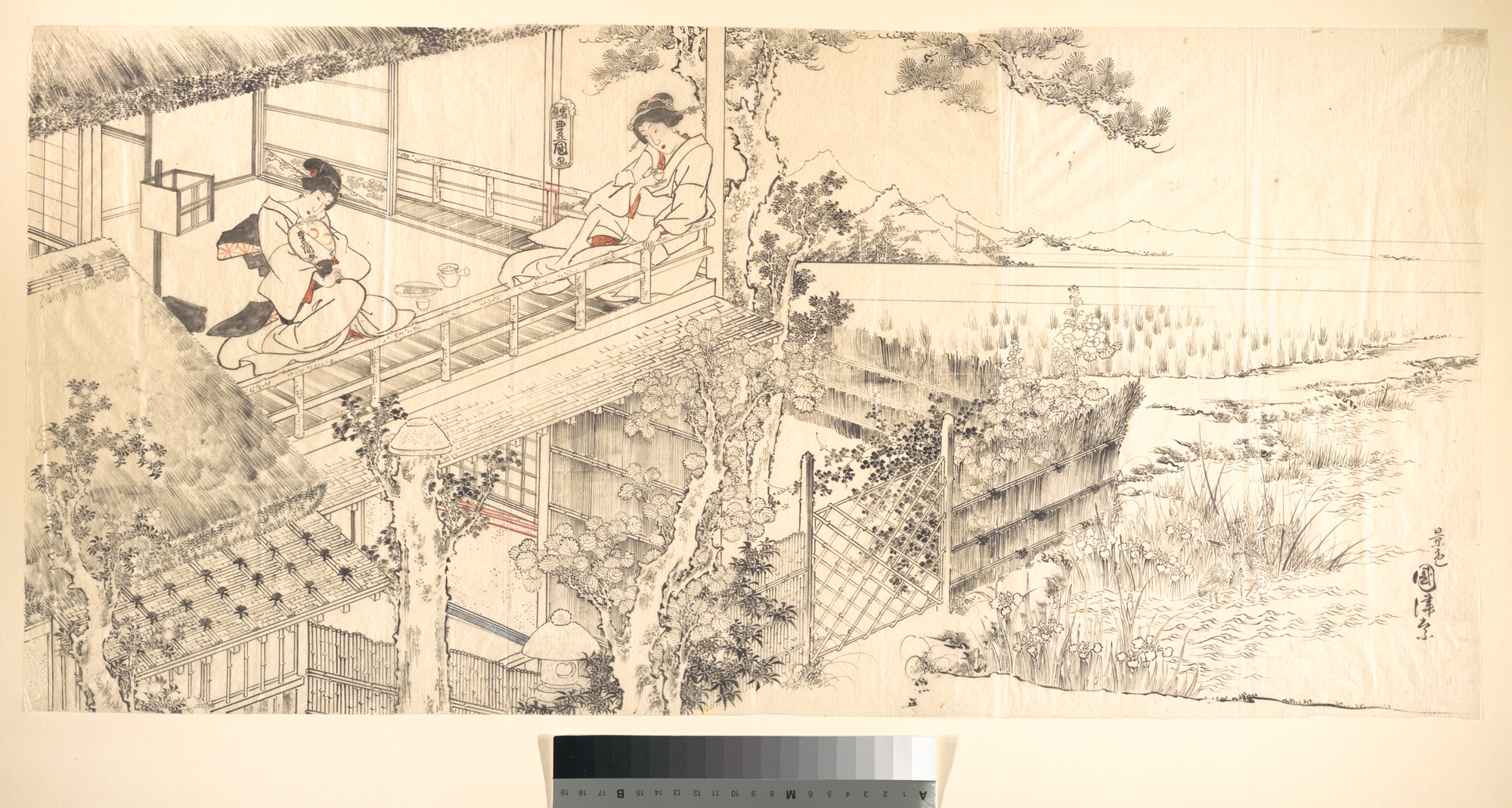
Two Courtesans Enjoying the View from a Teahouse
after 1844
Drawings intended as design for woodblock prints (triptych); ink and color on paper
Frequently Asked Questions
Artisans, from the series "An Up-to-Date Parody of the Four Classes" was created by Utagawa Kunisada (歌川国貞) in 19th century.