
Bando Mitsugoro III as Minamoto no Yorimasa (right), Segawa Kikunojo V as Ayame no Mae (center), and Ichikawa Danjuro VII as I no Hayata (left)
- Date:
- c. 1820
- Medium:
- Color woodblock prints; shikishiban triptych, surimono
- Source:
- Art Institute of Chicago
Description
This shikishiban-format triptych surimono of about 1820 by Utagawa Kunisada presents three of the leading Edo kabuki stars in role: Bando Mitsugoro III as the warrior-poet Minamoto no Yorimasa on the right, Segawa Kikunojo V as the court lady Ayame no Mae in the center, and Ichikawa Danjuro VII as the retainer I no Hayata on the left. The trio is drawn from the legend of Minamoto no Yorimasa's killing of the nue, the chimerical monster that terrorized the imperial palace, recorded in the Heike Monogatari and dramatized in Noh and kabuki. Ayame no Mae was the court lady whom Yorimasa won as a reward for the deed; I no Hayata was the retainer who delivered the killing blow to the fallen creature. Surimono of this kind were privately commissioned, often by poetry clubs whose members admired specific actors, and their luxury production values, including metallic pigments, embossing, and limited editions, set them apart from commercial yakusha-e. Bando Mitsugoro III, Segawa Kikunojo V, and Ichikawa Danjuro VII were among the dominant stage personalities of the late 1810s and 1820s, and the triptych is a record of a real or imagined performance pairing of three superstars. Kunisada's design uses the three near-square sheets in coordinated composition, with each actor identified by likeness, costume, and crest. The Art Institute of Chicago's holding preserves the triptych intact, a valuable circumstance given how often surimono sets have been separated over centuries of collecting.
More Prints by Utagawa Kunisada

The actors Ichikawa Danjuro VII as Takamoto no kitsune and Segawa Kikunojo V as Izumi no Chieda-gitsune
1818
Color woodblock print; shikishiban, surimono

Basketry Work: By the Craftsman Ichida Shōshichirō of Naniwa (Kagozaiku Naniwa saikunin Ichida Shōshichirō)
1819
Woodblock print; ink and color on paper
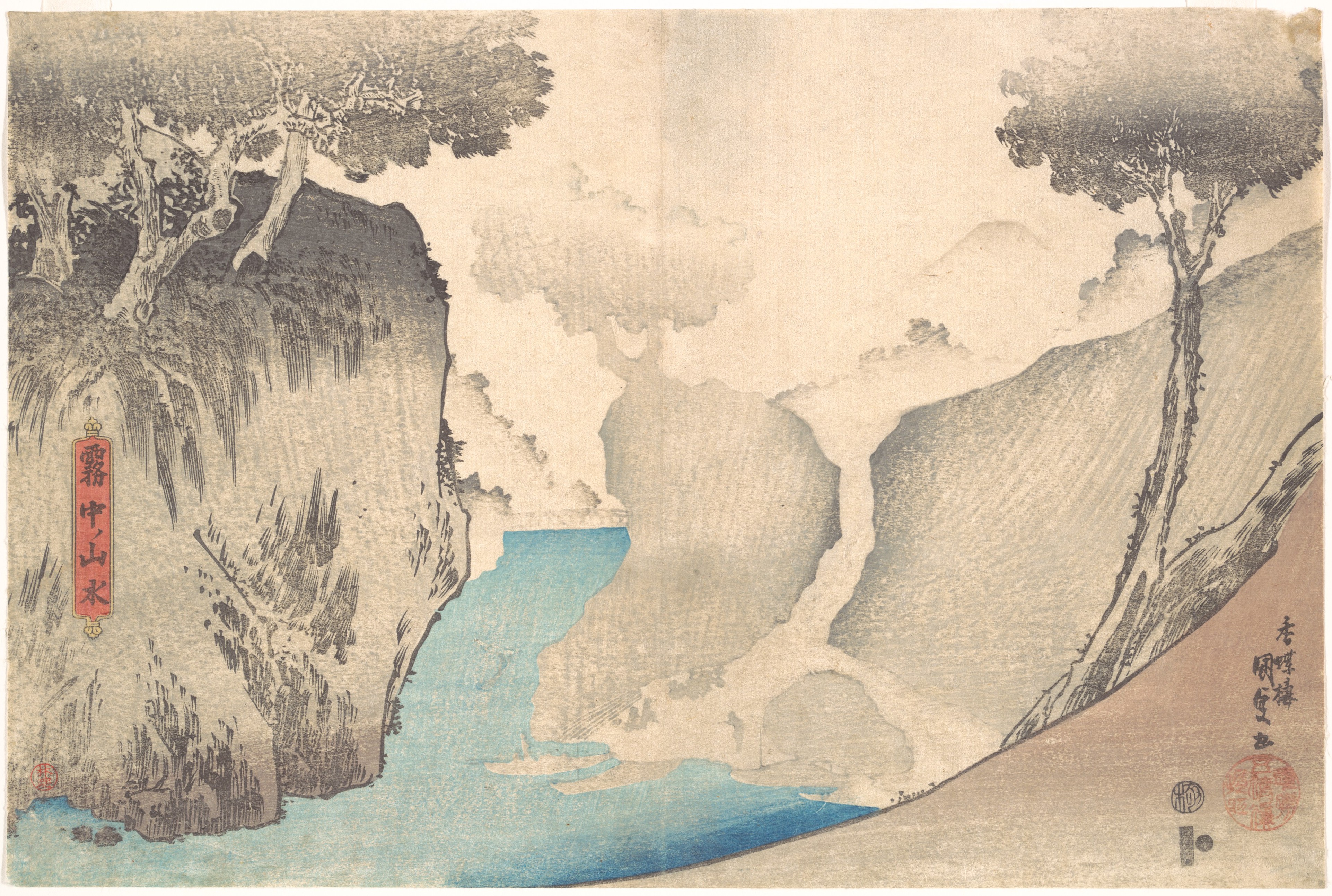
Ochanomizu in the Mist
mid-19th century
Woodblock print; ink and color on paper
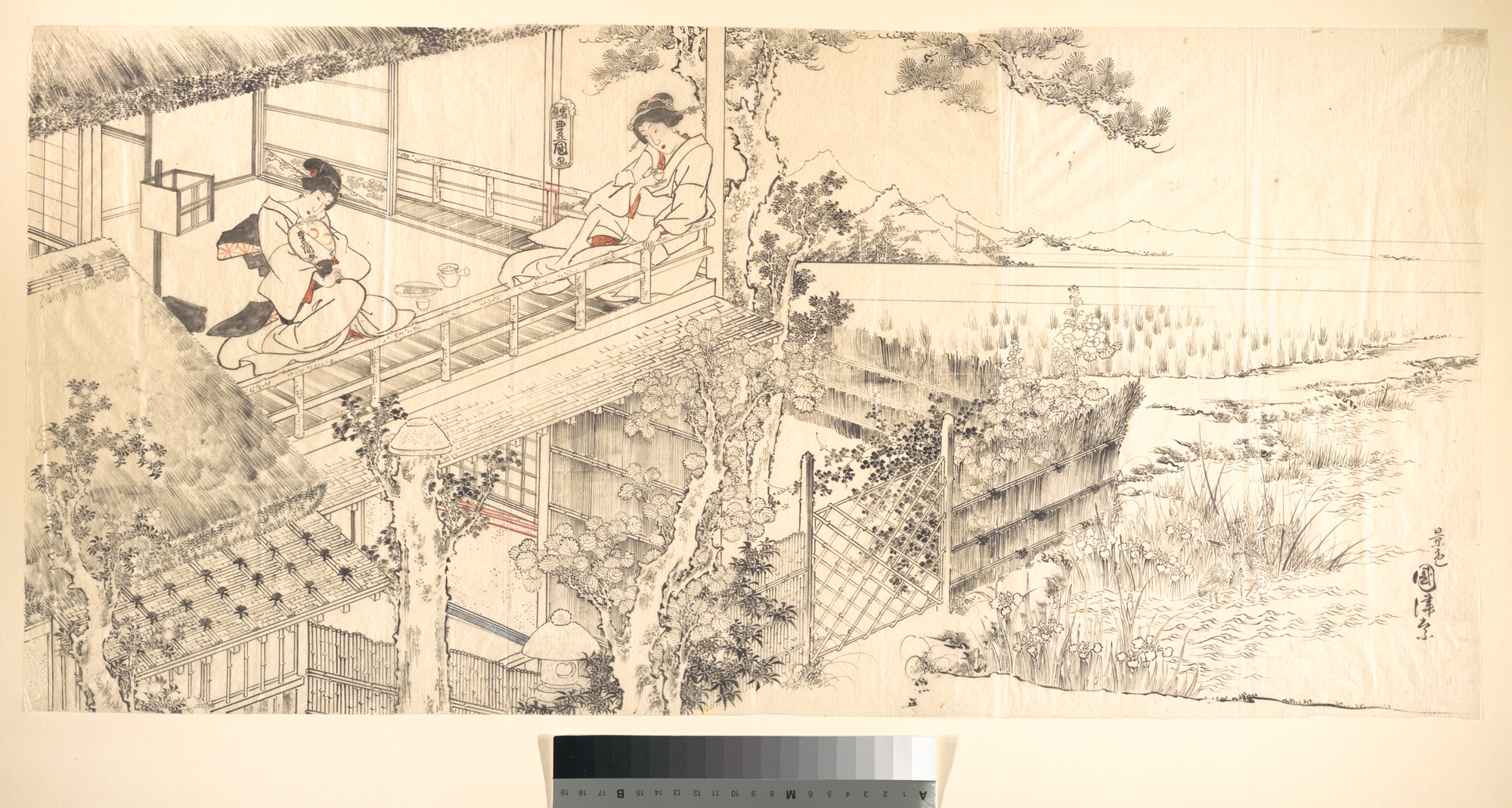
Two Courtesans Enjoying the View from a Teahouse
after 1844
Drawings intended as design for woodblock prints (triptych); ink and color on paper
Frequently Asked Questions
Bando Mitsugoro III as Minamoto no Yorimasa (right), Segawa Kikunojo V as Ayame no Mae (center), and Ichikawa Danjuro VII as I no Hayata (left) was created by Utagawa Kunisada (歌川国貞) in c. 1820.