
Begonias of Mount Ashigara (Ashigarayama no shukaido): Bando Hikosaburo V as Yamauba, from the series "Contemporary Versions of Thirty-six Selected Flowers (Tosei mitate sanjurokkasen)"
- Date:
- 1862
- Medium:
- Color woodblock print; chirimen-e
- Source:
- Art Institute of Chicago
Description
From his 1862 series "Contemporary Versions of Thirty-six Selected Flowers (Tosei Mitate Sanjurokkasen)," this Utagawa Kunisada print pairs Bando Hikosaburo V in the role of the mountain hag Yamauba with the seasonal motif of begonias at Mount Ashigara. The series belongs to the mitate genre central to Edo ukiyo-e, in which contemporary actors and beauties are matched to classical subjects, in this case the long-canonical list of thirty-six flowers, generating a layered visual pun for connoisseurs. As the dominant designer of yakusha-e in his time, Kunisada used the mitate framework to give actor portraits literary depth and to expand their appeal beyond pure kabuki fandom. Yamauba, the mythical mountain woman who in some legends nursed the boy hero Kintaro on Mount Ashigara, was a celebrated kabuki role often portrayed with wild hair, weather-worn features, and a powerful, almost otherworldly presence. Hikosaburo V is here shown with the strong, focused expression that audiences associated with his interpretation of the role. The begonias (shukaido) ground the image in the seasonal calendar of Edo ukiyo-e, while the title cartouche, with its decorative brocade border and pictorial inset, functions as a small landscape print of Mount Ashigara in its own right. Kunisada's late style is fully evident: bold black contours, deep coloration, and an almost graphic emphasis on costume pattern. The Art Institute of Chicago preserves this sheet as part of its survey of late Edo yakusha-e, an indispensable resource for tracking the way mitate prints recombined performance, literary heritage, and seasonal imagery.
More Prints by Utagawa Kunisada

The actors Ichikawa Danjuro VII as Takamoto no kitsune and Segawa Kikunojo V as Izumi no Chieda-gitsune
1818
Color woodblock print; shikishiban, surimono

Basketry Work: By the Craftsman Ichida Shōshichirō of Naniwa (Kagozaiku Naniwa saikunin Ichida Shōshichirō)
1819
Woodblock print; ink and color on paper
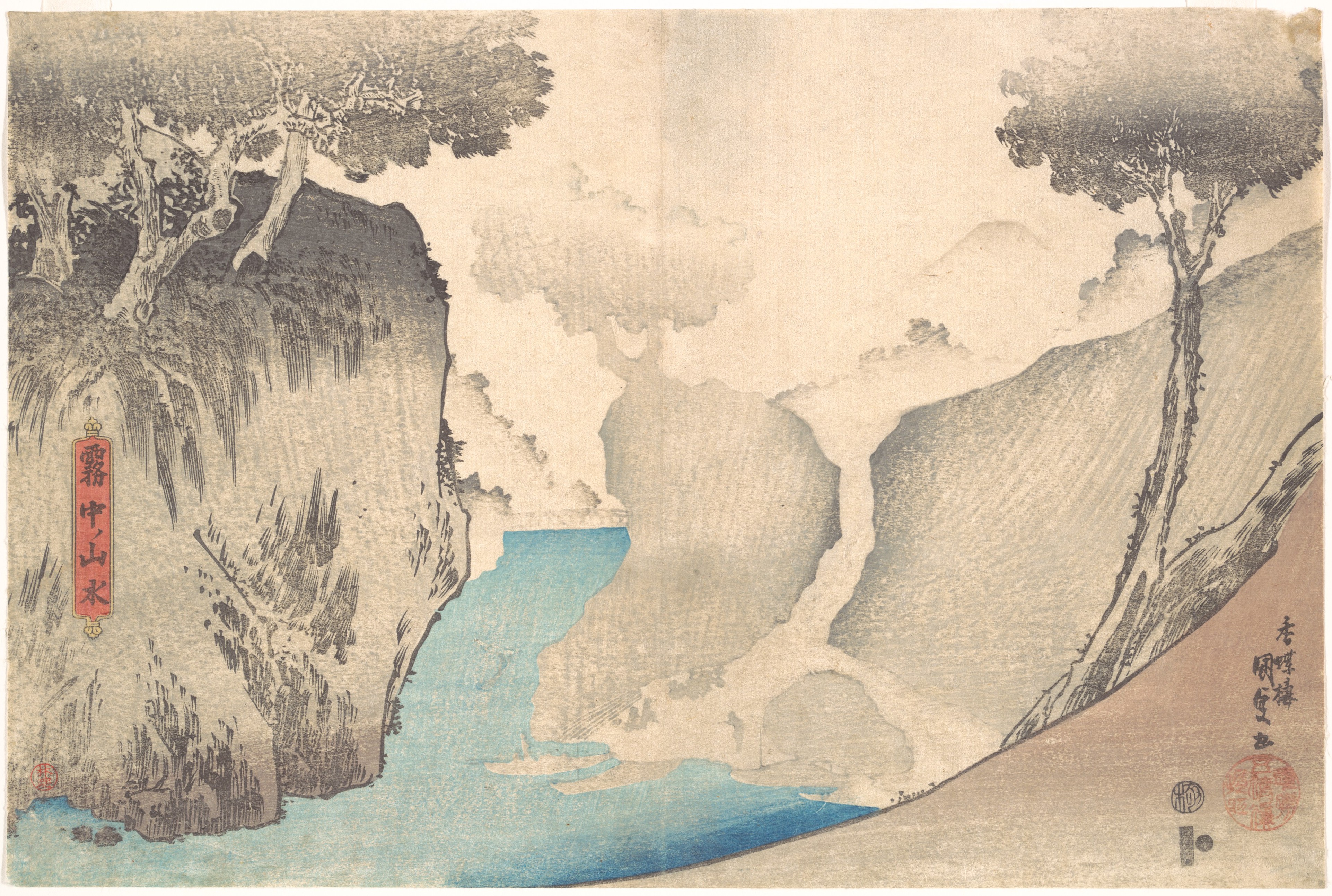
Ochanomizu in the Mist
mid-19th century
Woodblock print; ink and color on paper
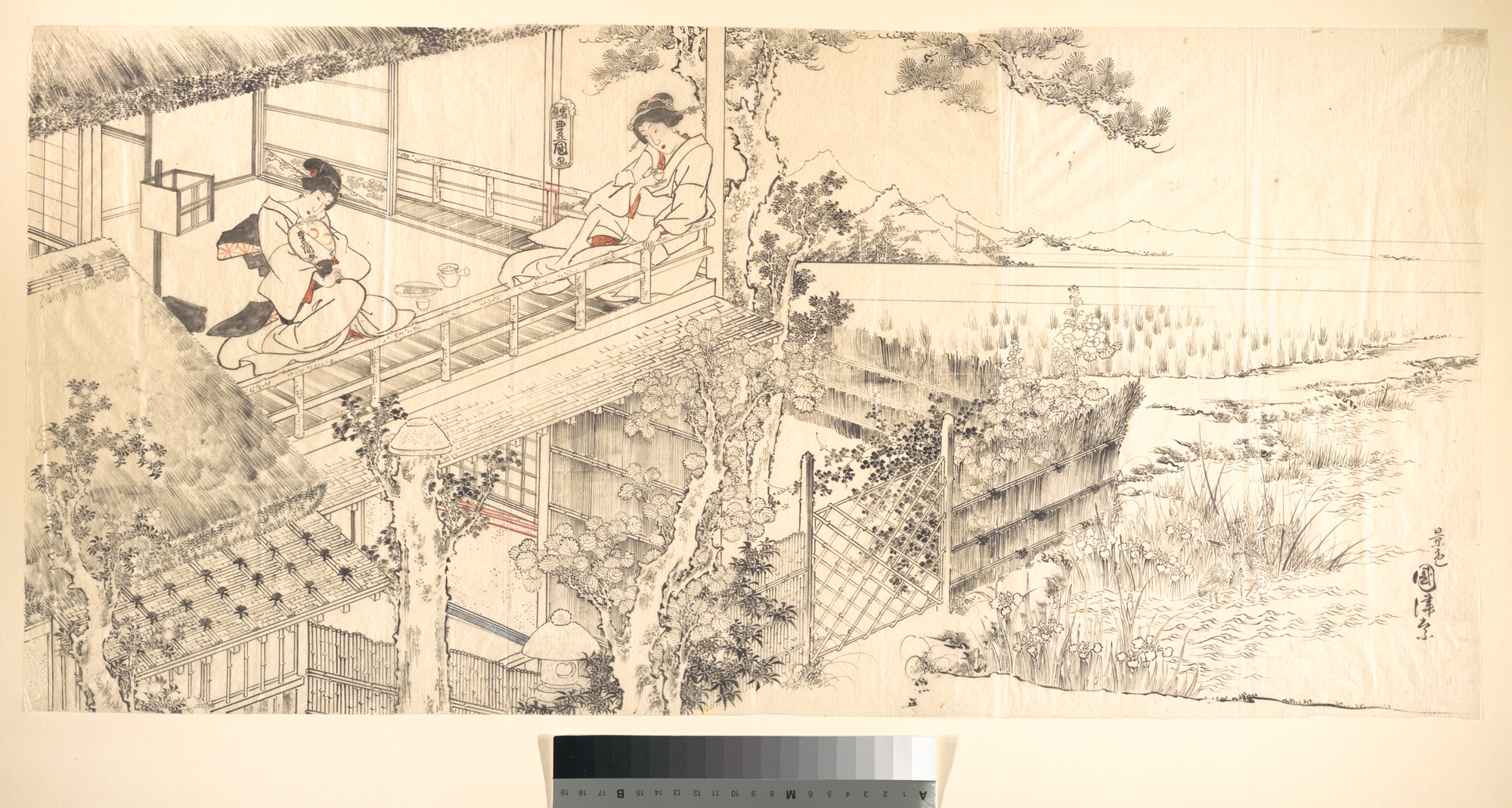
Two Courtesans Enjoying the View from a Teahouse
after 1844
Drawings intended as design for woodblock prints (triptych); ink and color on paper
More Birds & Flowers Prints
Frequently Asked Questions
Begonias of Mount Ashigara (Ashigarayama no shukaido): Bando Hikosaburo V as Yamauba, from the series "Contemporary Versions of Thirty-six Selected Flowers (Tosei mitate sanjurokkasen)" was created by Utagawa Kunisada (歌川国貞) in 1862.
Begonias of Mount Ashigara (Ashigarayama no shukaido): Bando Hikosaburo V as Yamauba, from the series "Contemporary Versions of Thirty-six Selected Flowers (Tosei mitate sanjurokkasen)" depicts birds & flowers.