
Chidori Jewel River, Famous Place of Mutsu Province: Yamatoya Baiga (Mutsu meisho chidori no tamagawa Yamatoya Baiga)
- Date:
- ca. 1832-1833
- Medium:
- Source:
- Victoria and Albert Museum
Description
Chidori Jewel River, Famous Place of Mutsu Province: Yamatoya Baiga (Mutsu meisho chidori no tamagawa Yamatoya Baiga), designed by Utagawa Kunisada in 1832, draws on the long Japanese poetic tradition of the Six Jewel Rivers (Mu Tamagawa) — six waterways scattered across the country and celebrated in classical waka for their pure water and seasonal associations. The Chidori (plover) Tamagawa of Mutsu Province in the far north was particularly associated with the cries of plovers along its banks in winter. Kunisada combines this poetic geography with a portrait of Yamatoya Baiga, a haiku name used by a contemporary cultural figure, blending meisho-e (famous-place pictures) and bijin-ga or portraiture into the kind of allusive, multi-layered design that distinguished his mature work. The 1832 dating places the print in the productive middle of his career, when he was developing the mitate conventions that would dominate his post-1840 series. The Victoria and Albert Museum preserves this impression as O422706. As the leading Edo ukiyo-e designer of his generation, Kunisada specialized in yakusha-e but routinely produced subjects of this kind — refined poetic allusions for the educated urban audience — and the Tamagawa series in particular have been recognized by historians as among his most considered designs outside the kabuki theater. The print rewards readers attentive to the intersection of classical waka, regional geography, and Edo print fashion.
More Prints by Utagawa Kunisada

The actors Ichikawa Danjuro VII as Takamoto no kitsune and Segawa Kikunojo V as Izumi no Chieda-gitsune
1818
Color woodblock print; shikishiban, surimono

Basketry Work: By the Craftsman Ichida Shōshichirō of Naniwa (Kagozaiku Naniwa saikunin Ichida Shōshichirō)
1819
Woodblock print; ink and color on paper
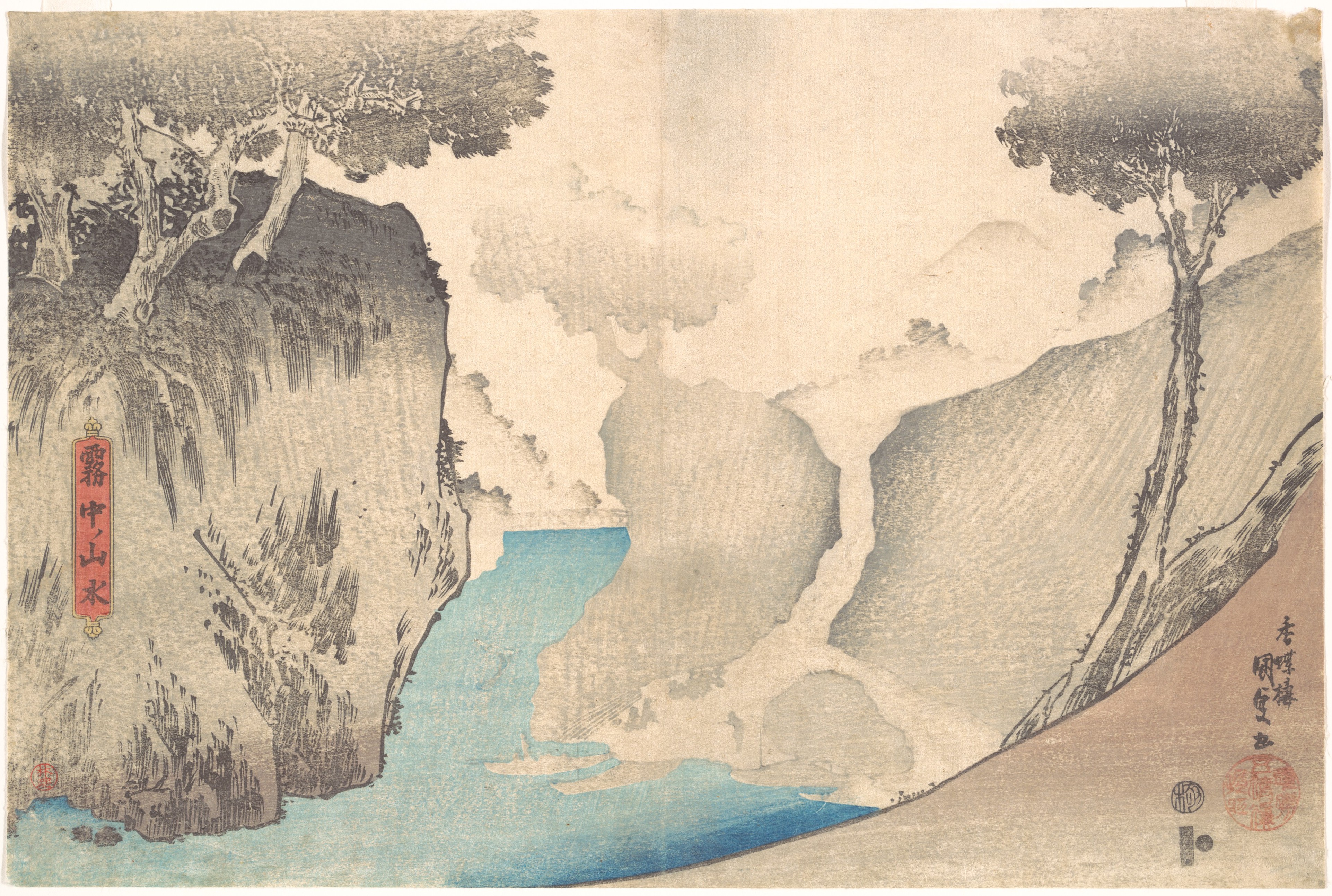
Ochanomizu in the Mist
mid-19th century
Woodblock print; ink and color on paper
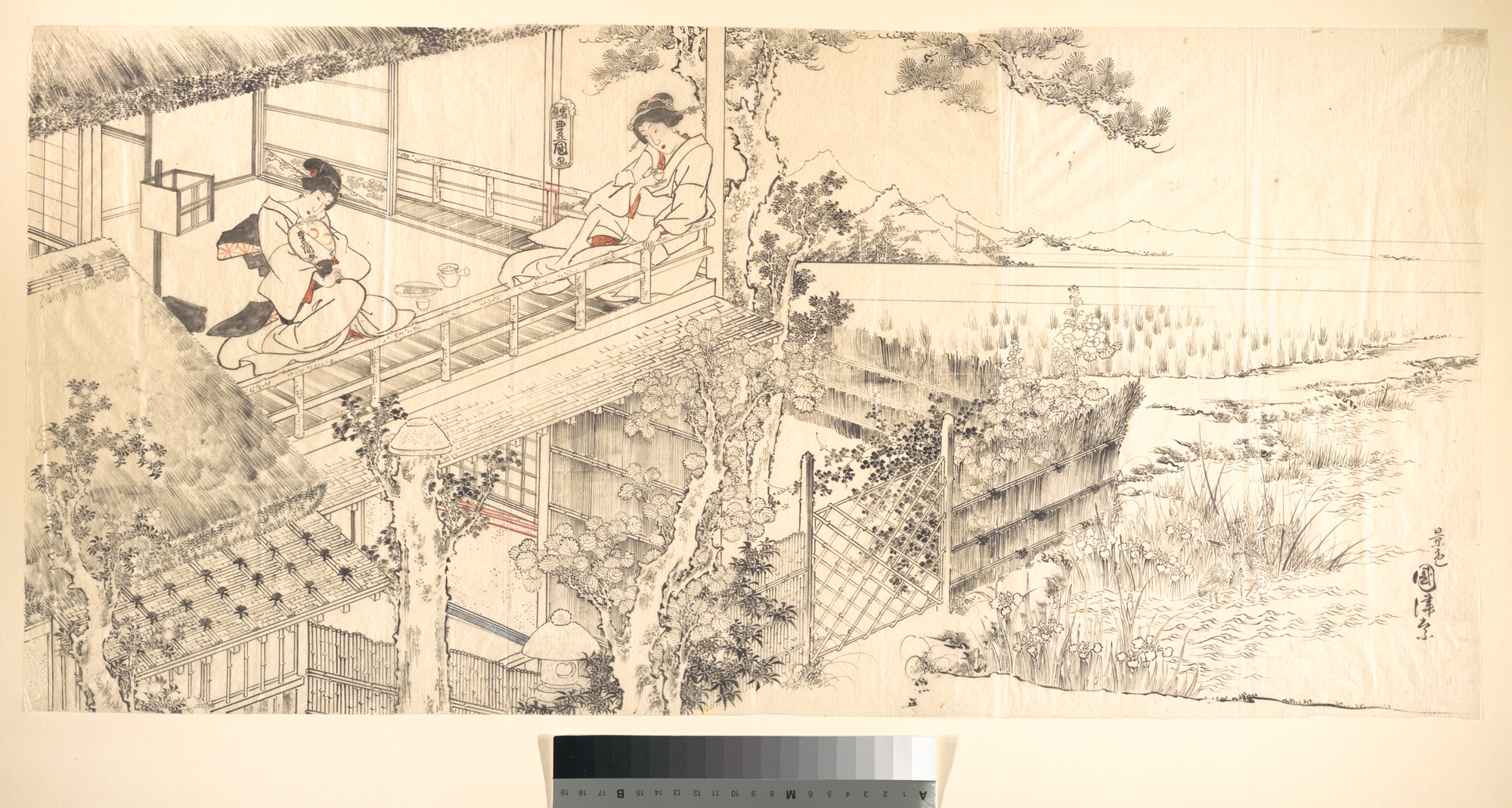
Two Courtesans Enjoying the View from a Teahouse
after 1844
Drawings intended as design for woodblock prints (triptych); ink and color on paper
Frequently Asked Questions
Chidori Jewel River, Famous Place of Mutsu Province: Yamatoya Baiga (Mutsu meisho chidori no tamagawa Yamatoya Baiga) was created by Utagawa Kunisada (歌川国貞) in ca. 1832-1833.