
Chikubu Island in Omi Province, No. 30 on the Saikoku Pilgrimage Route (Saikoku junrei sanjuban Omi Chikubujima), from the series "The Miracles of Kannon (Kannon reigenki)"
- Date:
- 1859
- Medium:
- Color woodblock print; oban
- Source:
- Art Institute of Chicago
Description
In this 1859 print from his series "The Miracles of Kannon (Kannon Reigenki)," Utagawa Kunisada depicts a scene associated with Chikubu Island in Omi Province, the thirtieth stop on the Saikoku pilgrimage route of thirty-three Kannon temples that has structured Japanese religious travel since the medieval period. Although Kunisada was overwhelmingly identified with yakusha-e, he periodically engaged the devotional and topographic genres that anchored much of Edo ukiyo-e print culture. "Kannon Reigenki" combines the visual conventions of the bijinga genre with the iconography of religious miracle tales: each sheet typically pairs an elegant contemporary female figure in the foreground with an inset cartouche or background vignette depicting a specific Kannon site and its associated legend. For Chikubu Island, a small landmass in Lake Biwa famed for its Hogon-ji temple and its waters, the inset rehearses the local tradition of Kannon's intercession, while the foreground beauty mediates between the viewer and the sacred geography of Omi. The print thus participates in the wider Edo cultural phenomenon of pilgrimage-as-tourism, in which Edo ukiyo-e prints functioned both as devotional aids and as substitutes for the journeys themselves. Kunisada's compositional decisions, the strong vertical of the figure, the lake horizon in the inset, the brocade-style cartouche framing, are all hallmarks of his late style. The Art Institute of Chicago holds this impression as part of its broad coverage of Kunisada's serial production, where it documents the artist's engagement with Buddhist subjects beyond the kabuki stage.
More Prints by Utagawa Kunisada

The actors Ichikawa Danjuro VII as Takamoto no kitsune and Segawa Kikunojo V as Izumi no Chieda-gitsune
1818
Color woodblock print; shikishiban, surimono

Basketry Work: By the Craftsman Ichida Shōshichirō of Naniwa (Kagozaiku Naniwa saikunin Ichida Shōshichirō)
1819
Woodblock print; ink and color on paper
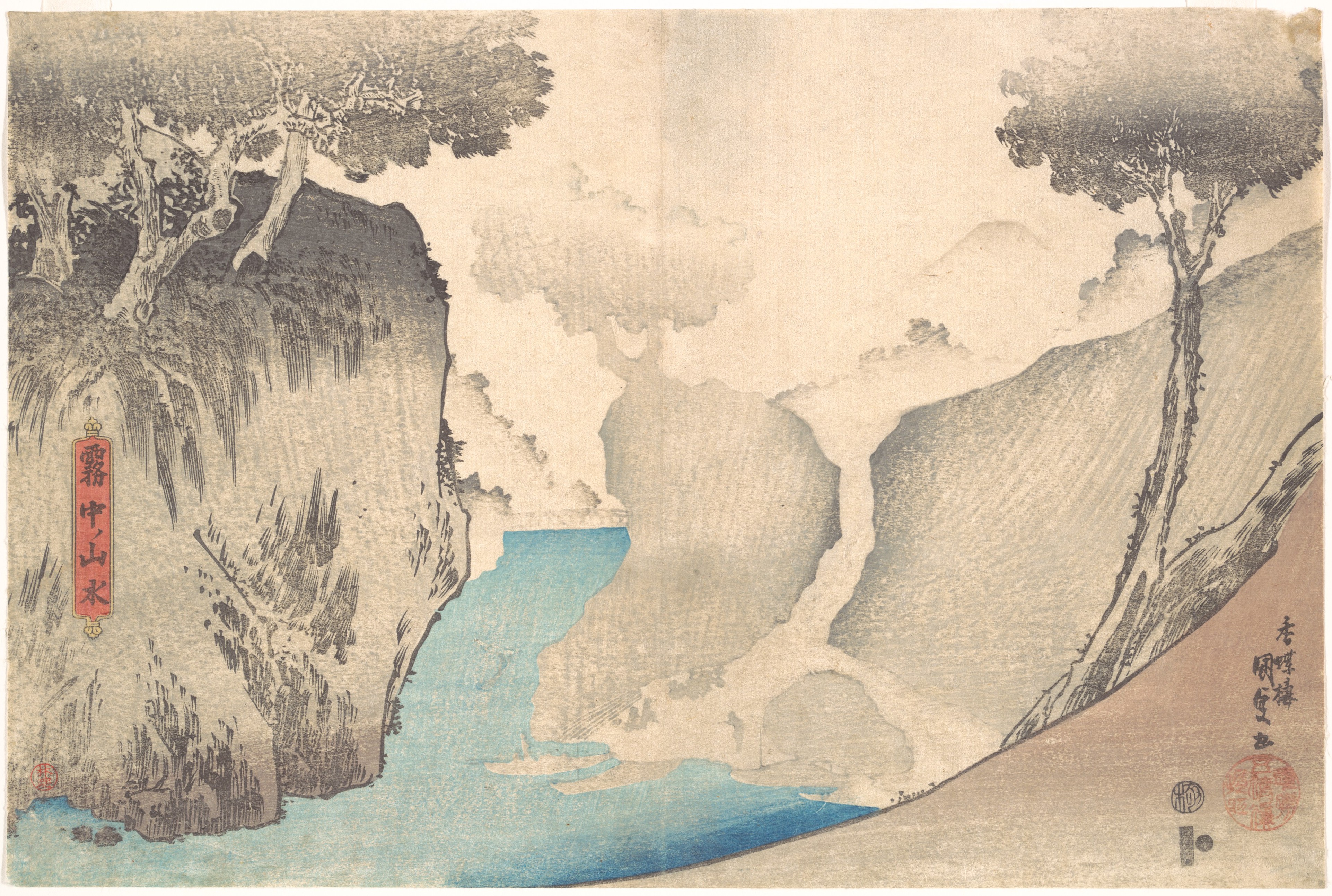
Ochanomizu in the Mist
mid-19th century
Woodblock print; ink and color on paper
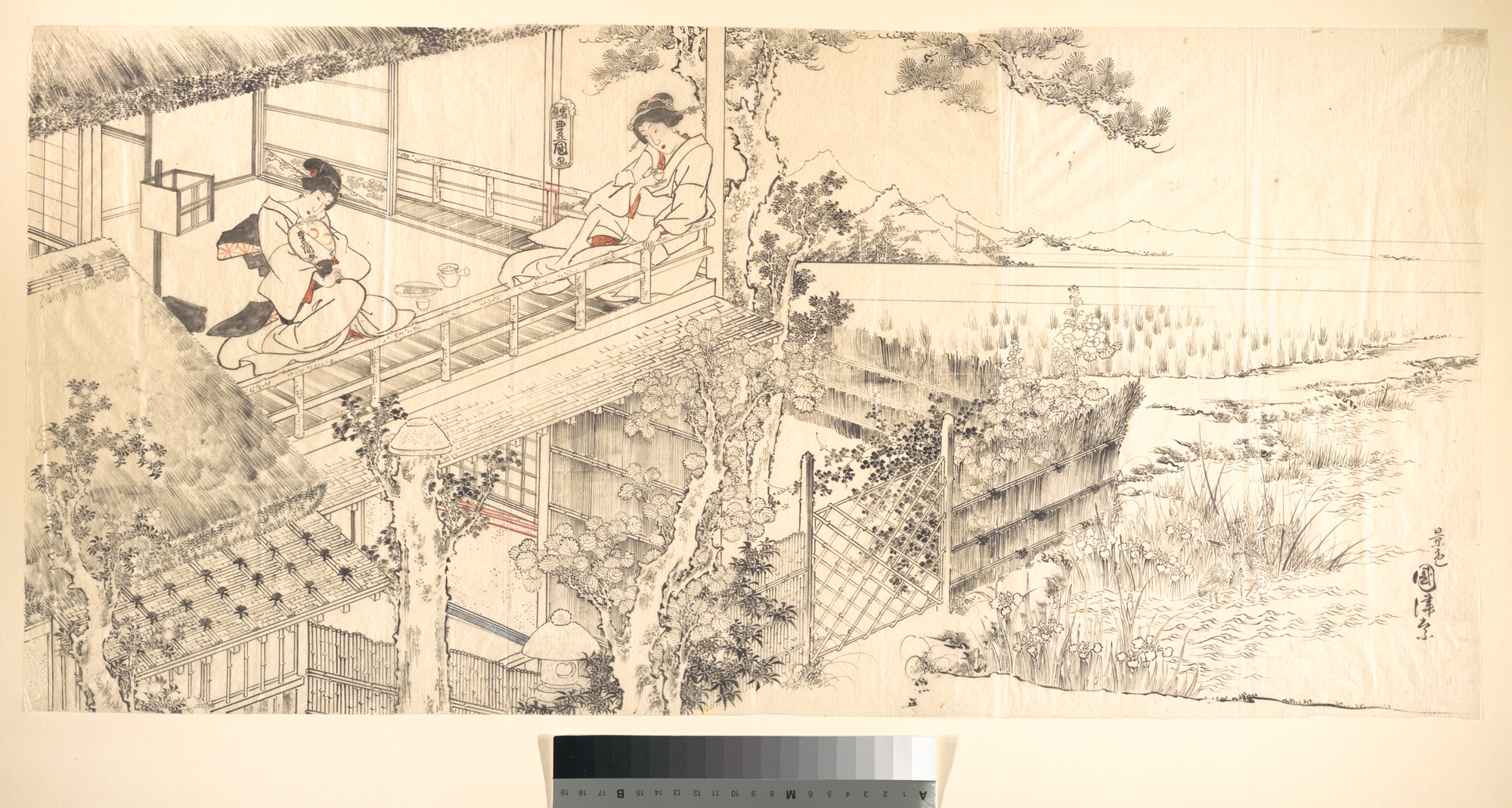
Two Courtesans Enjoying the View from a Teahouse
after 1844
Drawings intended as design for woodblock prints (triptych); ink and color on paper
Frequently Asked Questions
Chikubu Island in Omi Province, No. 30 on the Saikoku Pilgrimage Route (Saikoku junrei sanjuban Omi Chikubujima), from the series "The Miracles of Kannon (Kannon reigenki)" was created by Utagawa Kunisada (歌川国貞) in 1859.