
Crouching tiger
- Date:
- 1830
- Medium:
- Color woodblock print; shikishiban, surimono
- Source:
- Art Institute of Chicago
Description
"Crouching Tiger," dated 1830 in the Art Institute of Chicago's record (artwork 23473), is an unusual subject within Utagawa Kunisada's documented output, more often associated with his teacher Toyokuni I's lineage than with the stage-focused work that defined Kunisada's career. Tigers were not native to Japan, and Edo painters and printmakers worked from imported Chinese models and from kabuki-derived role iconography; designers absorbed the animal into the standard Sino-Japanese vocabulary of ferocity, courage, and exorcism. As a single-sheet design, a crouching tiger could function as a New Year auspicious image, a kabuki-related reference (the tiger appears in roles such as Watōnai in "The Battles of Coxinga"), or a samurai-tied decorative subject. By 1830, the elder Kunisada was confident across multiple genres and able to issue such designs alongside his core yakusha-e. The Art Institute's impression preserves the sheet within its broader Kunisada holdings. The print illustrates how the Utagawa school's leading figure could move beyond actor portraits and bijin-ga to participate in the broader visual currency of Edo ukiyo-e - including subjects whose iconography traveled across painting, print, and stage.
More Prints by Utagawa Kunisada

The actors Ichikawa Danjuro VII as Takamoto no kitsune and Segawa Kikunojo V as Izumi no Chieda-gitsune
1818
Color woodblock print; shikishiban, surimono

Basketry Work: By the Craftsman Ichida Shōshichirō of Naniwa (Kagozaiku Naniwa saikunin Ichida Shōshichirō)
1819
Woodblock print; ink and color on paper
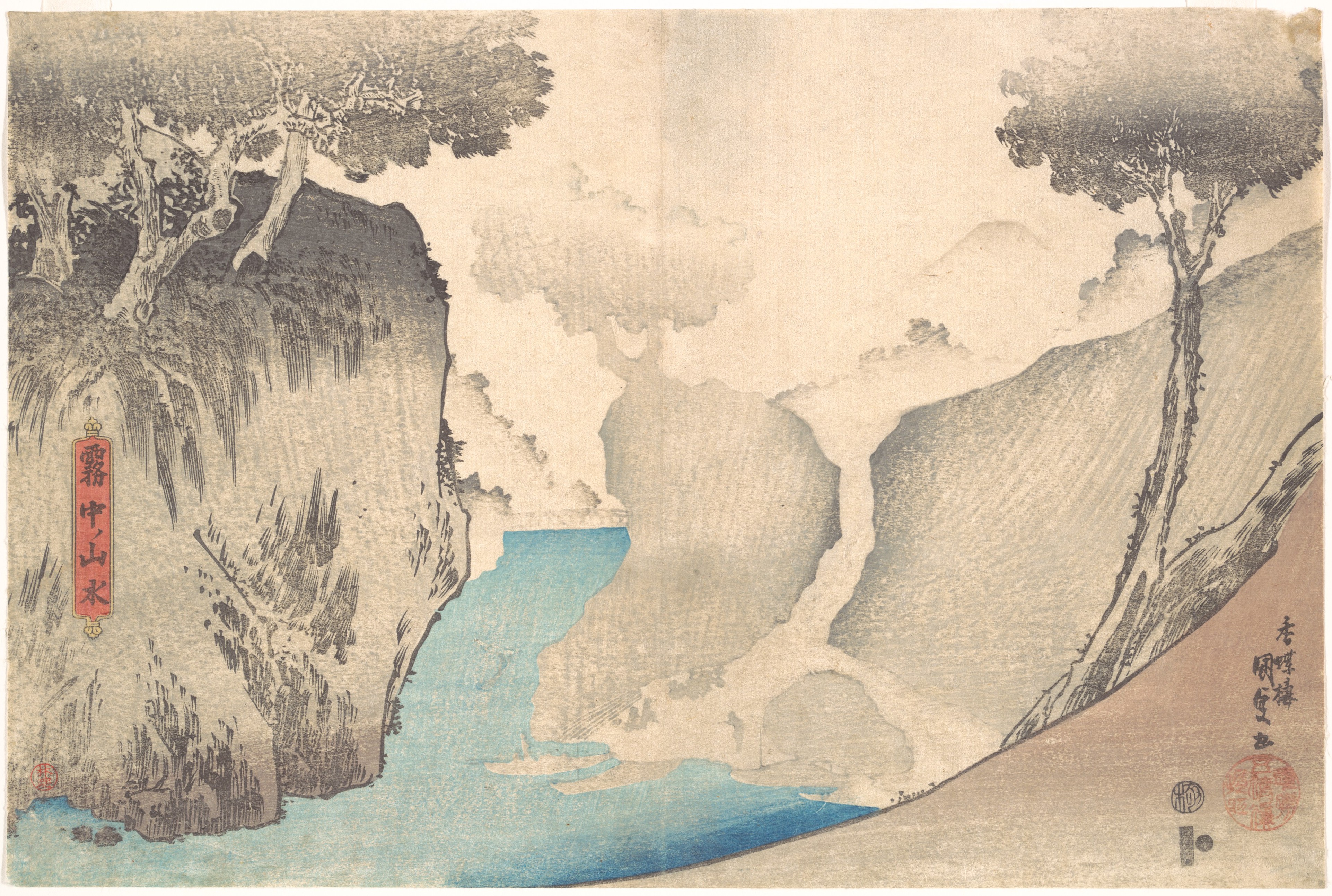
Ochanomizu in the Mist
mid-19th century
Woodblock print; ink and color on paper
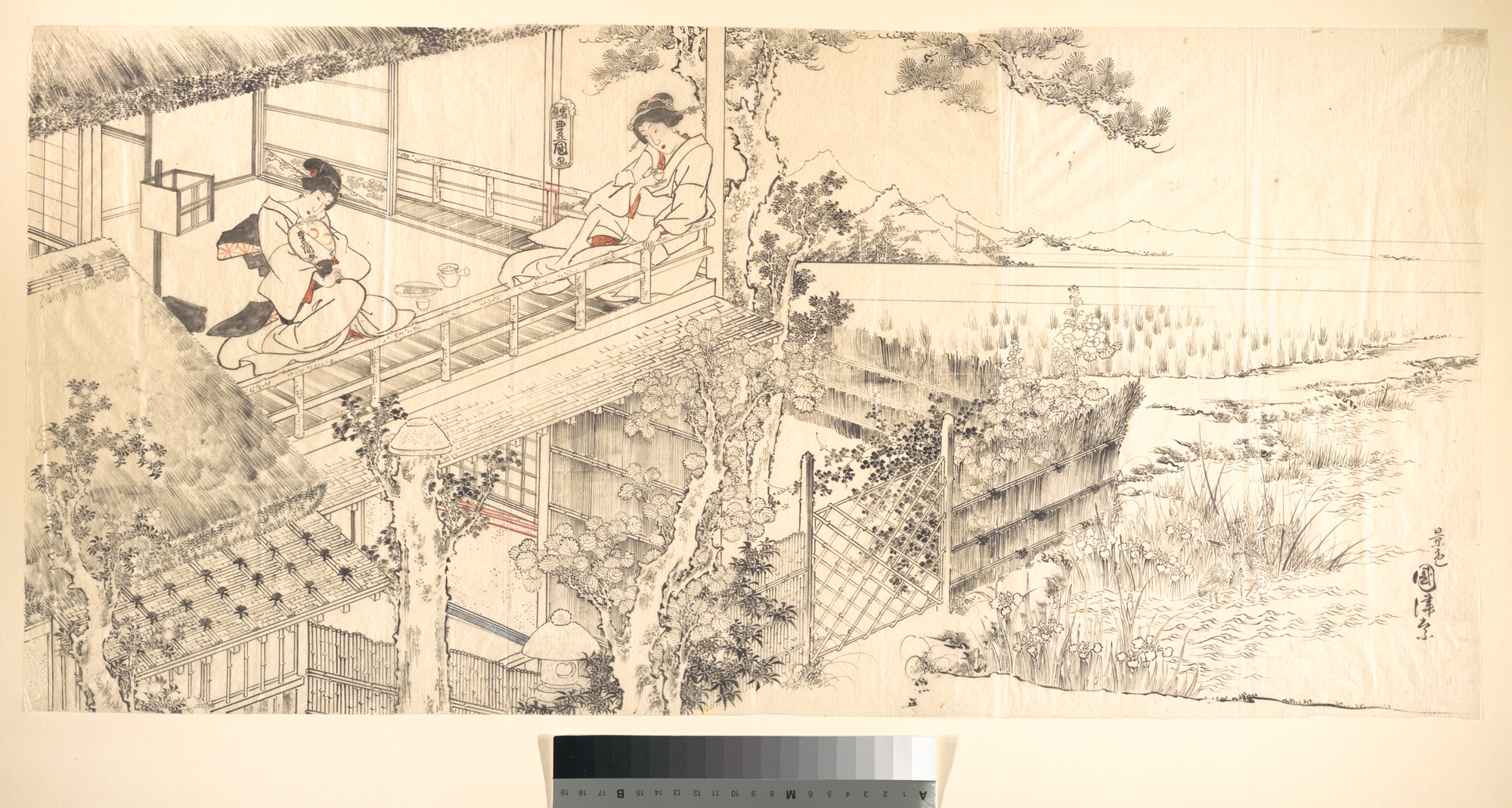
Two Courtesans Enjoying the View from a Teahouse
after 1844
Drawings intended as design for woodblock prints (triptych); ink and color on paper
Frequently Asked Questions
Crouching tiger was created by Utagawa Kunisada (歌川国貞) in 1830.