
(Edo meisho) hyakunin bijo (One Hundred Beautiful Women at Famous Places in Edo)
- Source:
- ukiyo-e.org
Description
One Hundred Beautiful Women at Famous Places in Edo (Edo meisho hyakunin bijo) is an undated woodblock print by Utagawa Kunisada from a bijin-ga series mapping a hundred celebrated women onto a hundred famous sites in the city of Edo. The meisho — 'famous place' — genre had been a staple of Edo ukiyo-e since the eighteenth century, and pairing each location with a contemporary beauty was the kind of structural conceit Kunisada exploited repeatedly across his career. The format typically places a half- or three-quarter-length female figure on the main picture plane while a smaller landscape cartouche identifies the meisho, allowing the print to function simultaneously as a fashion plate, a guide to the city and a discreet conduit for yakusha-e likenesses, since Edo audiences read kabuki onnagata into many idealised women. The figural type here is Kunisada's mature bijin: a long oval face, narrow eyes set high, a calligraphic mouth and an elongated body whose proportions are exaggerated for the tall print format. Costume is the principal pictorial event, with the woodblock printer's skill in overprinting and bokashi gradations giving substance to the patterned silks. The print survives through ukiyo-e.org's aggregation of British Museum holdings — the impression is recorded under the British Museum's collection — and the series belongs to the prolific catalogue of bijin-ga Kunisada designed from the 1830s through the 1850s, when the meisho framework gave his commercial bijin work a steady structural backbone.
More Prints by Utagawa Kunisada

The actors Ichikawa Danjuro VII as Takamoto no kitsune and Segawa Kikunojo V as Izumi no Chieda-gitsune
1818
Color woodblock print; shikishiban, surimono

Basketry Work: By the Craftsman Ichida Shōshichirō of Naniwa (Kagozaiku Naniwa saikunin Ichida Shōshichirō)
1819
Woodblock print; ink and color on paper
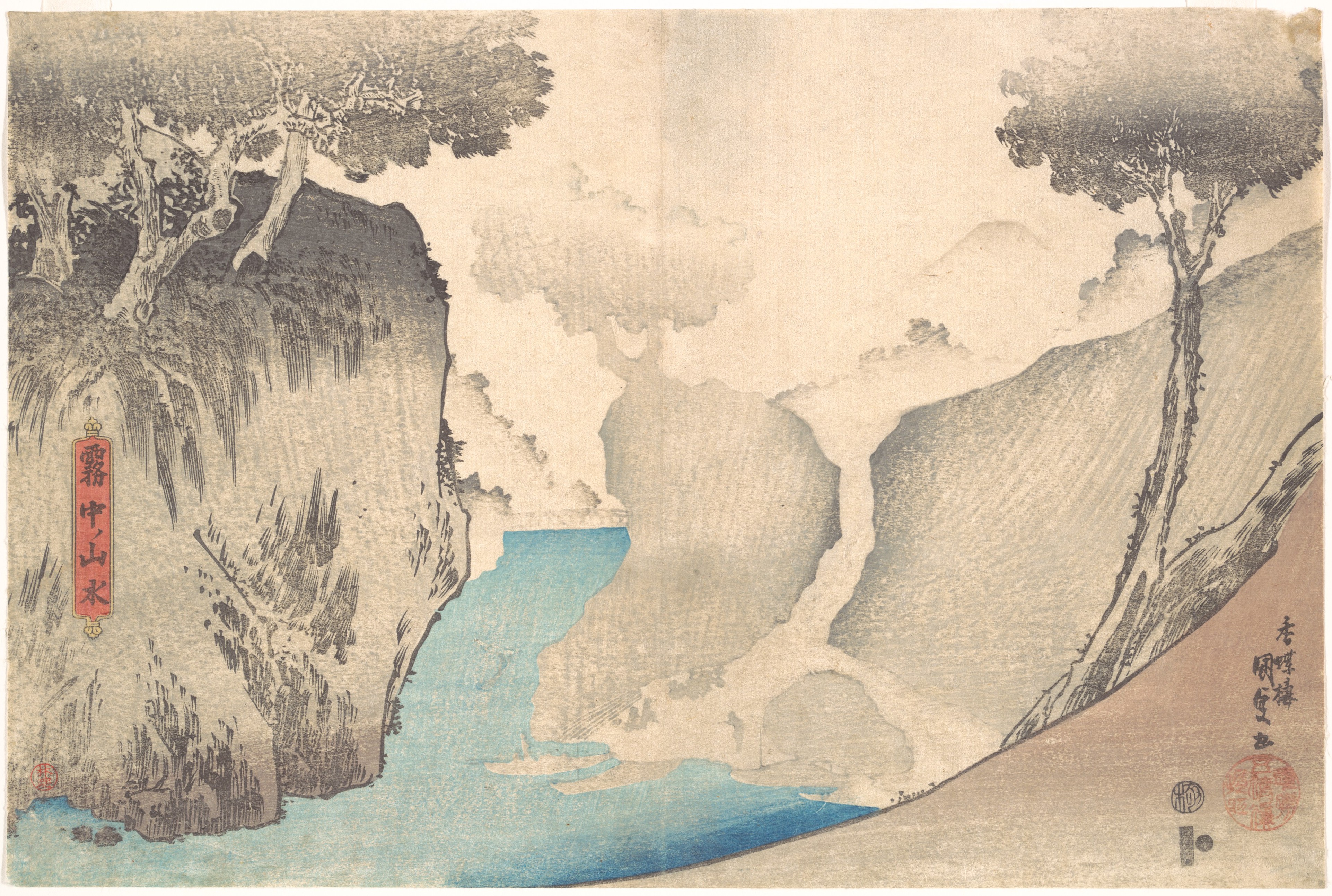
Ochanomizu in the Mist
mid-19th century
Woodblock print; ink and color on paper
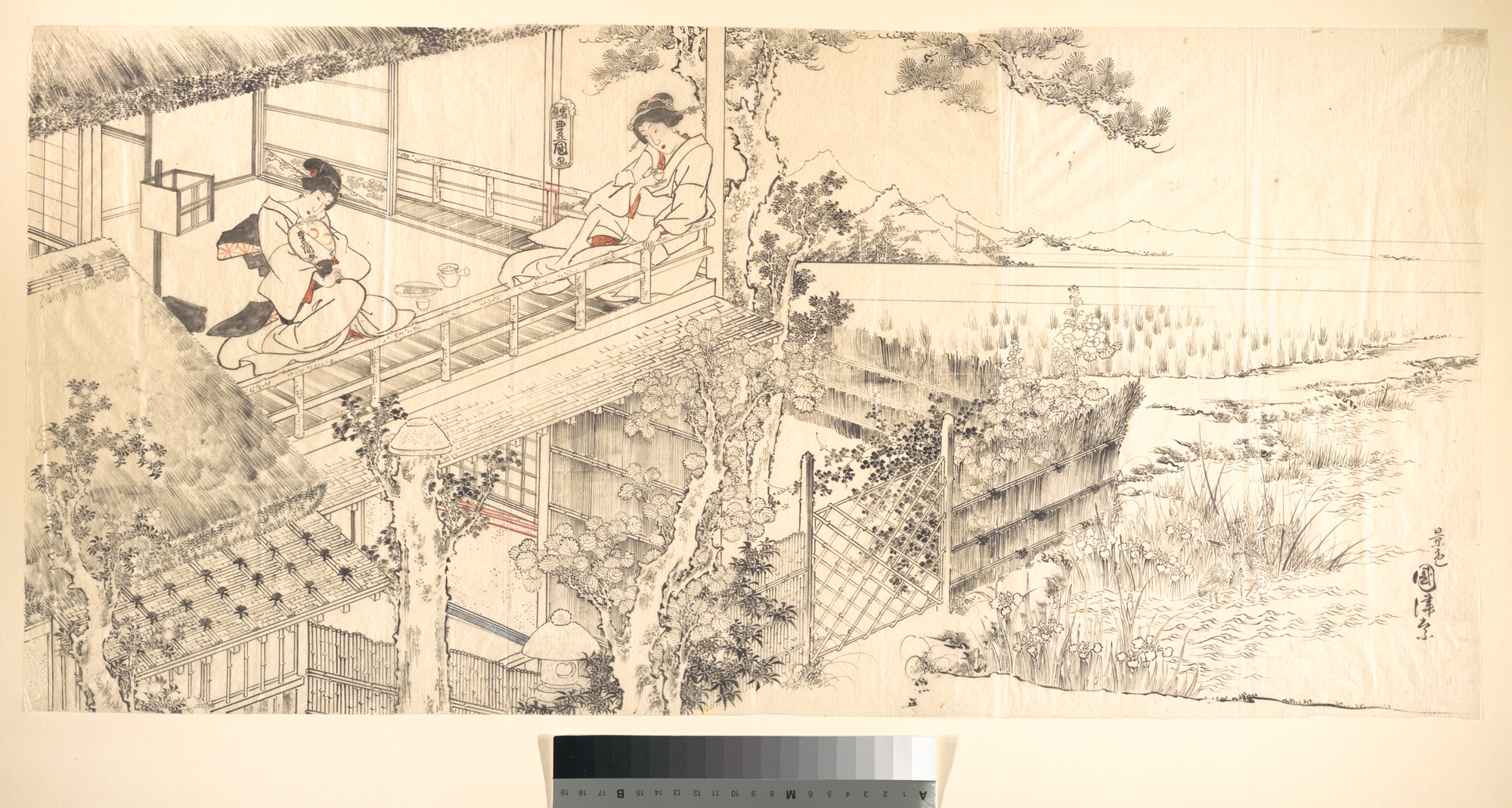
Two Courtesans Enjoying the View from a Teahouse
after 1844
Drawings intended as design for woodblock prints (triptych); ink and color on paper
Frequently Asked Questions
(Edo meisho) hyakunin bijo (One Hundred Beautiful Women at Famous Places in Edo) was created by Utagawa Kunisada (歌川国貞).