
Fifty-Three Stations of the Tōkaidō: Inspired by Famous Pictures
- Date:
- 1864
- Medium:
- Woodblock print; ink and color on paper
- Source:
- Metropolitan Museum of Art
Description
Fifty-Three Stations of the Tokaido: Inspired by Famous Pictures, dating from 1864 and now in the Metropolitan Museum of Art, is a late Edo ukiyo-e collaboration in which Utagawa Kunisada contributed actor figures to a landscape format made famous by Utagawa Hiroshige. The Tokaido road, with its fifty-three post stations between Edo and Kyoto, had become a totemic subject of Japanese woodblock printing after Hiroshige's 1833-34 Hoeido edition. By the time of this 1864 series, Kunisada - working as Toyokuni III - lent his characteristic yakusha-e style to a hybrid format that paired kabuki actor portraits with topographical insets recalling earlier famous-pictures (meisho-e) sources. The combination flattered both the celebrity-driven Edo theater market and the print buyer's appetite for travel imagery. Kunisada's actor figures dominate the foreground, dressed in patterned robes and shown half- or three-quarter length, while a cartouche above frames the landscape view of the station in a deliberate echo of Hiroshige. The 1864 date places the series in the late Bunkyu and early Genji eras, when aniline-influenced reds and purples were entering the palette and Edo publishers were assembling ambitious multi-sheet sets as the market for woodblock prints reached its commercial peak. The Met's impression demonstrates the technical confidence of late Utagawa-school block-cutters, with crisp key-block lines around the actors and looser, atmospheric color in the landscape inset. The set is a useful index of how Kunisada absorbed and repurposed his contemporaries' best-known subjects.
More Prints by Utagawa Kunisada

The actors Ichikawa Danjuro VII as Takamoto no kitsune and Segawa Kikunojo V as Izumi no Chieda-gitsune
1818
Color woodblock print; shikishiban, surimono

Basketry Work: By the Craftsman Ichida Shōshichirō of Naniwa (Kagozaiku Naniwa saikunin Ichida Shōshichirō)
1819
Woodblock print; ink and color on paper
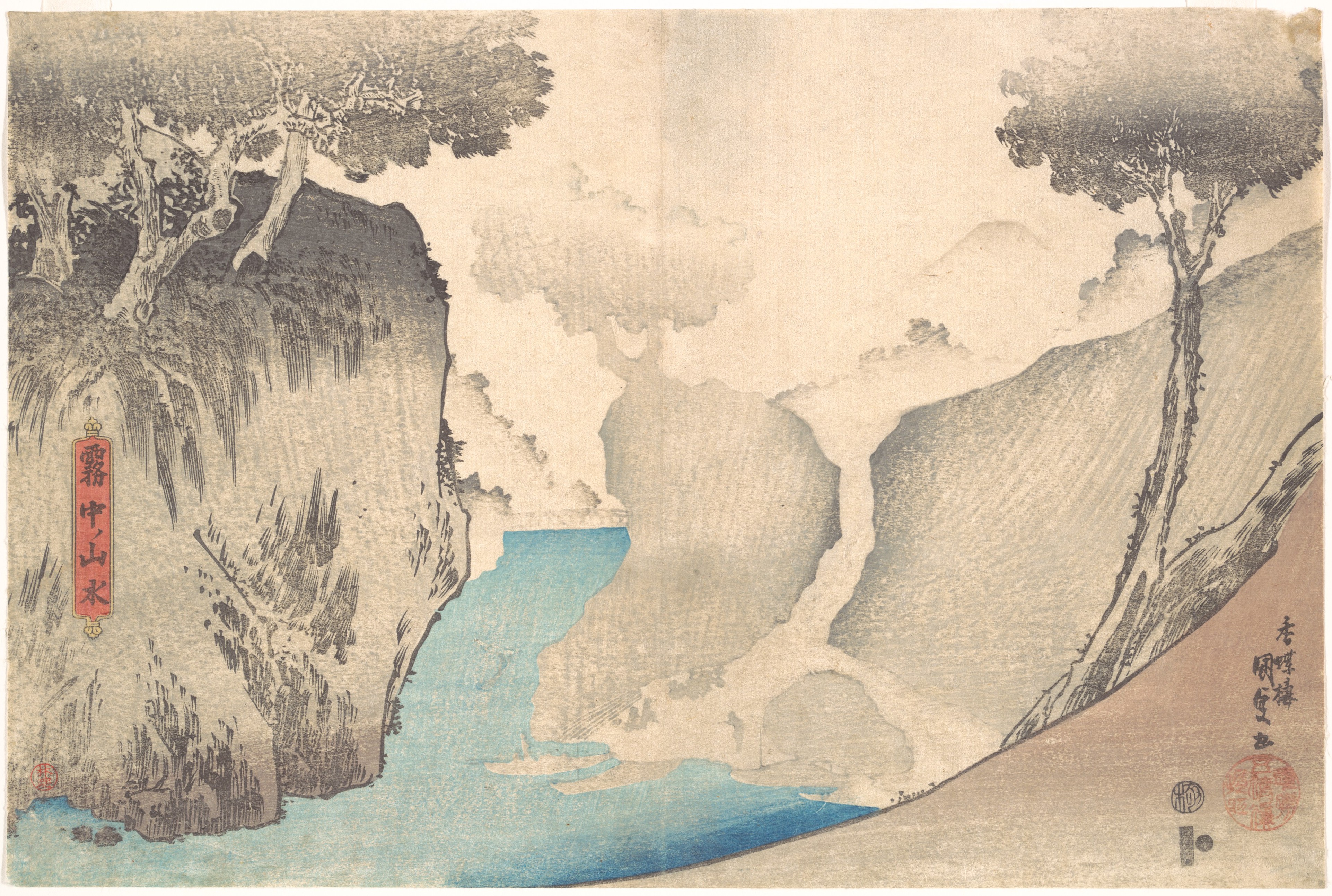
Ochanomizu in the Mist
mid-19th century
Woodblock print; ink and color on paper
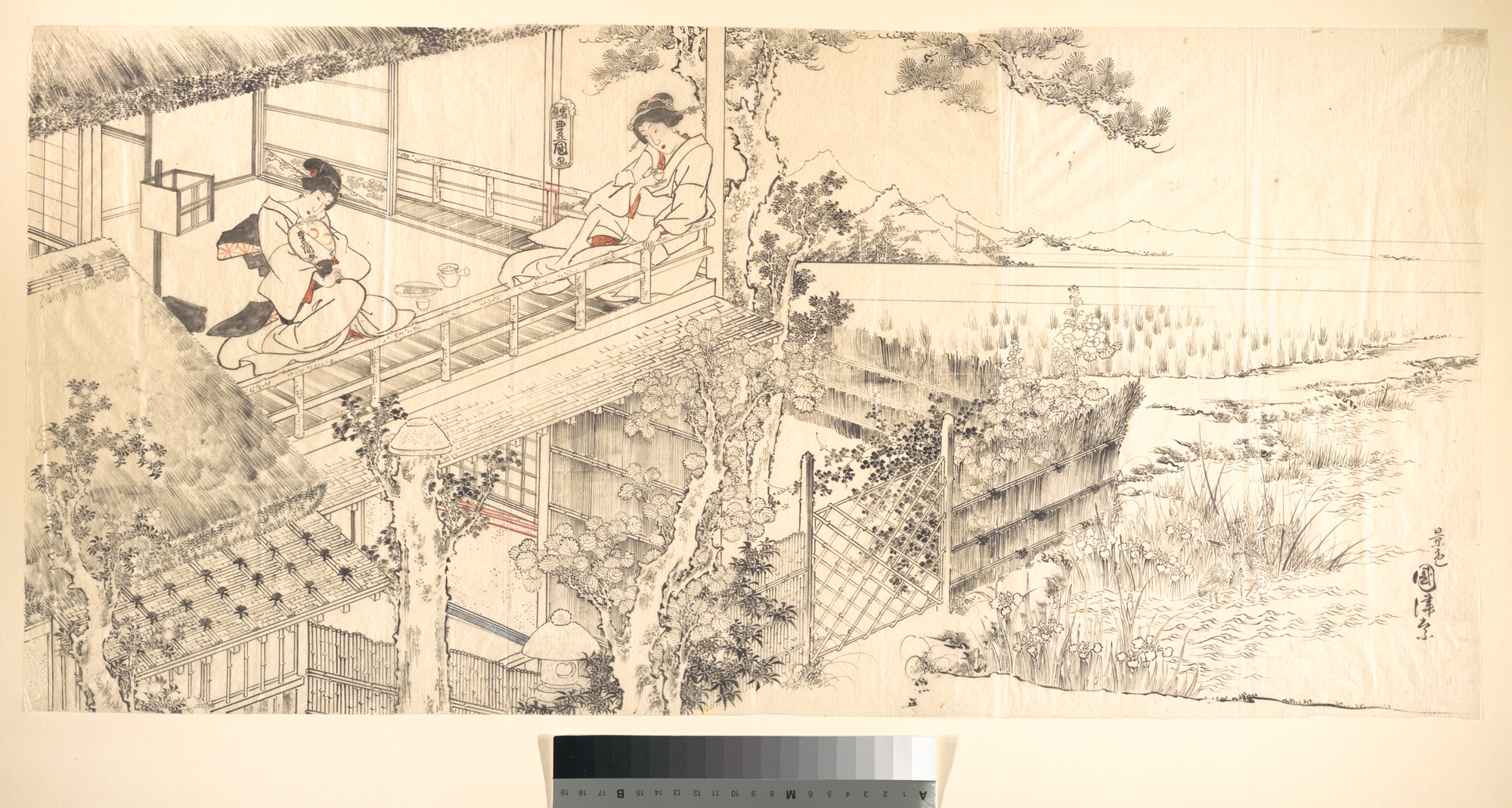
Two Courtesans Enjoying the View from a Teahouse
after 1844
Drawings intended as design for woodblock prints (triptych); ink and color on paper
Frequently Asked Questions
Fifty-Three Stations of the Tōkaidō: Inspired by Famous Pictures was created by Utagawa Kunisada (歌川国貞) in 1864.