
Genji shohikubai no uchi: Ume.
- Date:
- ca. 1848
- Medium:
- Source:
- Victoria and Albert Museum
Description
Genji shohikubai no uchi: Ume, designed in 1848 by Utagawa Kunisada and held at the Victoria and Albert Museum, belongs to the artist's long engagement with the inaka Genji genre of Edo ukiyo-e. The title refers to a Genji series organized around the auspicious triad of pine (sho), bamboo (chiku), and plum (bai), with this sheet representing ume, the plum. Kunisada's Genji prints feed off the runaway success of Ryutei Tanehiko's serialized novel Nise Murasaki inaka Genji, which had been published from 1829 to 1842 with Kunisada himself as its principal illustrator, before being suppressed under the Tempo Reforms. The print's central figure - typically the Edo-period Genji surrogate Mitsuuji - is set against a flowering plum tree, the first blossom of the new year and an allusion to literary refinement. The composition uses Kunisada's mature bijinga formula: elongated face, narrow eyes, small red lower lip, and a robe whose pattern is intensified by careful block alignment. The plum branch and the seasonal framing carry the courtly atmosphere of the Heian source, while the figure's costume and coiffure place him squarely in the contemporary Edo aesthetic of the Koka era. The 1848 dating, just as the inaka Genji craze was experiencing a quiet revival after the Reforms, indicates that publishers were testing how far they could reanimate the property. The Victoria and Albert Museum's impression preserves the soft pastel coloration typical of Kunisada's late-1840s Genji prints and the polished printing of Edo polychrome blockwork.
More Prints by Utagawa Kunisada

The actors Ichikawa Danjuro VII as Takamoto no kitsune and Segawa Kikunojo V as Izumi no Chieda-gitsune
1818
Color woodblock print; shikishiban, surimono

Basketry Work: By the Craftsman Ichida Shōshichirō of Naniwa (Kagozaiku Naniwa saikunin Ichida Shōshichirō)
1819
Woodblock print; ink and color on paper
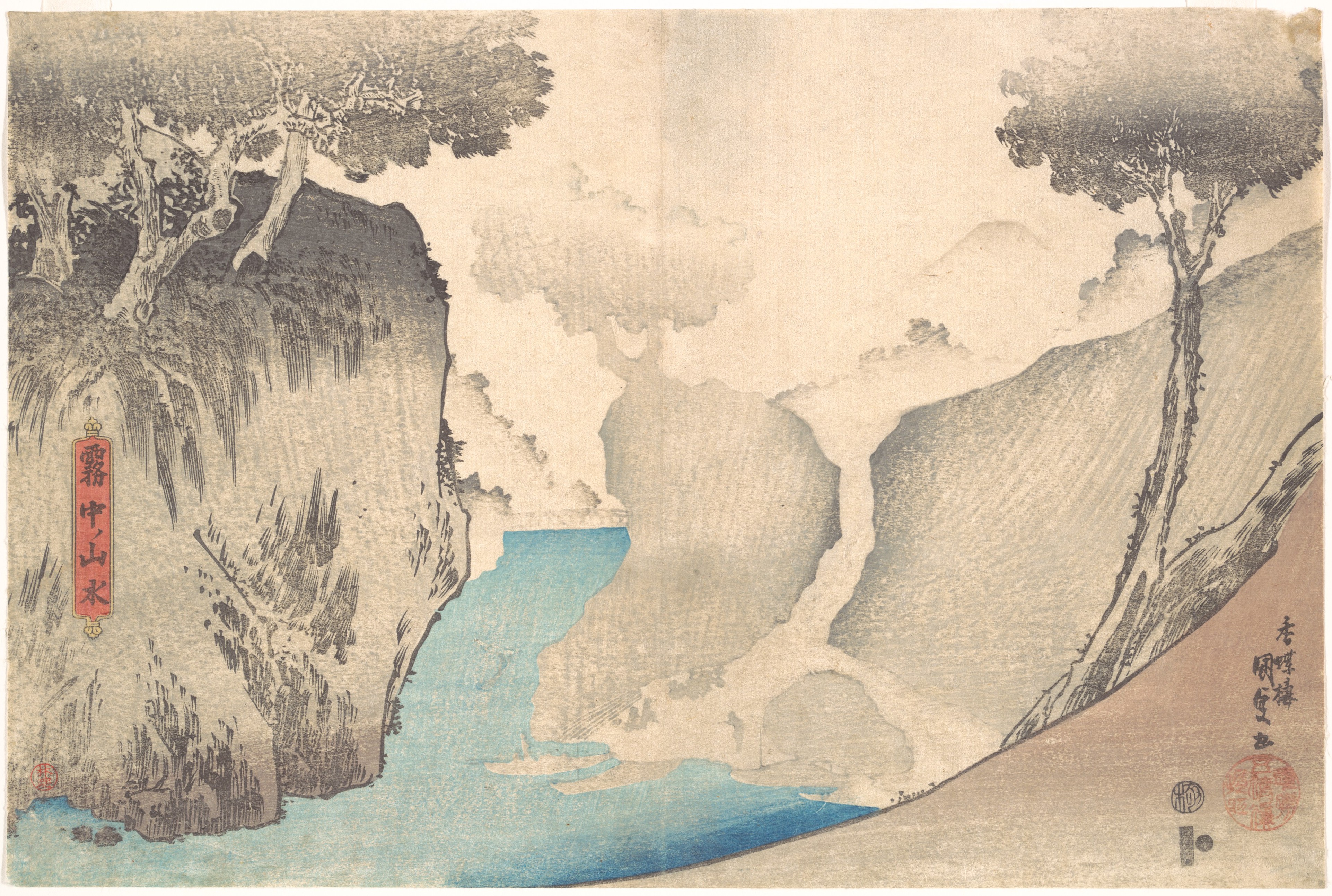
Ochanomizu in the Mist
mid-19th century
Woodblock print; ink and color on paper
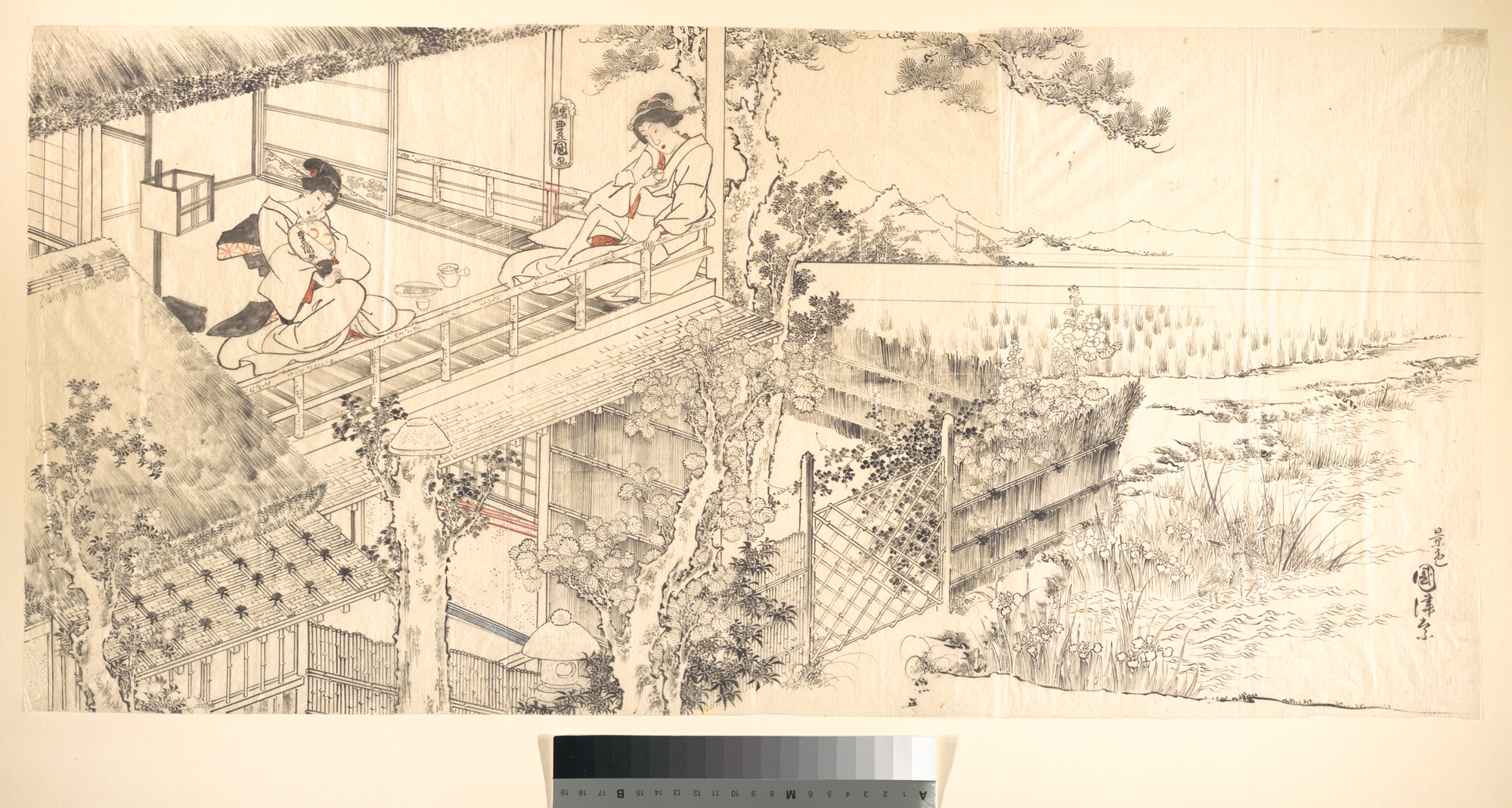
Two Courtesans Enjoying the View from a Teahouse
after 1844
Drawings intended as design for woodblock prints (triptych); ink and color on paper
Frequently Asked Questions
Genji shohikubai no uchi: Ume. was created by Utagawa Kunisada (歌川国貞) in ca. 1848.