
Getsuskkwa
- Date:
- ca. 1848
- Medium:
- Source:
- Victoria and Albert Museum
Description
Getsuskkwa, dated 1848 in the Victoria and Albert Museum's catalogue, is an Edo ukiyo-e by Utagawa Kunisada whose title appears in a transliteration suggesting Getsu setsu ka, the conventional Japanese phrase for moon, snow, and flower - the three traditional seasonal motifs that organized poetic and pictorial sets throughout East Asian art. Kunisada turned to this triad several times across his career, producing series in which a moon scene, a snow scene, and a flower scene each carried a corresponding figure - typically a bijin, a courtesan, or an actor - thematically linked to the season. The 1848 dating places the print in the Koka era, when the post-reform recovery had restored the lucrative bijinga and yakusha-e markets and Kunisada, as Toyokuni III, was issuing large numbers of multi-sheet sets in collaboration with the city's leading publishers. The composition would conventionally show a single figure with a seasonal cartouche above, the patterned kimono and accessories selected to evoke moon, snow, or flower. The figural style is the mature Kunisada manner: elongated face, downcast or slightly turned head, narrow eyes, small red mouth. The V&A's holding offers a representative example of how the moon-snow-flower triad became a marketable structural device in late Edo ukiyo-e, allowing publishers to commission related sheets that buyers could collect together. Even with its title slightly garbled by transliteration, the sheet sits comfortably within Kunisada's well-documented seasonal-set production of the late 1840s.
More Prints by Utagawa Kunisada

The actors Ichikawa Danjuro VII as Takamoto no kitsune and Segawa Kikunojo V as Izumi no Chieda-gitsune
1818
Color woodblock print; shikishiban, surimono

Basketry Work: By the Craftsman Ichida Shōshichirō of Naniwa (Kagozaiku Naniwa saikunin Ichida Shōshichirō)
1819
Woodblock print; ink and color on paper
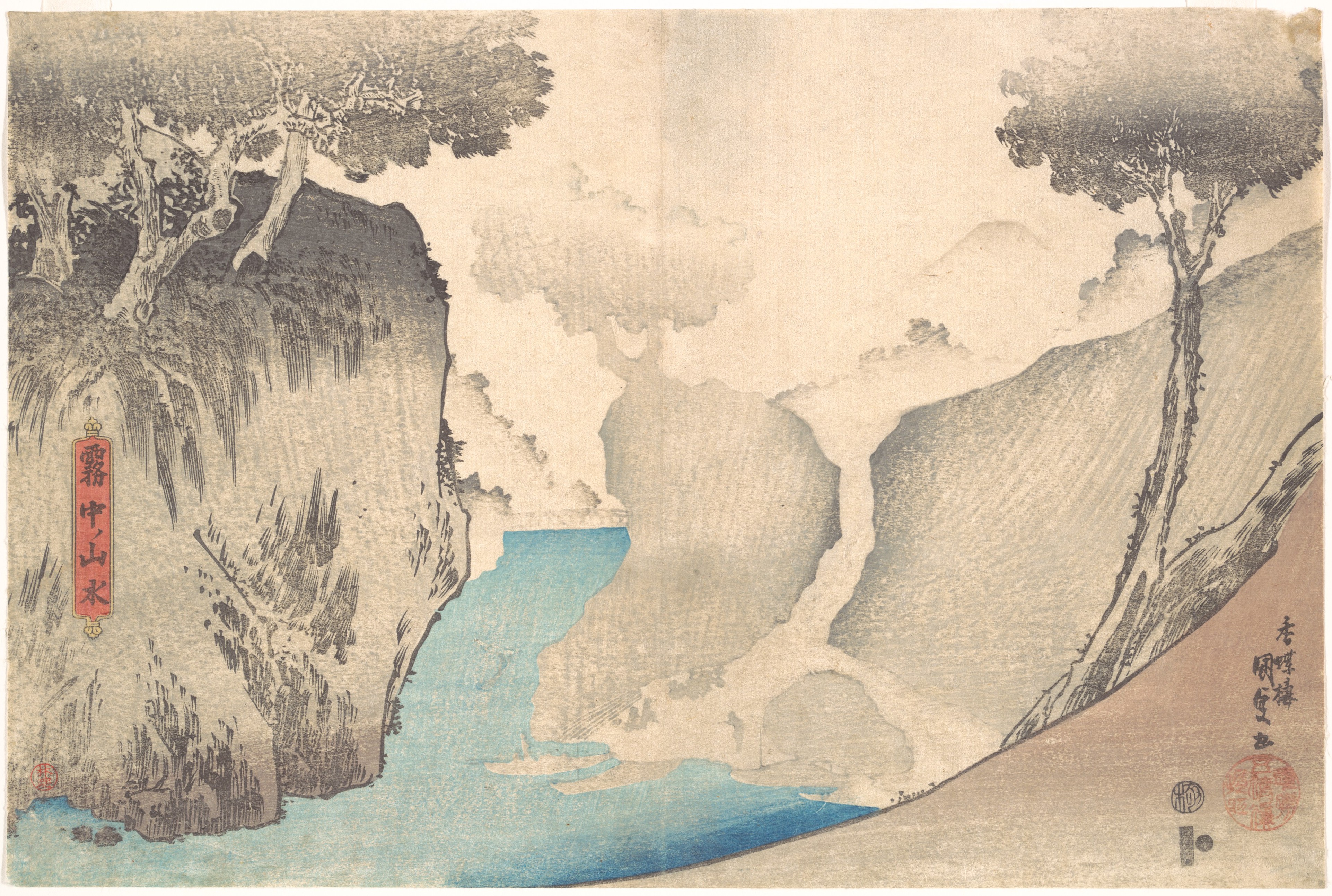
Ochanomizu in the Mist
mid-19th century
Woodblock print; ink and color on paper
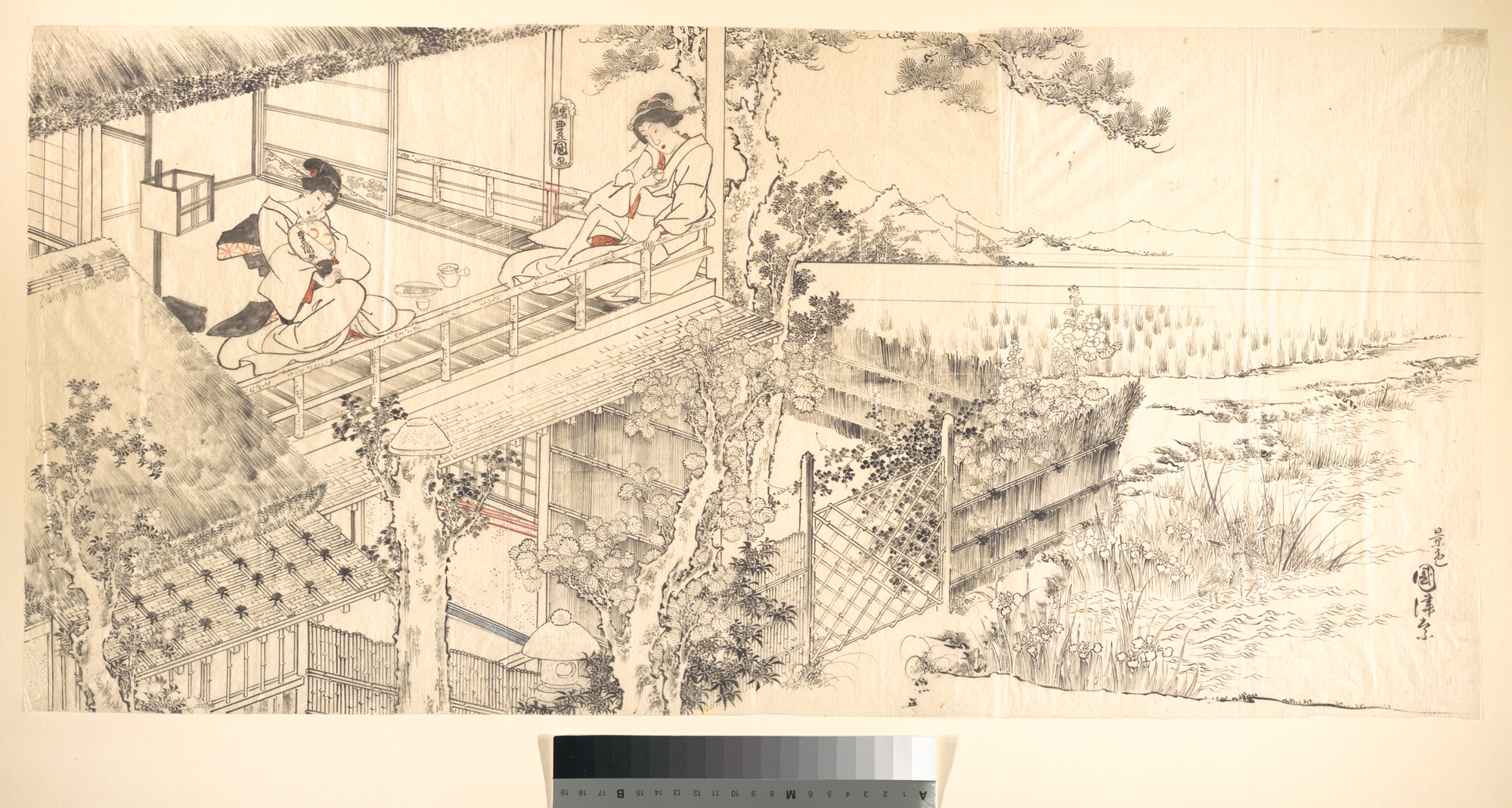
Two Courtesans Enjoying the View from a Teahouse
after 1844
Drawings intended as design for woodblock prints (triptych); ink and color on paper
Frequently Asked Questions
Getsuskkwa was created by Utagawa Kunisada (歌川国貞) in ca. 1848.