
Guan Yu, Liu Bei, and Zhang Fei
- Date:
- 1825
- Medium:
- Color woodblock print; shikishiban, surimono
- Source:
- Art Institute of Chicago
Description
This 1825 shikishiban-format surimono by Utagawa Kunisada depicts Guan Yu, Liu Bei, and Zhang Fei, the three legendary heroes of the Chinese Three Kingdoms cycle whose oath of brotherhood in the Peach Garden became one of the most famous episodes in East Asian historical romance. The Romance of the Three Kingdoms (Sanguo Yanyi), known in Japanese as Sangokushi, was widely read in Edo Japan and provided constant subject matter for ukiyo-e from the late eighteenth century onward. Liu Bei is the virtuous warlord and future founder of Shu Han; Guan Yu, his sworn brother, is the loyal red-faced warrior god of war later deified across East Asia; Zhang Fei is the impetuous and indomitable third brother. The three together are an icon of righteous brotherhood and martial loyalty. Kunisada's 1825 surimono treatment, commissioned privately and printed in a luxurious limited edition, brings the heroes into the cultivated literary atmosphere of Edo poetry clubs. The shikishiban format constrains the composition to near-square proportions, and the design would deploy careful figure differentiation, military equipment, and the costume conventions for Chinese subjects that Kunisada had learned from Toyokuni I's studio and from earlier Edo Chinese-subject prints. The Art Institute of Chicago's example preserves Kunisada's Bunsei-period engagement with Sangokushi material, a parallel strand to his actor prints and an important reminder of the global literary culture circulating in late-Edo Japan.
More Prints by Utagawa Kunisada

The actors Ichikawa Danjuro VII as Takamoto no kitsune and Segawa Kikunojo V as Izumi no Chieda-gitsune
1818
Color woodblock print; shikishiban, surimono

Basketry Work: By the Craftsman Ichida Shōshichirō of Naniwa (Kagozaiku Naniwa saikunin Ichida Shōshichirō)
1819
Woodblock print; ink and color on paper
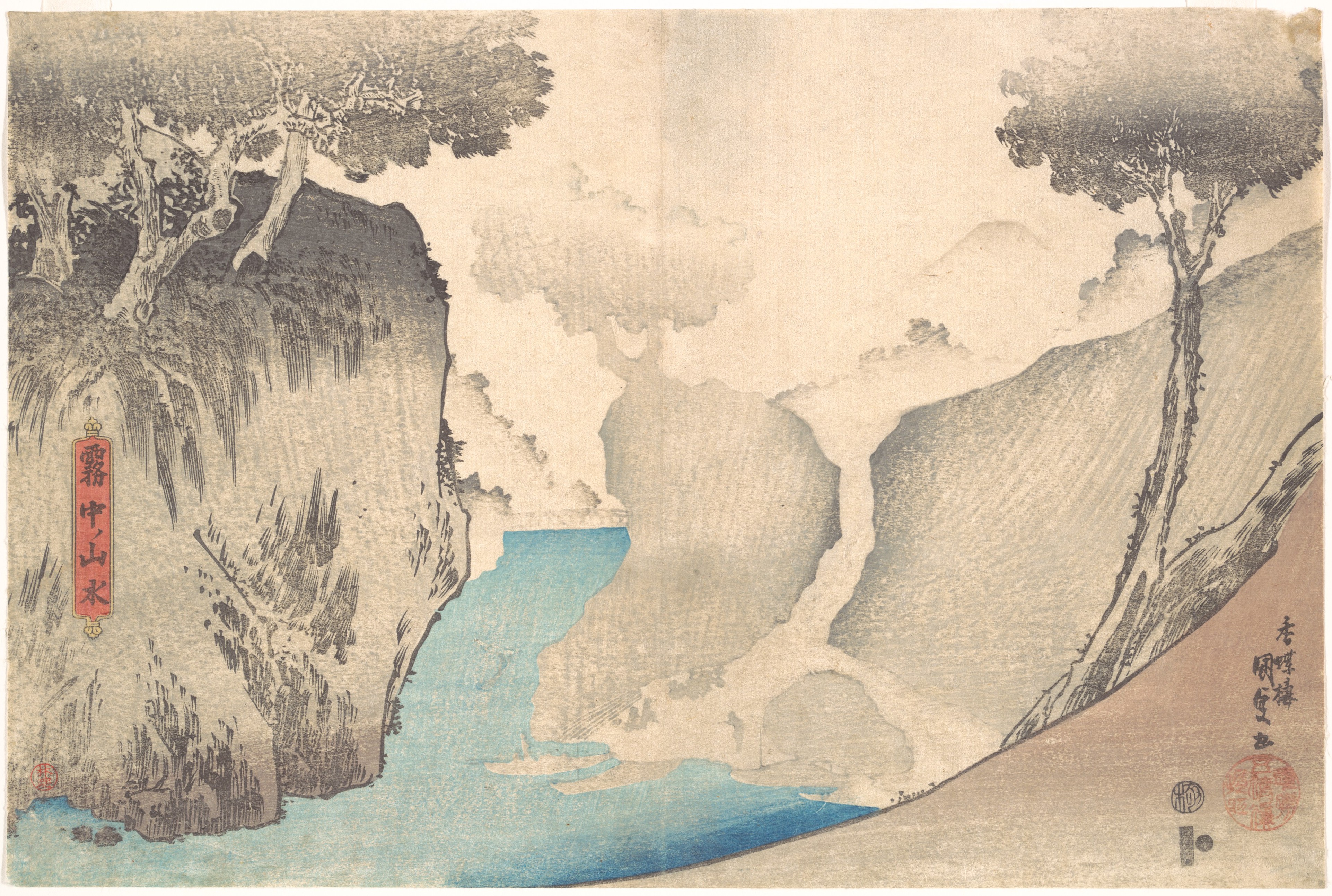
Ochanomizu in the Mist
mid-19th century
Woodblock print; ink and color on paper
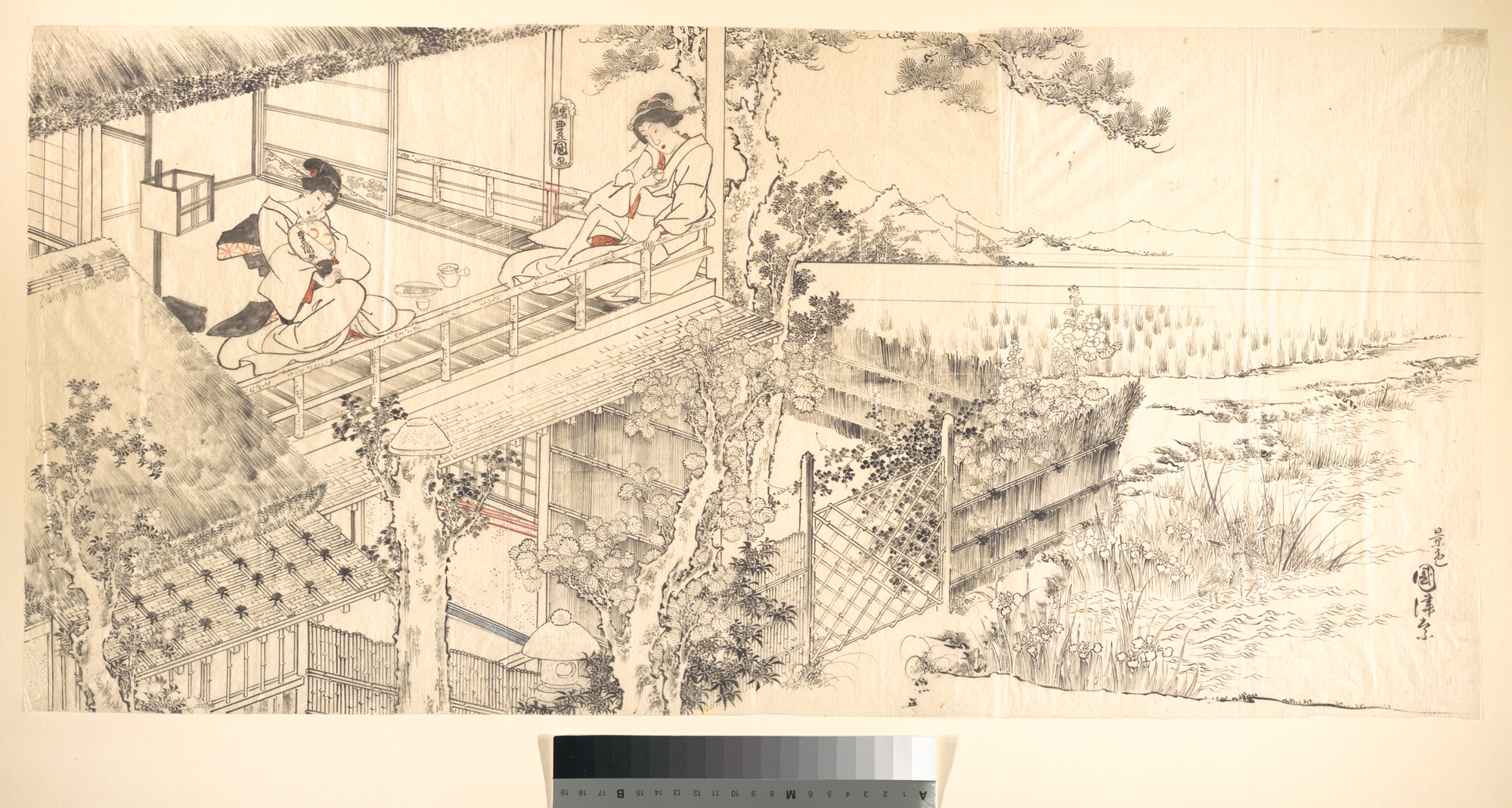
Two Courtesans Enjoying the View from a Teahouse
after 1844
Drawings intended as design for woodblock prints (triptych); ink and color on paper
Frequently Asked Questions
Guan Yu, Liu Bei, and Zhang Fei was created by Utagawa Kunisada (歌川国貞) in 1825.