
Hana soroi haru no taimen
- Date:
- ca. 1852
- Medium:
- Source:
- Victoria and Albert Museum
Description
Hana soroi haru no taimen is an 1852 woodblock print by Utagawa Kunisada, designed at a moment when he was working as Toyokuni III at the head of the Utagawa school and dominating Edo ukiyo-e production. The title refers to a 'spring confrontation' framed as an assortment of flowers, a phrasing that signals one of the most popular plot situations in Edo theatre: the formal taimen, or face-off, in which the Soga brothers confront their father's killer Kudō Suketsune. The taimen scene from Soga monogatari kabuki adaptations was traditionally performed in the New Year and was a fixture of the Edo theatrical calendar, with the figures arranged in a static, heraldic tableau perfectly suited to the woodblock medium. Kunisada renders the scene as a multi-sheet triptych in which named actors take the principal roles; their crests on costume sleeves and the careful facial likenesses make this unambiguously yakusha-e, even when the title leans on a poetic metaphor of flowers. The composition organises the cast across the picture plane in the conventional taimen arrangement, with the brothers and their adversary aligned for maximum visual confrontation. Kunisada uses the saturated reds, indigos and ochres of the early 1850s Edo print palette, with heavy outlines and dense pattern work that reward close looking. The Victoria and Albert Museum holds the impression and dates it to 1852, locating it within the highly conventionalised but commercially central body of New Year actor prints that shaped much of Kunisada's later career.
More Prints by Utagawa Kunisada

The actors Ichikawa Danjuro VII as Takamoto no kitsune and Segawa Kikunojo V as Izumi no Chieda-gitsune
1818
Color woodblock print; shikishiban, surimono

Basketry Work: By the Craftsman Ichida Shōshichirō of Naniwa (Kagozaiku Naniwa saikunin Ichida Shōshichirō)
1819
Woodblock print; ink and color on paper
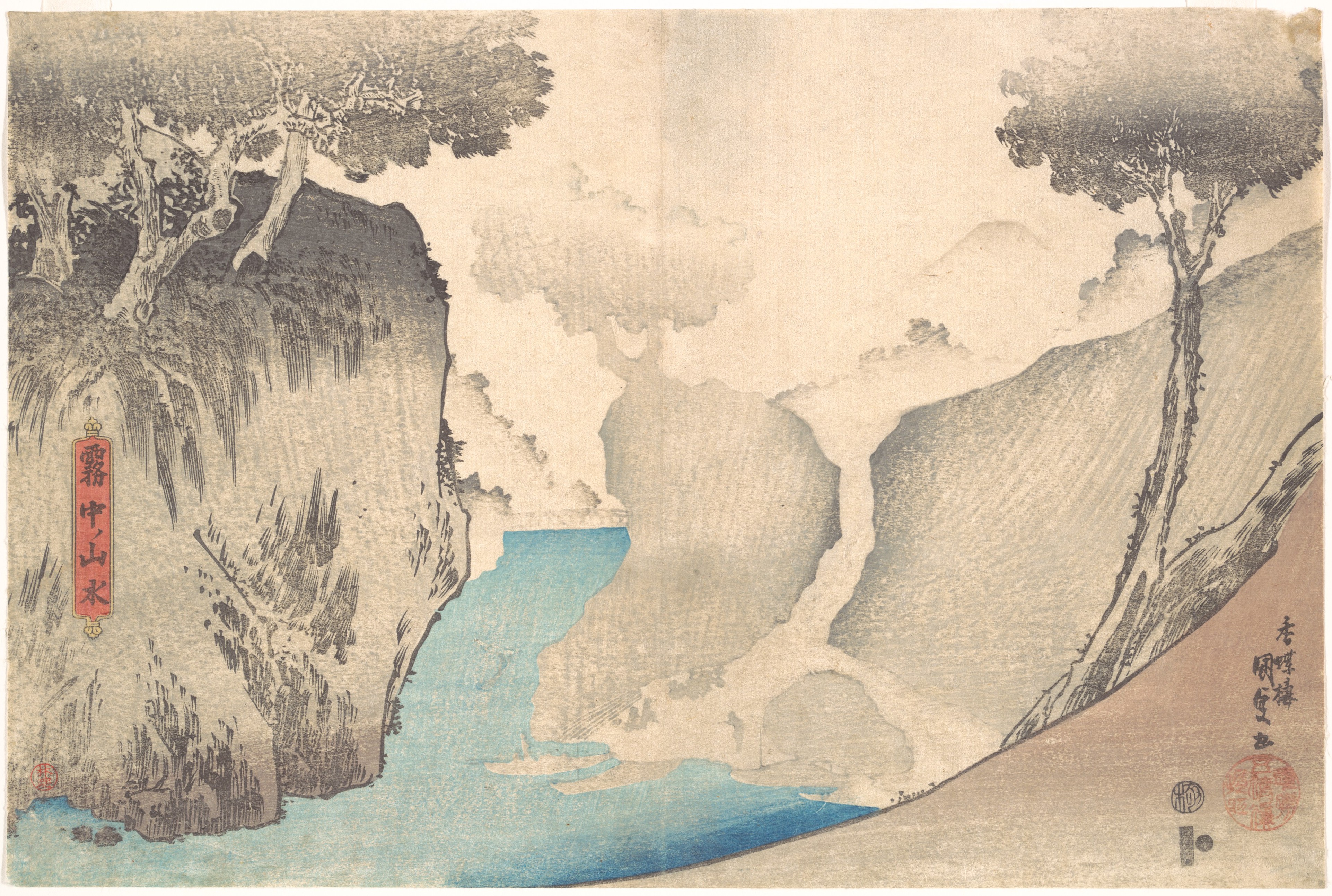
Ochanomizu in the Mist
mid-19th century
Woodblock print; ink and color on paper
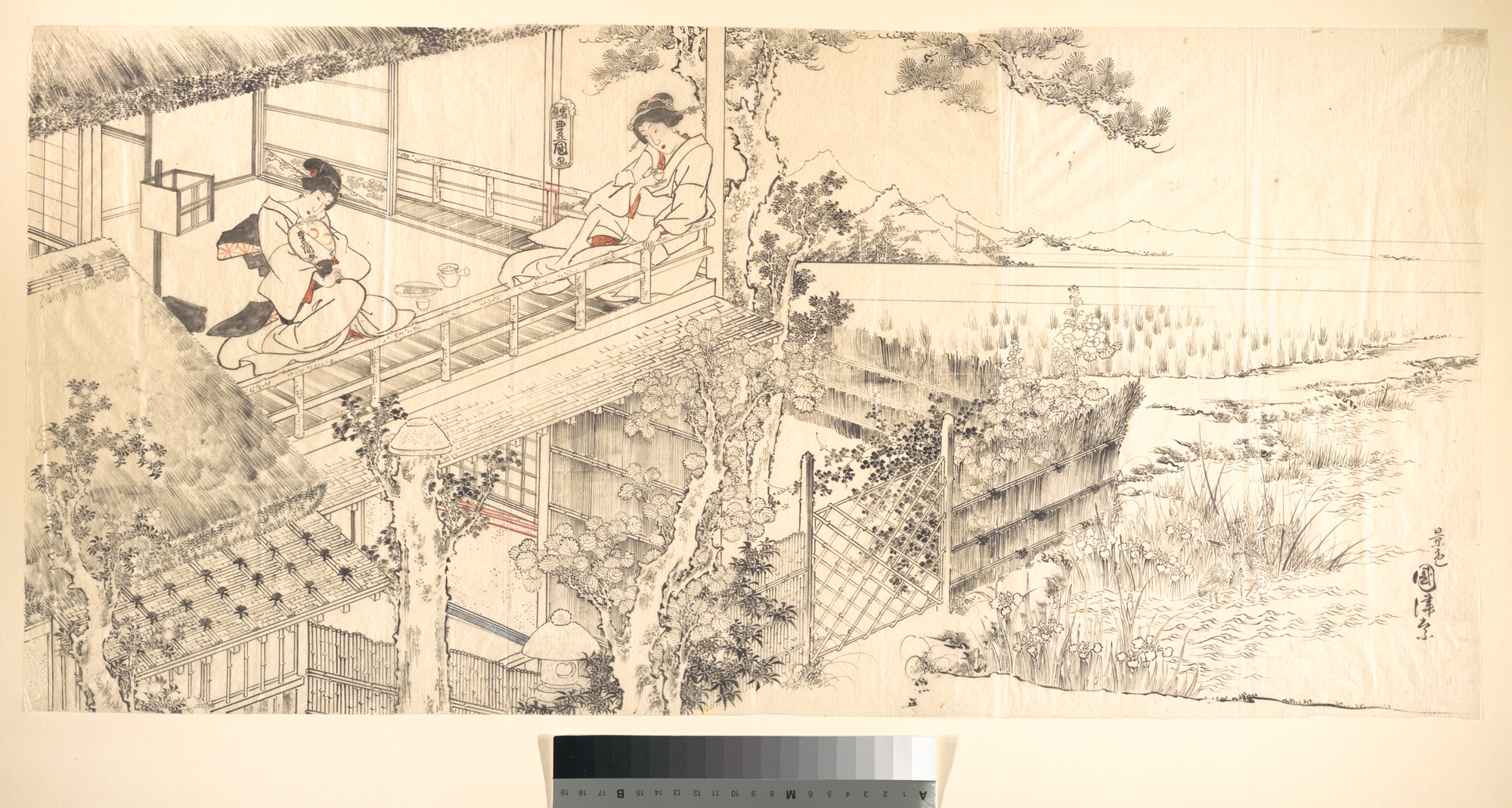
Two Courtesans Enjoying the View from a Teahouse
after 1844
Drawings intended as design for woodblock prints (triptych); ink and color on paper
Frequently Asked Questions
Hana soroi haru no taimen was created by Utagawa Kunisada (歌川国貞) in ca. 1852.