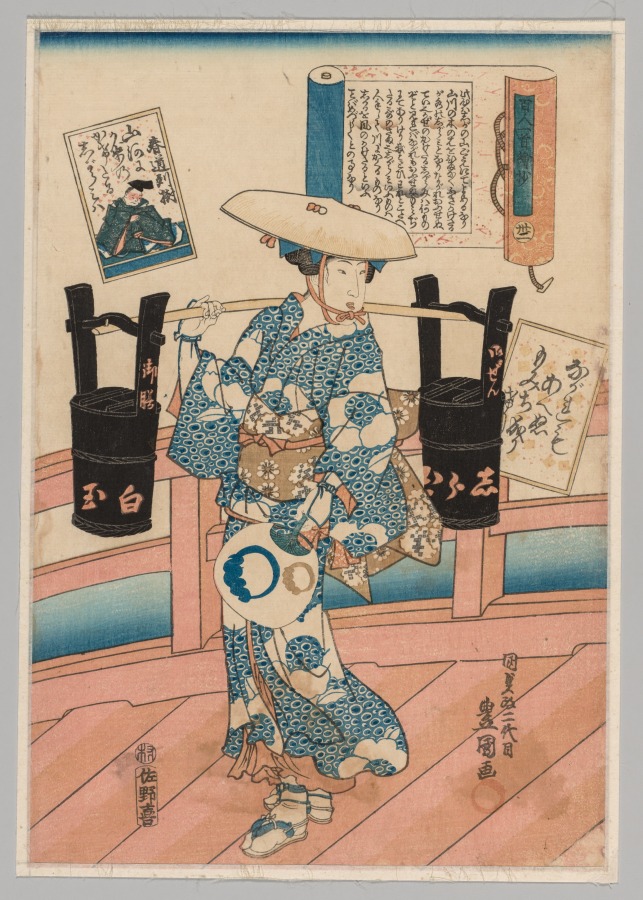
Harumichi no Tsuraki from the series A Pictorial Commentary on One Hundred Poems by One Hundred Poets, no. 31
- Date:
- 1844–47
- Medium:
- color woodblock print
- Source:
- Cleveland Museum of Art
Description
Harumichi no Tsuraki, designed by Utagawa Kunisada in 1844 as number thirty-one in the series A Pictorial Commentary on One Hundred Poems by One Hundred Poets (Hyakunin Isshu eshō), takes as its starting point a classical waka by the early Heian poet Harumichi no Tsuraki (d. 920). The Hyakunin Isshu, compiled by Fujiwara no Teika in the early thirteenth century, became one of the most enduringly popular literary anthologies in Japanese culture, and ukiyo-e designers throughout the Edo period produced repeated visual commentaries on its hundred verses. Kunisada's contribution in 1844 follows the standard mitate convention: a classical poem is paired with a contemporary scene or figure drawn from kabuki, popular fiction, or daily life, creating a layered work that flatters the educated viewer. The composition typically reproduces the poet's verse in a cartouche, includes a small portrait of the poet himself, and gives the main pictorial field to the modern allusion. By 1844 Kunisada had assumed the Toyokuni name (now usually catalogued as Toyokuni III) and was operating the busiest design studio in Edo, supplying the city's publishers with series of this kind in steady volume. The Cleveland Museum of Art preserves this impression as 1940.714. Within Edo ukiyo-e, mitate Hyakunin Isshu series like this one are valuable for showing how classical literacy and contemporary celebrity culture were jointly marketed through the print medium.
More Prints by Utagawa Kunisada

The actors Ichikawa Danjuro VII as Takamoto no kitsune and Segawa Kikunojo V as Izumi no Chieda-gitsune
1818
Color woodblock print; shikishiban, surimono

Basketry Work: By the Craftsman Ichida Shōshichirō of Naniwa (Kagozaiku Naniwa saikunin Ichida Shōshichirō)
1819
Woodblock print; ink and color on paper
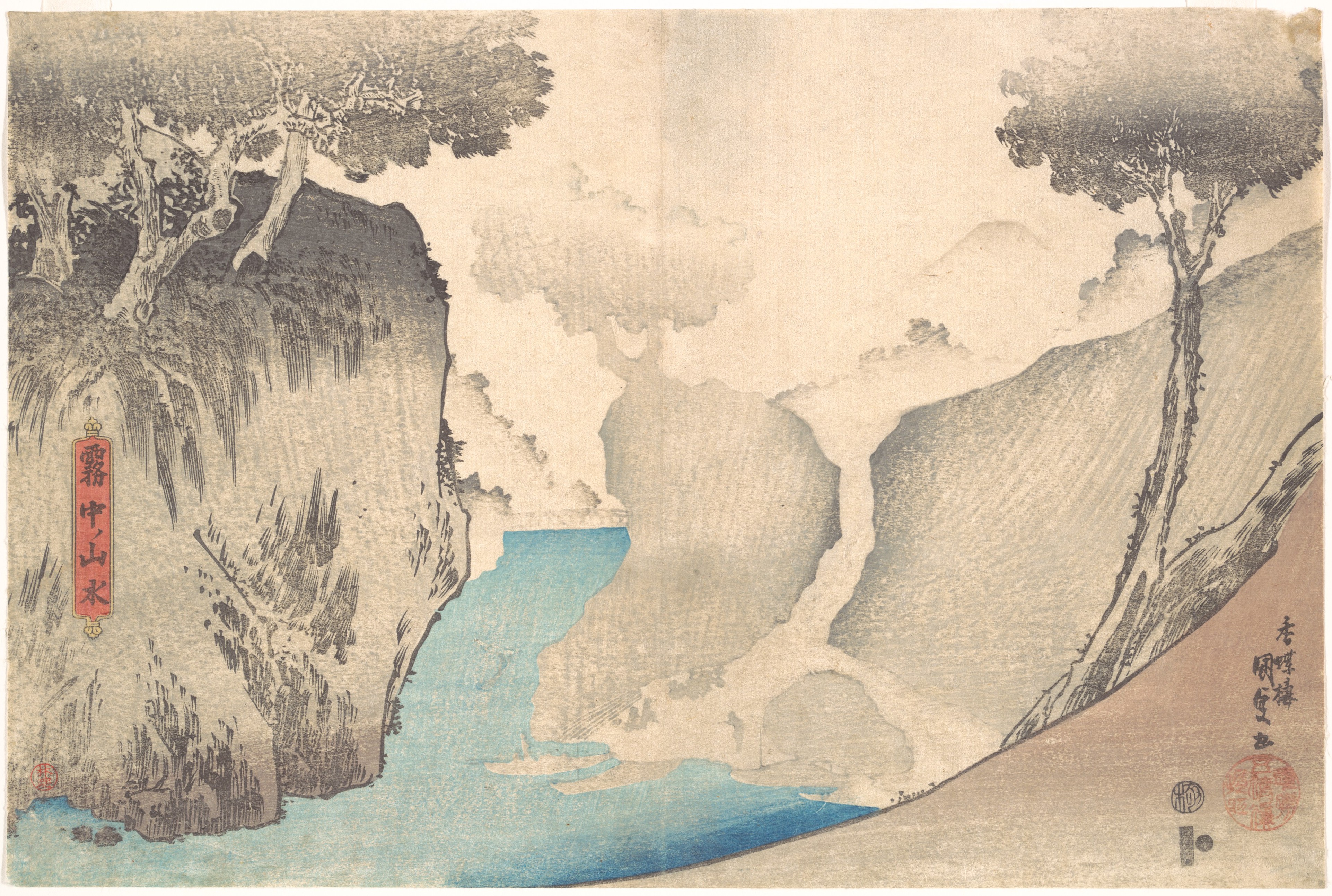
Ochanomizu in the Mist
mid-19th century
Woodblock print; ink and color on paper
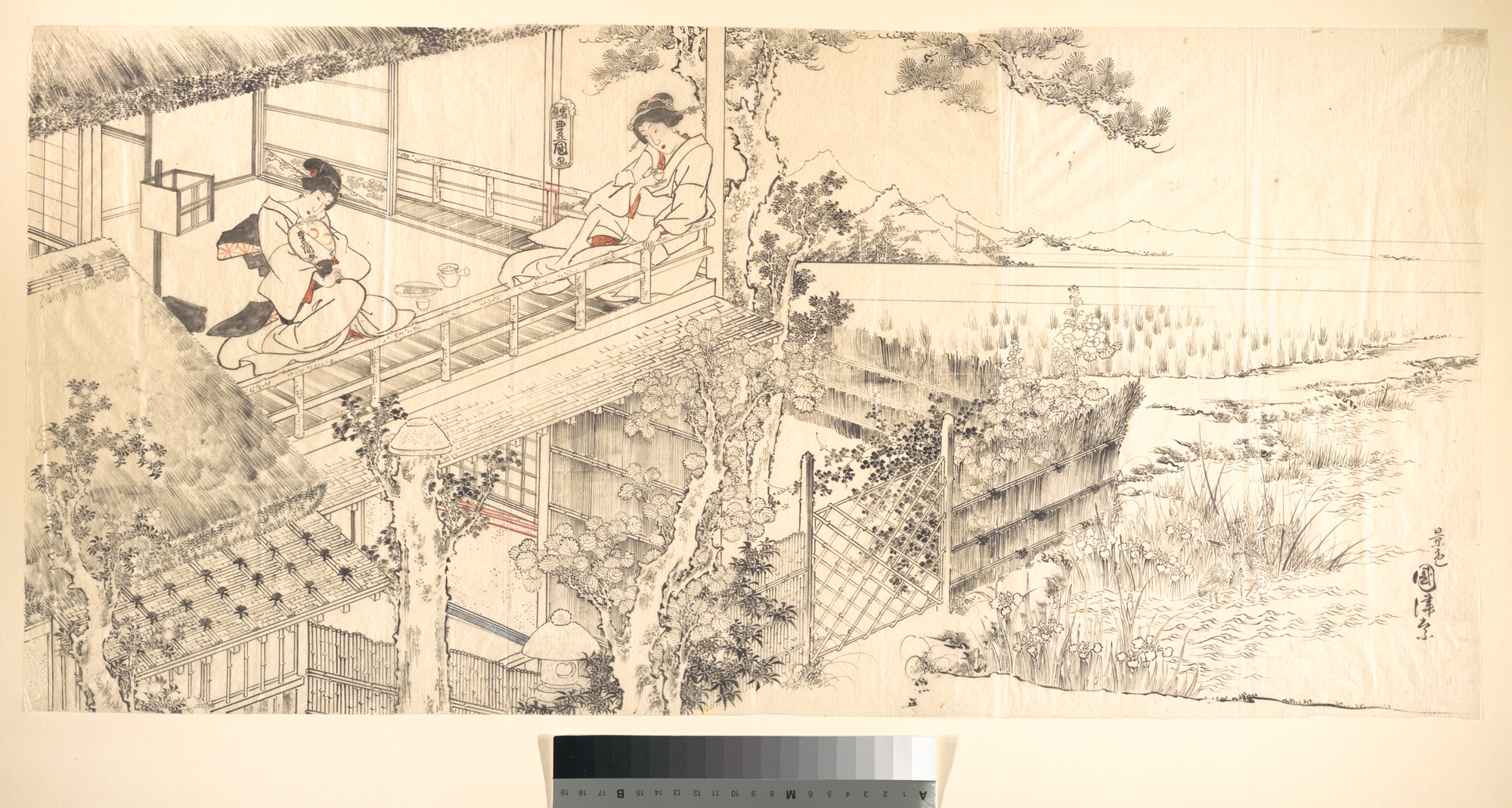
Two Courtesans Enjoying the View from a Teahouse
after 1844
Drawings intended as design for woodblock prints (triptych); ink and color on paper
Frequently Asked Questions
Harumichi no Tsuraki from the series A Pictorial Commentary on One Hundred Poems by One Hundred Poets, no. 31 was created by Utagawa Kunisada (歌川国貞) in 1844–47.