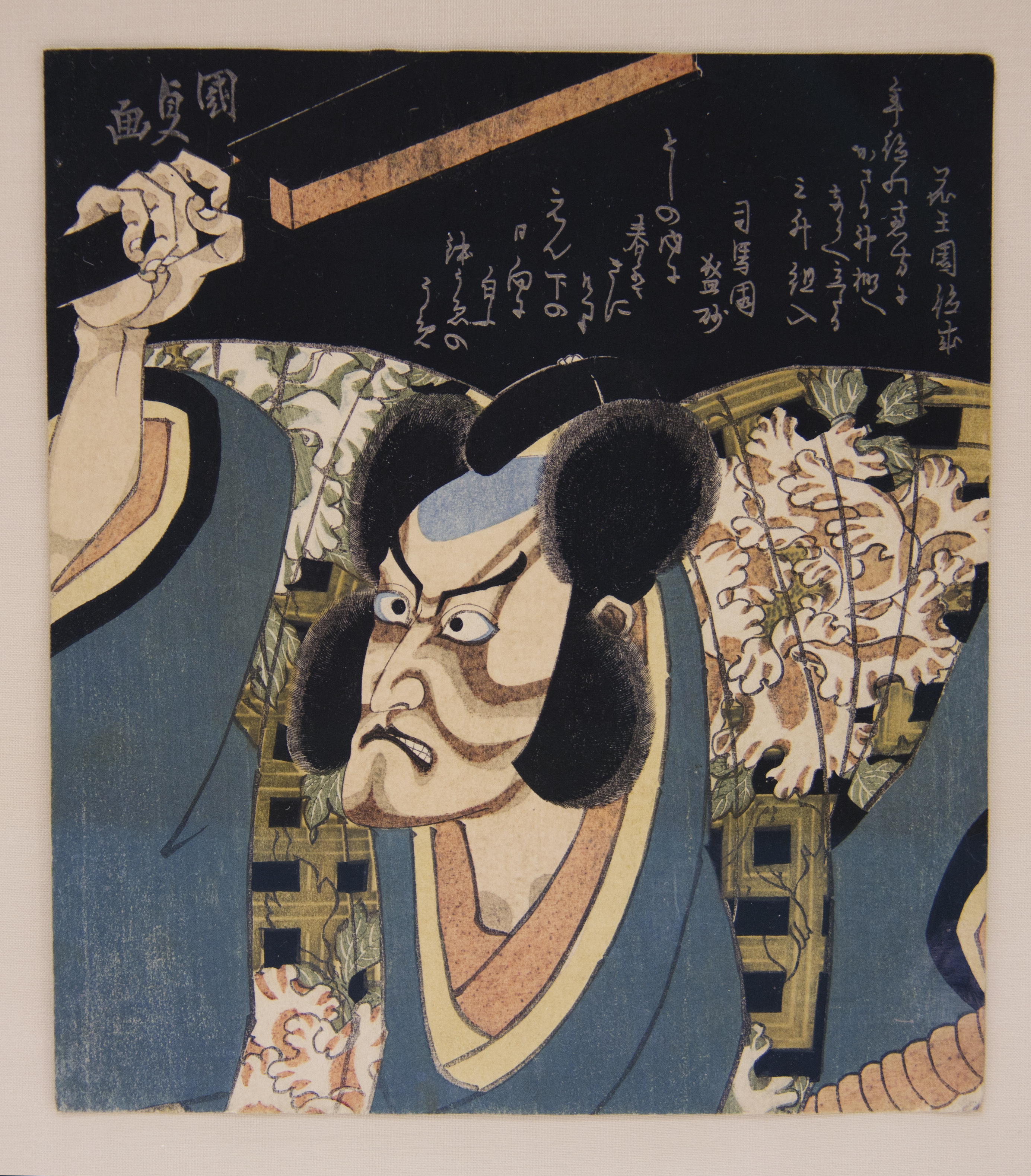
Ichikawa Danjūrō VII as Arajishi Otokonosuke
- Date:
- 1829
- Medium:
- Woodblock print (surimono); ink and color on paper; shikishiban
- Source:
- Metropolitan Museum of Art
Description
Dated 1829, this yakusha-e by Utagawa Kunisada portrays Ichikawa Danjūrō VII in the role of Arajishi Otokonosuke, one of the powerful male characters associated with the Ichikawa family's signature aragoto (rough style) repertoire. Otokonosuke appears in the play world of "Meiboku Sendai Hagi" and related dramas as a loyal retainer whose ferocity is conveyed through bold makeup, exaggerated posture, and a strident presence. Kunisada, a devoted recorder of the Ichikawa line, returned to Danjūrō VII repeatedly across the 1820s and 1830s, refining the visual codes - red kumadori makeup, broad mie poses, and characteristic costume - that allowed Edo audiences to recognize the actor in role. The print is preserved by the Metropolitan Museum of Art (accession 633299). As Edo ukiyo-e, it shows the Utagawa school's mature handling of stage portraiture in the late Bunsei era, when Kunisada was consolidating the dominance over yakusha-e that he would maintain until his death in 1865. The sheet is also a window onto the Ichikawa lineage's continuing centrality to Edo kabuki, with Kunisada's portraits functioning effectively as the public-facing iconography of the family's brand.
More Prints by Utagawa Kunisada

The actors Ichikawa Danjuro VII as Takamoto no kitsune and Segawa Kikunojo V as Izumi no Chieda-gitsune
1818
Color woodblock print; shikishiban, surimono

Basketry Work: By the Craftsman Ichida Shōshichirō of Naniwa (Kagozaiku Naniwa saikunin Ichida Shōshichirō)
1819
Woodblock print; ink and color on paper
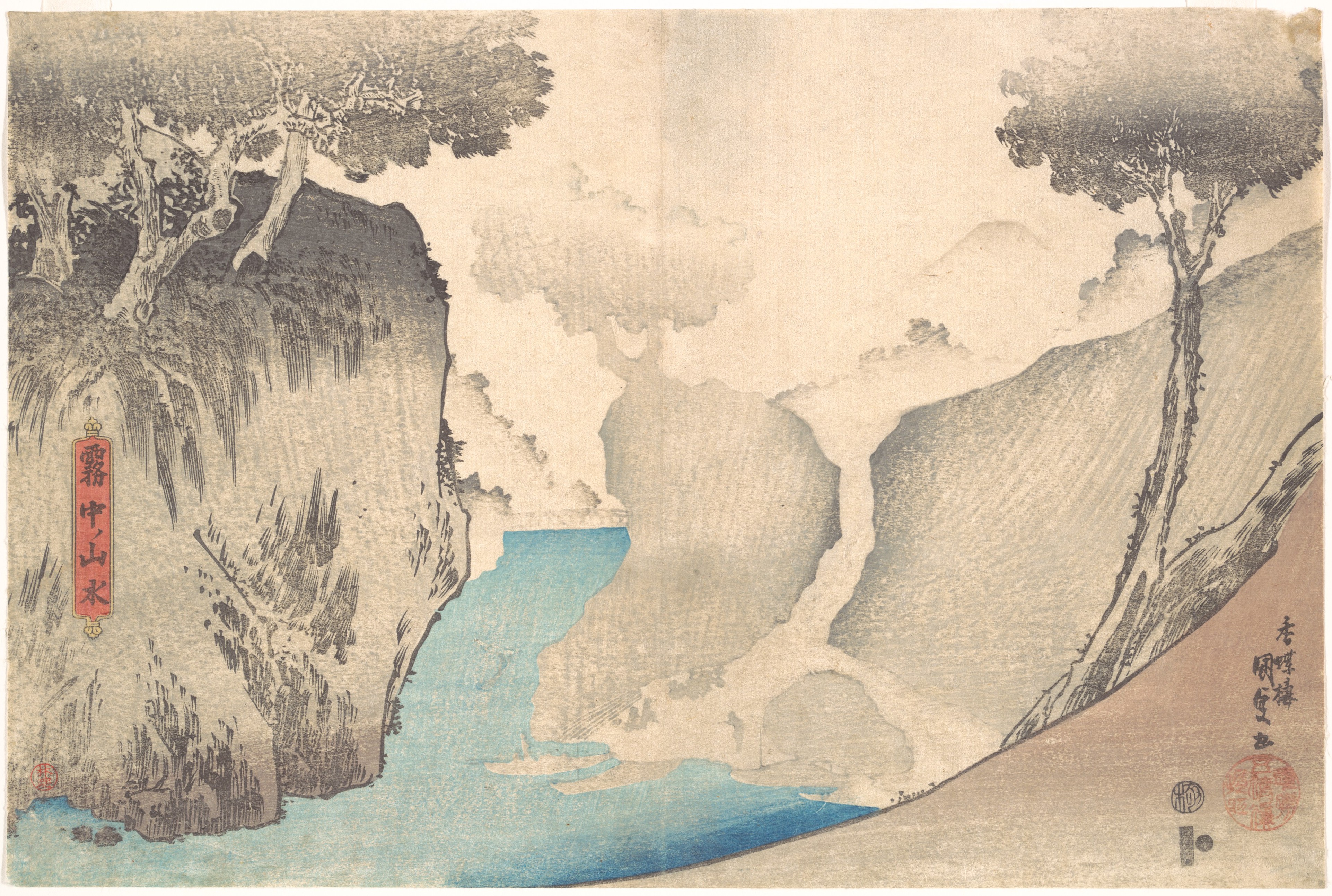
Ochanomizu in the Mist
mid-19th century
Woodblock print; ink and color on paper
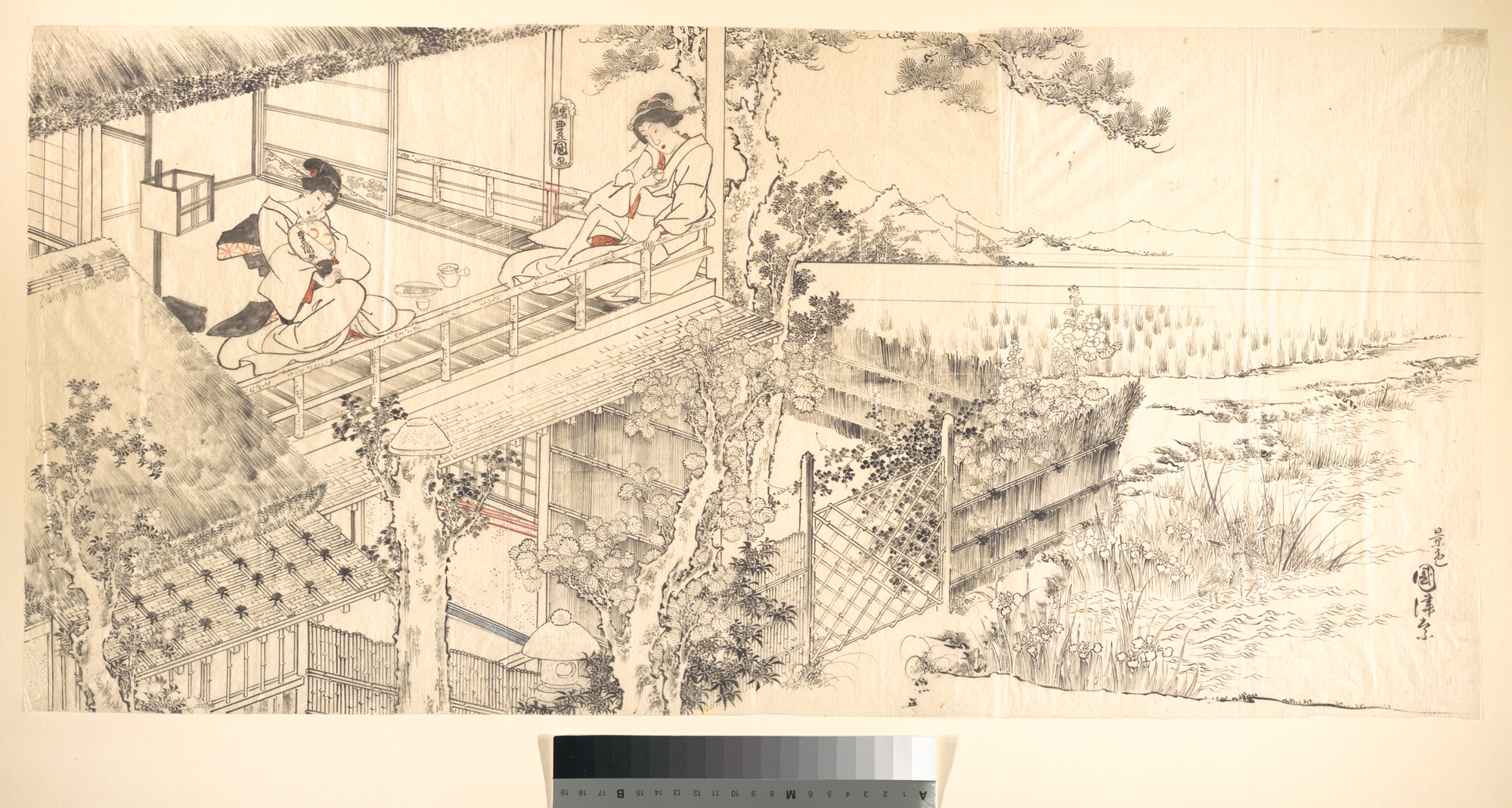
Two Courtesans Enjoying the View from a Teahouse
after 1844
Drawings intended as design for woodblock prints (triptych); ink and color on paper
Frequently Asked Questions
Ichikawa Danjūrō VII as Arajishi Otokonosuke was created by Utagawa Kunisada (歌川国貞) in 1829.