
Image of a Japanese Woman (Fujo Yamato sugata)
- Date:
- c. 1830/35
- Medium:
- Color woodblock print; vertical oban diptych
- Source:
- Art Institute of Chicago
Description
"Image of a Japanese Woman (Fujo Yamato sugata)" is a vertical oban-diptych color woodblock print of about 1830-1835 by Utagawa Kunisada, held in the Art Institute of Chicago. The title translates literally as "the figure of a Japanese woman," identifying the print as a celebratory bijin-ga in the classical mode. By the early 1830s Kunisada was at the height of his powers as a designer of beautiful-woman prints; with the contemporary rival Keisai Eisen he defined the late-Edo standard of feminine elegance, succeeding the earlier ideals of Kitagawa Utamaro and Hosoda Eishi. The vertical oban diptych format, with two oban sheets stacked vertically, was used by Kunisada and others for full-length single-figure subjects requiring an elongated composition, particularly tall standing beauties in elaborate costume. The Yamato sugata, the Japanese figure or pose, would have been rendered with all the textile sophistication for which Kunisada was prized: layered kimono with intricately patterned robes, broad sashes (obi) tied in elaborate ways, hair ornaments and combs, and the controlled gestural elegance that signaled the woman's status as either courtesan, geisha, or refined townswoman. Such bijin-ga were both fashion records and aspirational images, marketed to female and male buyers alike. The Art Institute of Chicago's preservation of both sheets of the vertical diptych preserves the design as its publisher intended.
More Prints by Utagawa Kunisada

The actors Ichikawa Danjuro VII as Takamoto no kitsune and Segawa Kikunojo V as Izumi no Chieda-gitsune
1818
Color woodblock print; shikishiban, surimono

Basketry Work: By the Craftsman Ichida Shōshichirō of Naniwa (Kagozaiku Naniwa saikunin Ichida Shōshichirō)
1819
Woodblock print; ink and color on paper
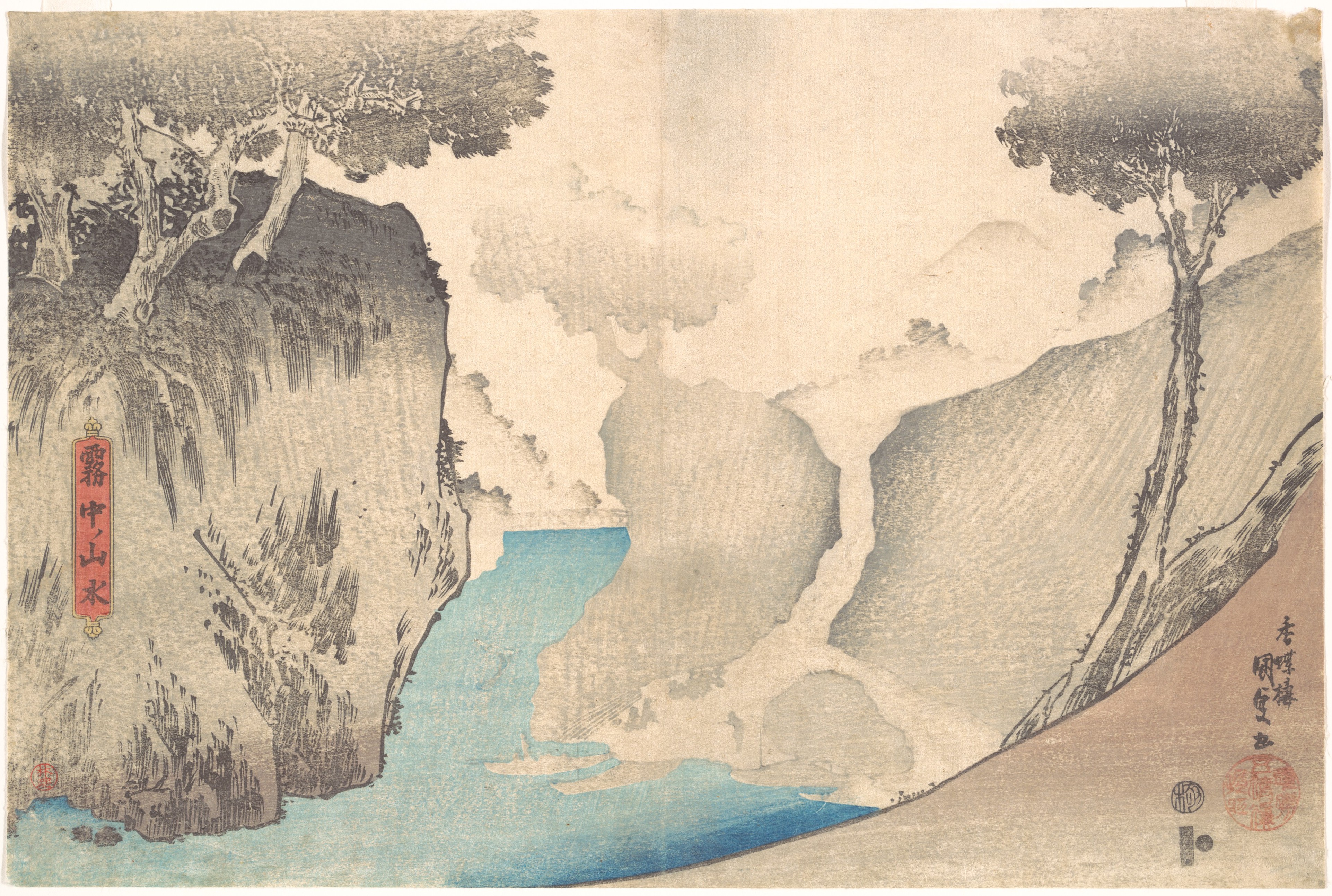
Ochanomizu in the Mist
mid-19th century
Woodblock print; ink and color on paper
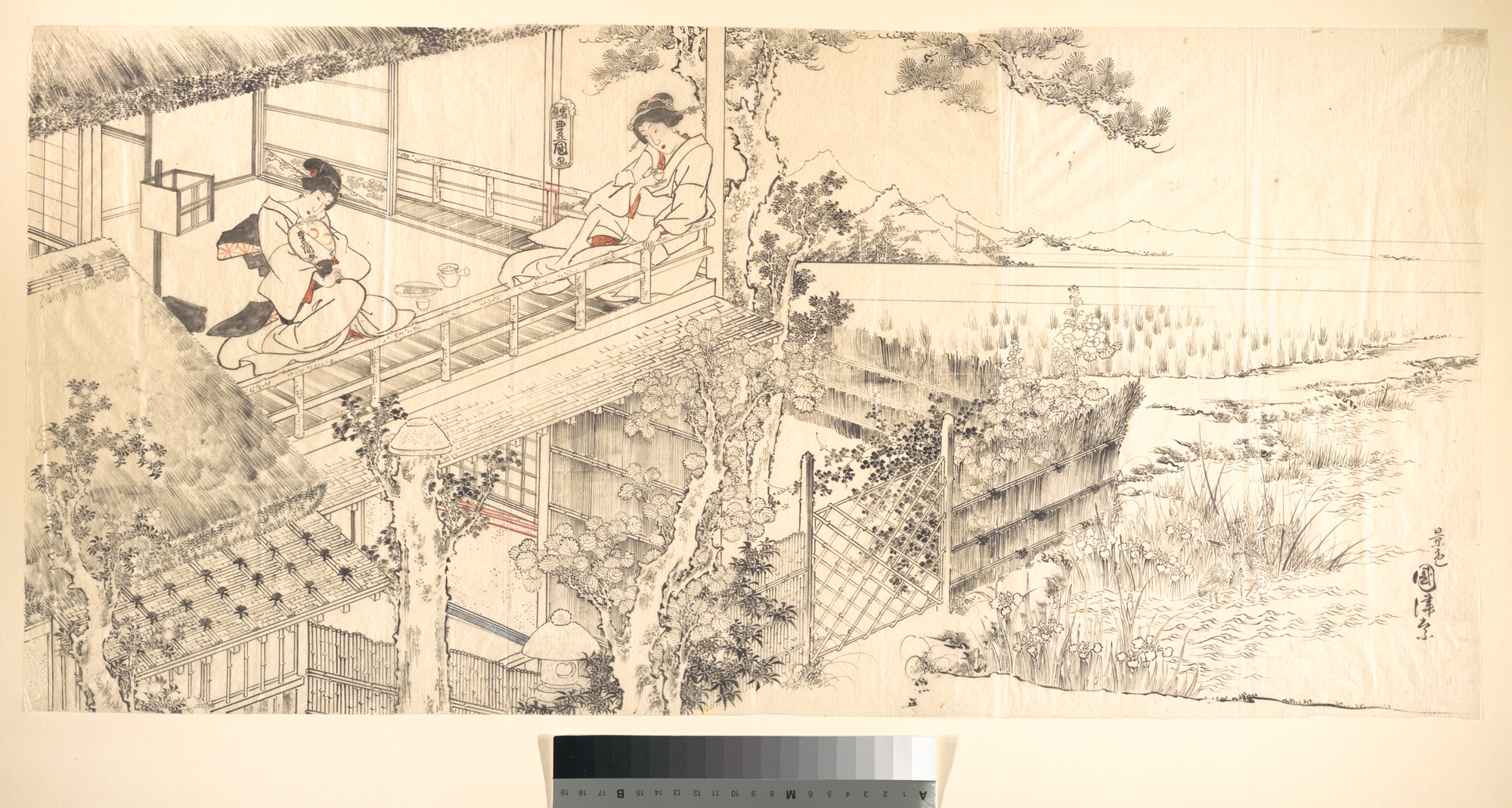
Two Courtesans Enjoying the View from a Teahouse
after 1844
Drawings intended as design for woodblock prints (triptych); ink and color on paper
Frequently Asked Questions
Image of a Japanese Woman (Fujo Yamato sugata) was created by Utagawa Kunisada (歌川国貞) in c. 1830/35.