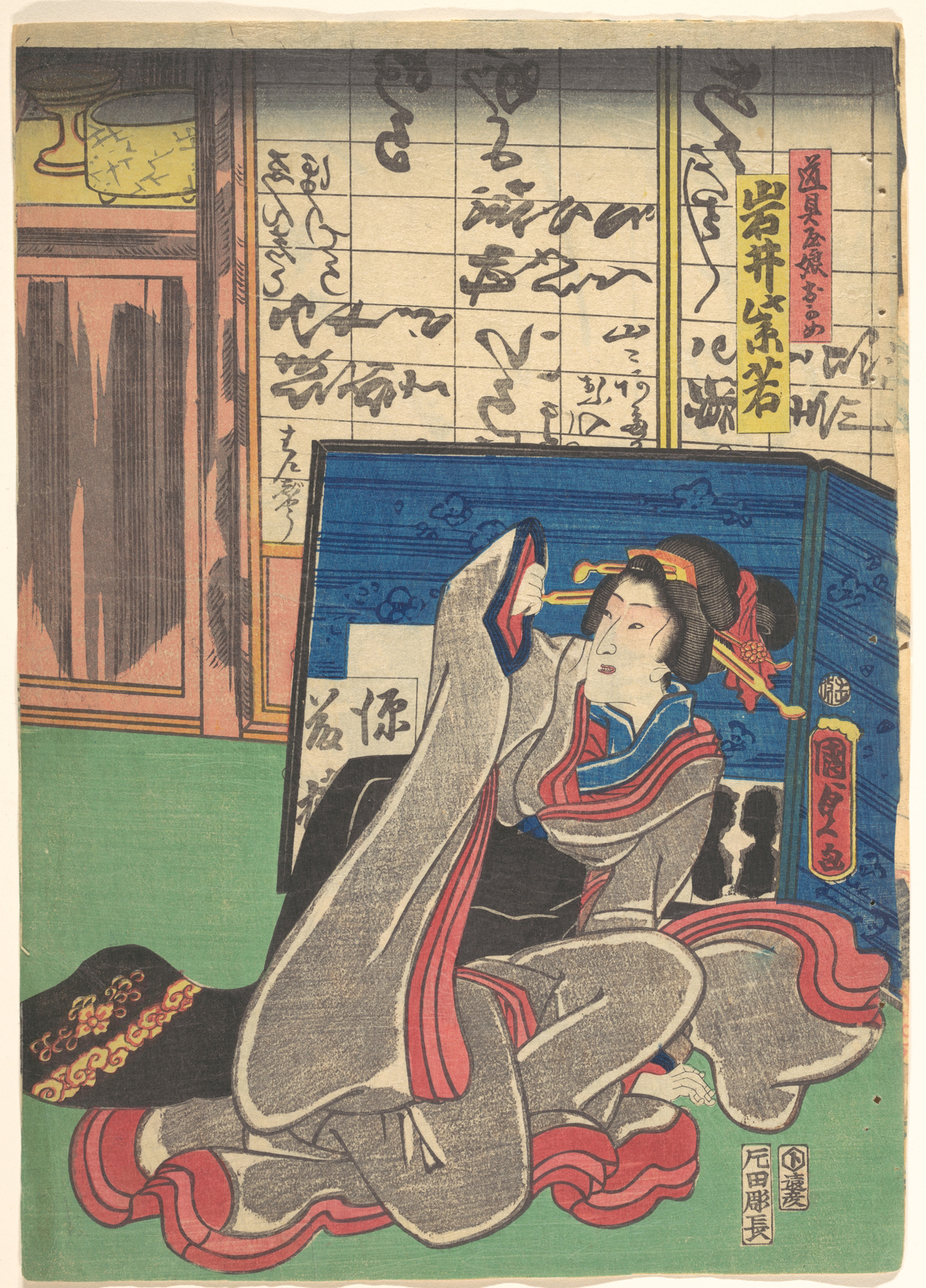
Iwai Shijaku II as Okame, the Daughter of a Furniture Store
- Date:
- 1864
- Medium:
- Right panel of a triptych of woodblock prints; ink and color on paper
- Source:
- Metropolitan Museum of Art
Description
Dated 1864, this late yakusha-e by Utagawa Kunisada (Toyokuni III) portrays Iwai Shijaku II in the role of Okame, the daughter of a furniture store - one of the merchant-household roles that fed kabuki's appetite for contemporary Edo life. Iwai Shijaku II belonged to the Iwai onnagata line, performers specializing in female roles whose lineage Kunisada documented across decades. The Okame role gives the sheet its characteristic mix: domestic setting, plain merchant-class costume cues, and the cosmetic and gestural conventions of the onnagata. Issued only a year before Kunisada's death, the design represents his sustained late-career commitment to the yakusha-e tradition that had defined his half-century career, even as new Meiji-era subjects and styles were beginning to encroach on the Edo print market. The Metropolitan Museum of Art preserves the impression (accession 58043). As Edo ukiyo-e in its closing phase, the print records both a specific Edo stage performance and a broader cultural moment in which kabuki and its visual ephemera retained their grip on the city even as larger political changes loomed.
More Prints by Utagawa Kunisada

The actors Ichikawa Danjuro VII as Takamoto no kitsune and Segawa Kikunojo V as Izumi no Chieda-gitsune
1818
Color woodblock print; shikishiban, surimono

Basketry Work: By the Craftsman Ichida Shōshichirō of Naniwa (Kagozaiku Naniwa saikunin Ichida Shōshichirō)
1819
Woodblock print; ink and color on paper
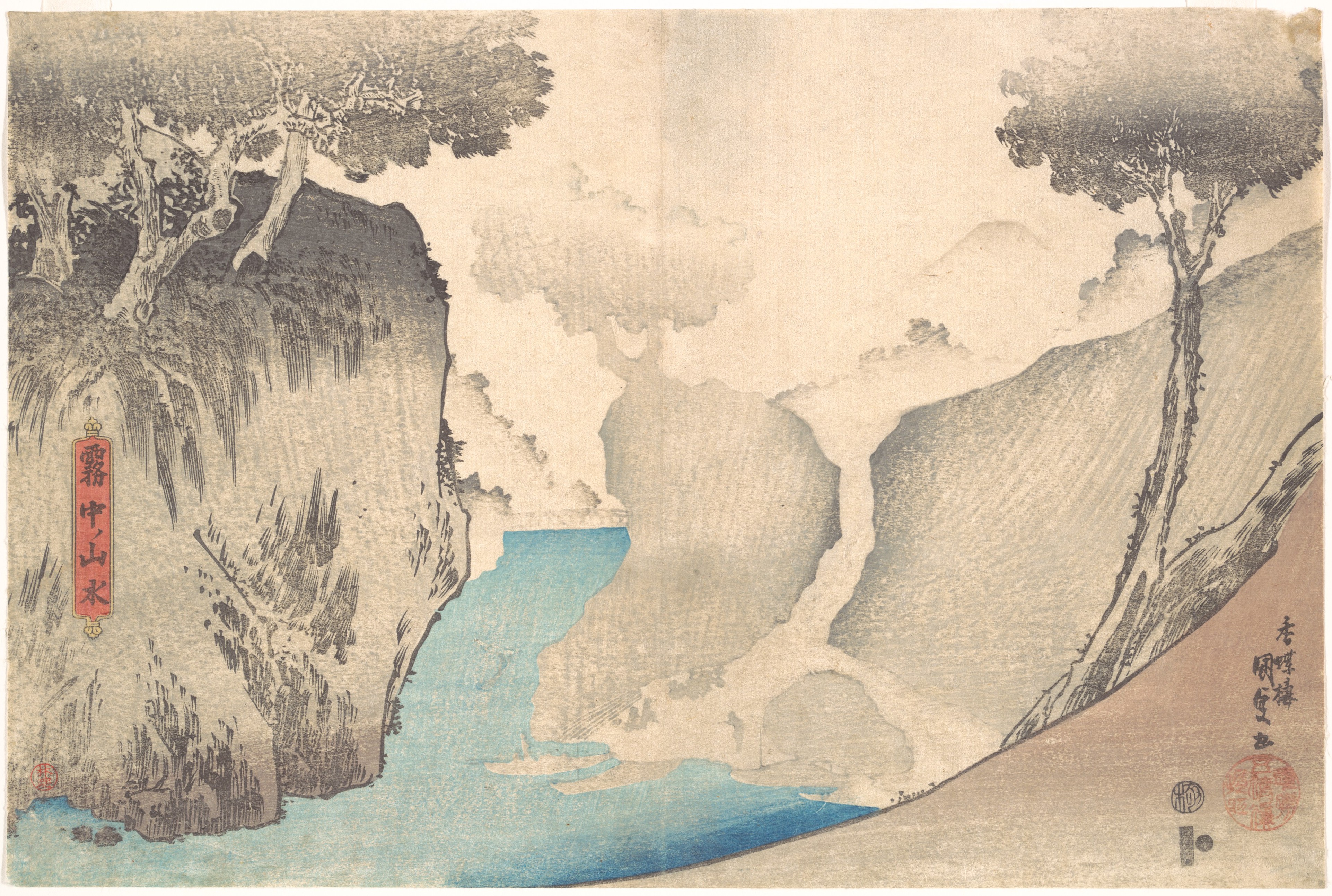
Ochanomizu in the Mist
mid-19th century
Woodblock print; ink and color on paper
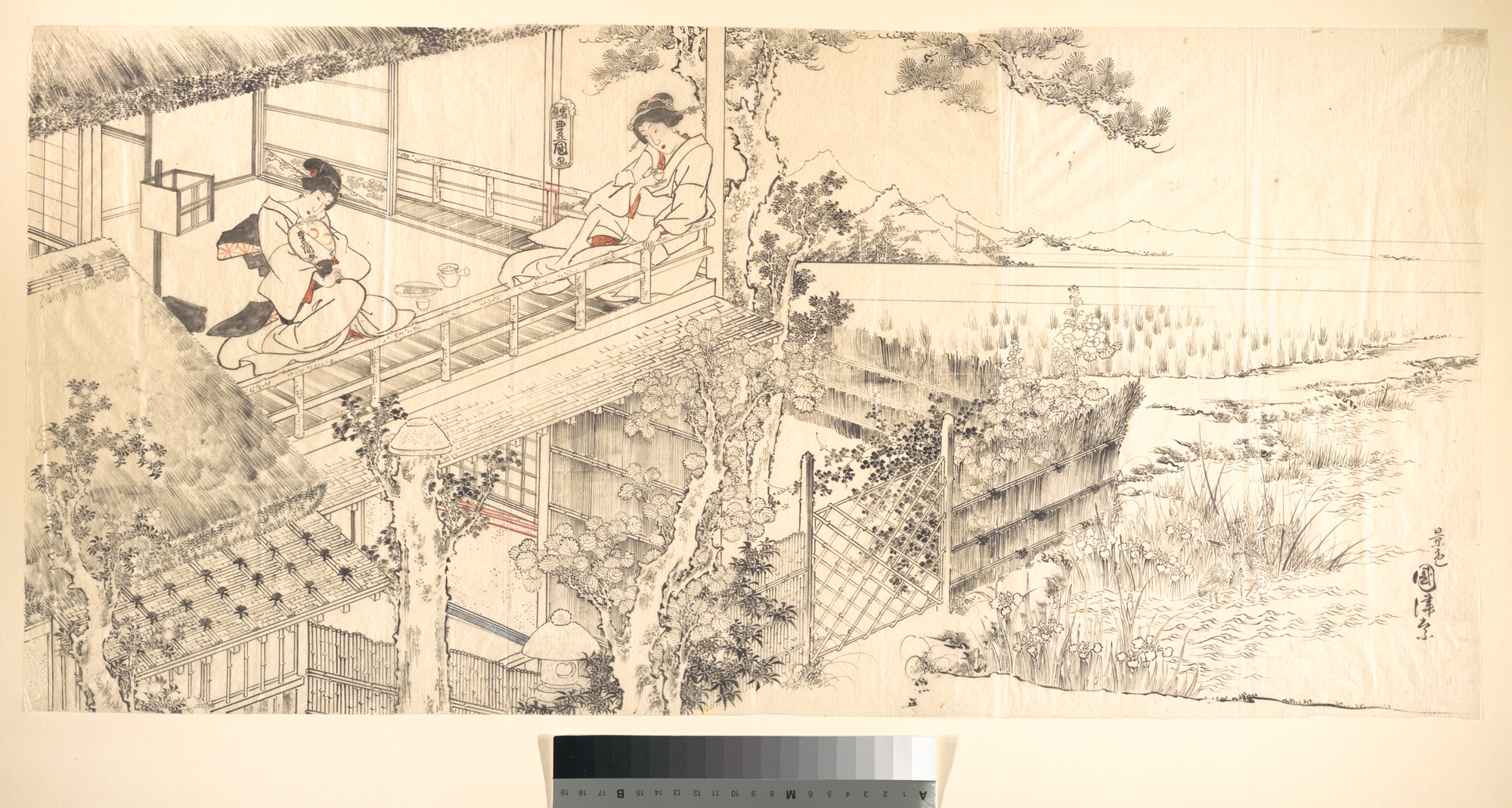
Two Courtesans Enjoying the View from a Teahouse
after 1844
Drawings intended as design for woodblock prints (triptych); ink and color on paper
Frequently Asked Questions
Iwai Shijaku II as Okame, the Daughter of a Furniture Store was created by Utagawa Kunisada (歌川国貞) in 1864.