
Kanagawa Station: The Tomb of Urashima (Kanagawa no eki, Urashima-zuka)
- Medium:
- Source:
- Victoria and Albert Museum
Description
Kanagawa Station: The Tomb of Urashima (Kanagawa no eki, Urashima-zuka) is one of Utagawa Kunisada's contributions to the Tōkaidō tradition, the long-running ukiyo-e genre that depicted the fifty-three post stations between Edo and Kyoto. Kanagawa was the third station out of Edo on the Tōkaidō highway, and the local landmark known as Urashima-zuka (the tomb of Urashima Tarō) provided a folkloric anchor for travel imagery in this area. The Urashima Tarō legend, in which a fisherman is taken to a dragon palace beneath the sea and returns to find centuries have passed, was deeply familiar to Edo audiences and was frequently invoked in poetry, drama, and prints. Kunisada's version filters the Tōkaidō subject through his characteristic interest in figures: rather than presenting a pure landscape in the Hokusai or Hiroshige mode, he tends to foreground a half-length or full-length character whose costume and pose carry as much of the design as the place itself. This approach allowed his publishers to combine the appetite for meisho-e (famous-place pictures) with the celebrity culture of yakusha-e in the Edo ukiyo-e marketplace. The Victoria and Albert Museum holds the impression catalogued as O426104. As a Kanagawa subject, the print also documents a stretch of road that would, only a few years after Kunisada's death, become the gateway to the newly opened treaty port of Yokohama and a site of intense modernization.
More Prints by Utagawa Kunisada

The actors Ichikawa Danjuro VII as Takamoto no kitsune and Segawa Kikunojo V as Izumi no Chieda-gitsune
1818
Color woodblock print; shikishiban, surimono

Basketry Work: By the Craftsman Ichida Shōshichirō of Naniwa (Kagozaiku Naniwa saikunin Ichida Shōshichirō)
1819
Woodblock print; ink and color on paper
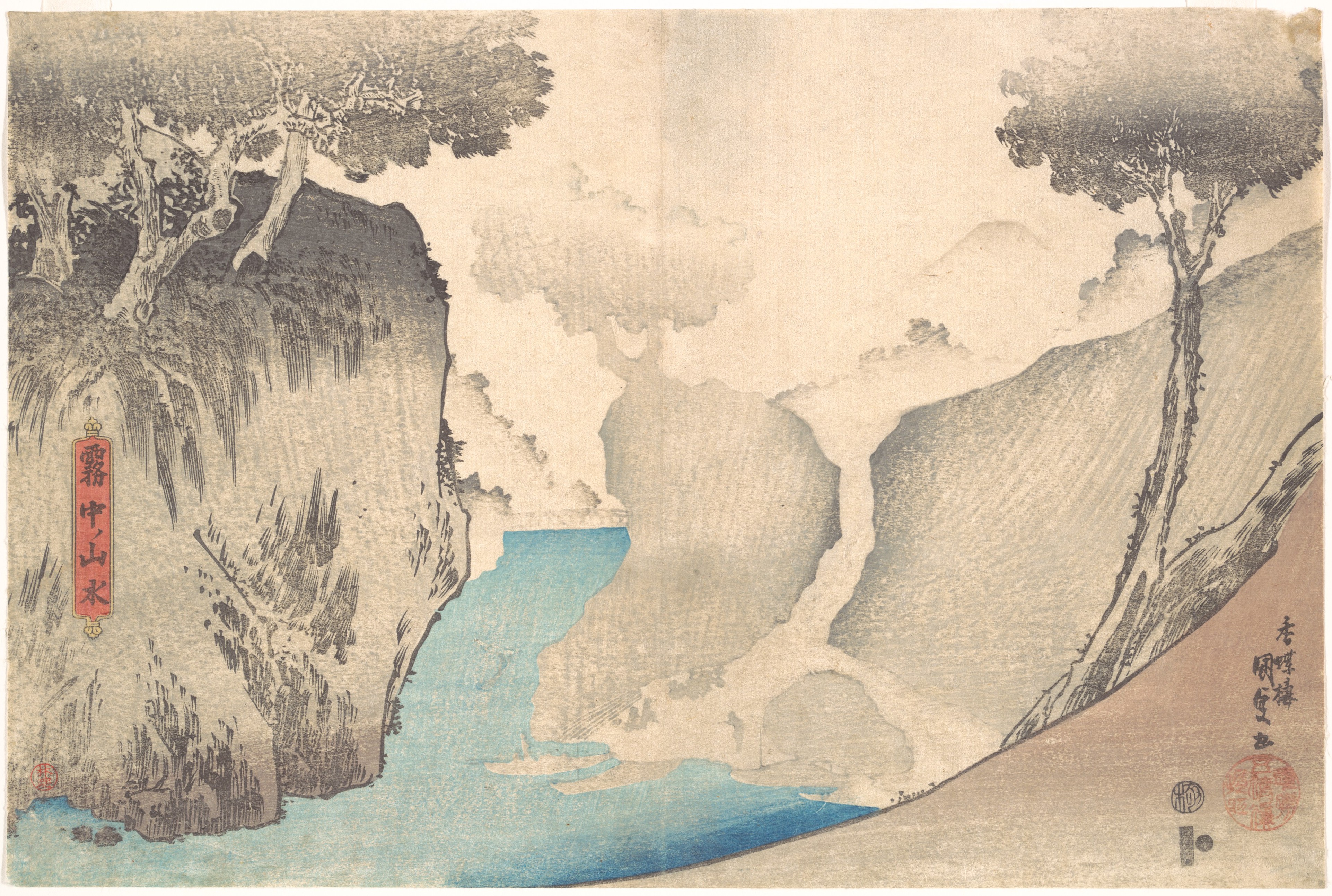
Ochanomizu in the Mist
mid-19th century
Woodblock print; ink and color on paper
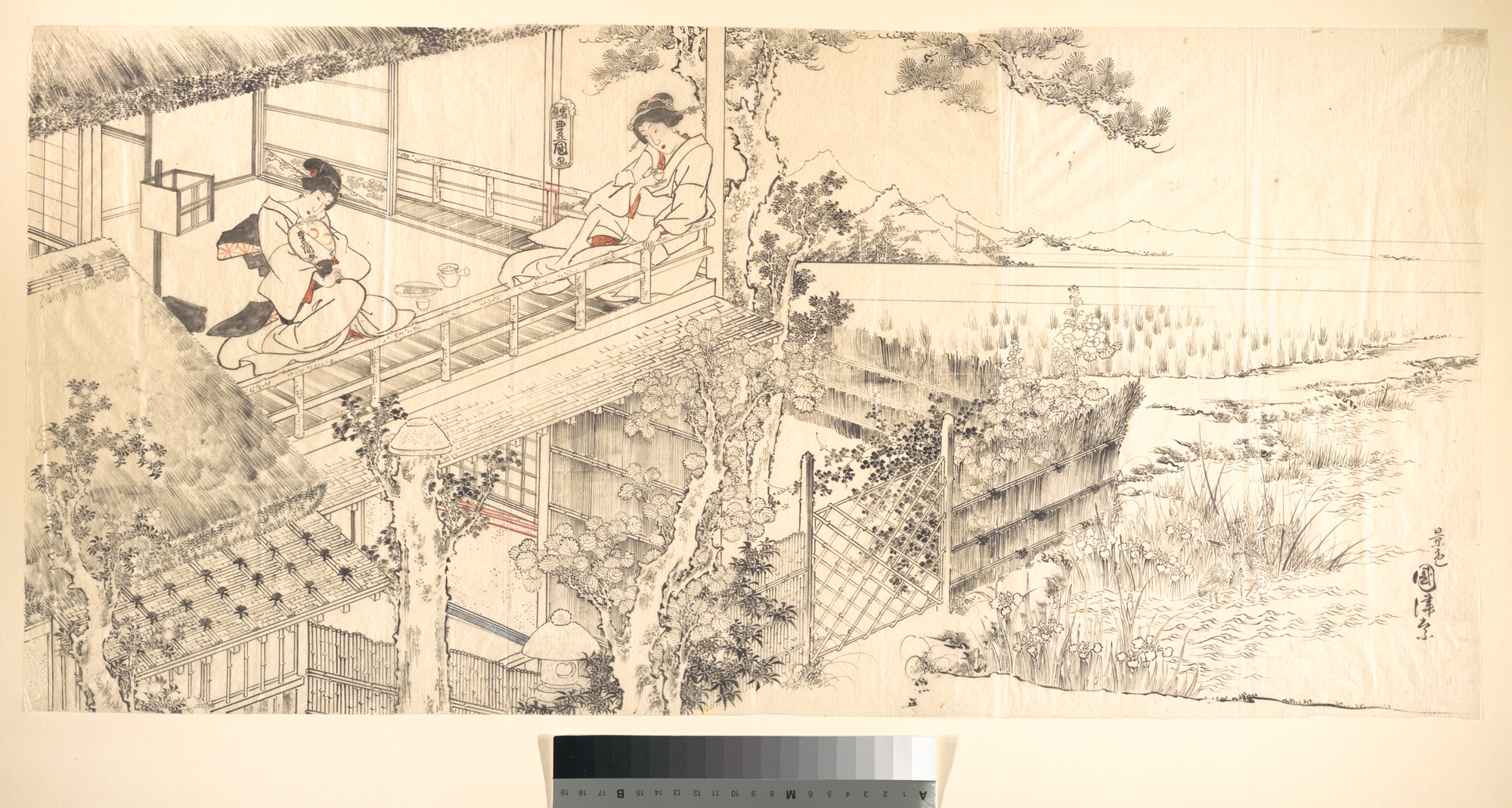
Two Courtesans Enjoying the View from a Teahouse
after 1844
Drawings intended as design for woodblock prints (triptych); ink and color on paper
Frequently Asked Questions
Kanagawa Station: The Tomb of Urashima (Kanagawa no eki, Urashima-zuka) was created by Utagawa Kunisada (歌川国貞).