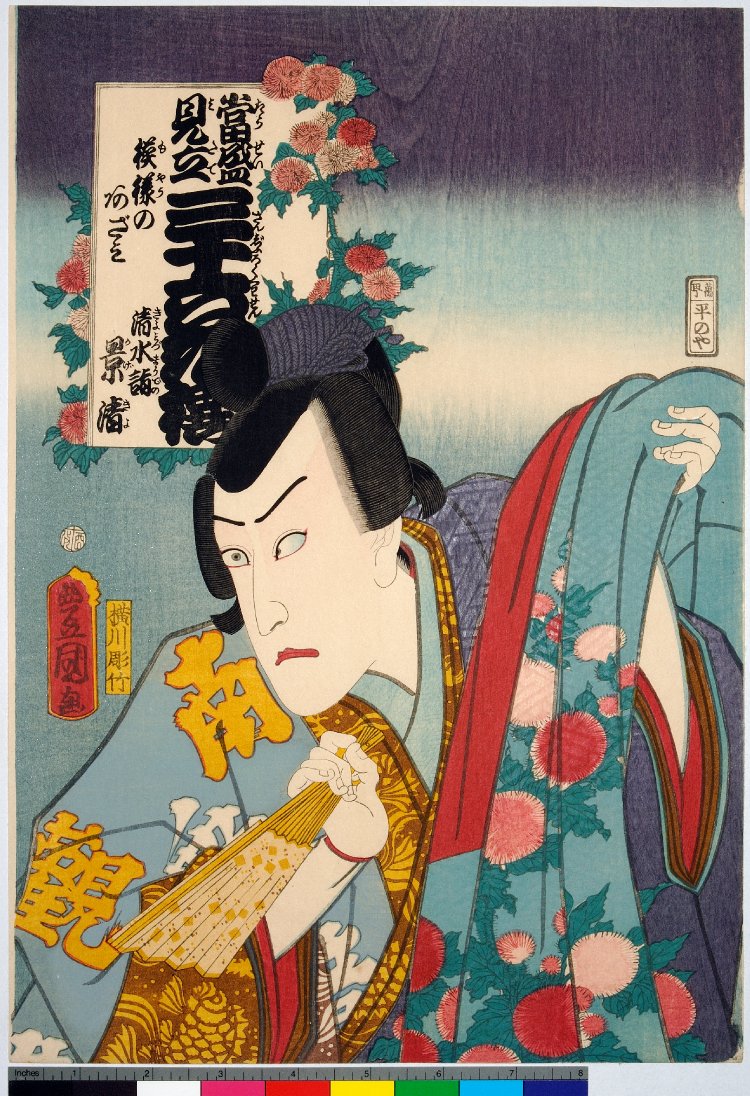
Kiyomizu mode no Kagekiyo, Moyo no azami (Kagekiyo on a Kiyomizu Pilgrimage, Thistle) / Tosei mitate sanju-rokkasen 當盛見立 三十六花撰 (Contemporary Kabuki Actors Likened to Thirty-Six Flowers (Immortals of Poetry))
- Source:
- ukiyo-e.org
Description
Kiyomizu mode no Kagekiyo, Moyo no azami (Kagekiyo on a Kiyomizu Pilgrimage, Thistle) is a yakusha-e from Utagawa Kunisada's Tosei mitate sanju-rokkasen (Contemporary Kabuki Actors Likened to Thirty-Six Flowers / Immortals of Poetry), in which an Edo kabuki star in the role of the Heike loyalist Taira no Kagekiyo is paired with one of the thirty-six classical poetic immortals and with the thistle (azami), a flower whose prickly toughness aligns naturally with the implacable warrior of the Kagekiyo cycle. The variant title 'Kagekiyo on a Kiyomizu Pilgrimage' alludes to the Kiyomizu shrine episode in which the hero's identity is exposed. Kunisada, the dominant designer of yakusha-e in nineteenth-century Edo ukiyo-e, presents the figure in a forceful half-length composition with the wild expression, set jaw, and patterned costume conventionally given to Kagekiyo roles in aragoto performance. The flower cartouche carrying the thistle spray and the series title cartouche at top mark the print as part of a coordinated set. The British Museum impression catalogued at ukiyo-e.org provides a stable reference for the design and supports broader study of Kunisada's mitate practice. Source: ukiyo-e.org / British Museum (https://ukiyo-e.org/image/bm/AN00431557_001_l).
More Prints by Utagawa Kunisada

The actors Ichikawa Danjuro VII as Takamoto no kitsune and Segawa Kikunojo V as Izumi no Chieda-gitsune
1818
Color woodblock print; shikishiban, surimono

Basketry Work: By the Craftsman Ichida Shōshichirō of Naniwa (Kagozaiku Naniwa saikunin Ichida Shōshichirō)
1819
Woodblock print; ink and color on paper
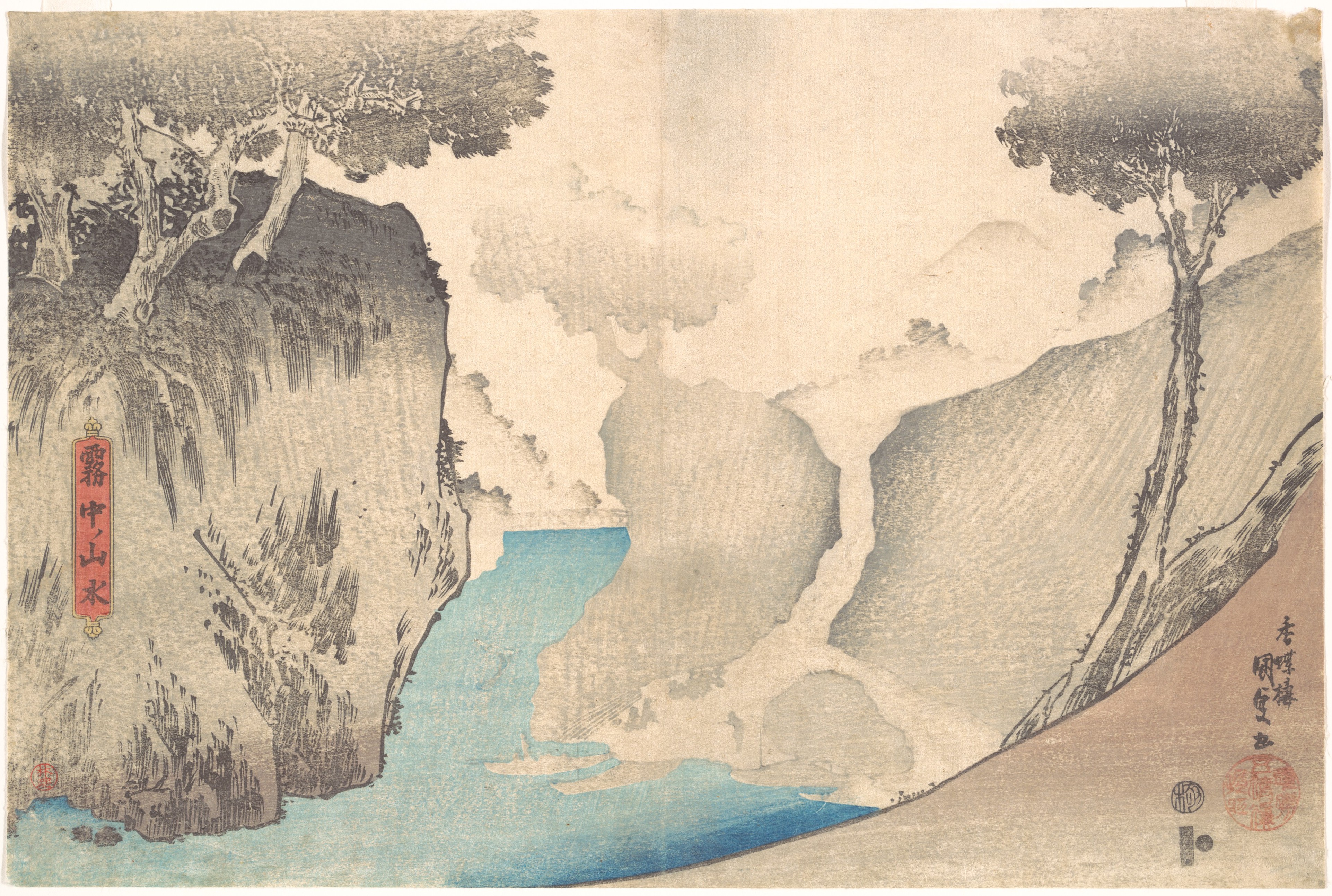
Ochanomizu in the Mist
mid-19th century
Woodblock print; ink and color on paper
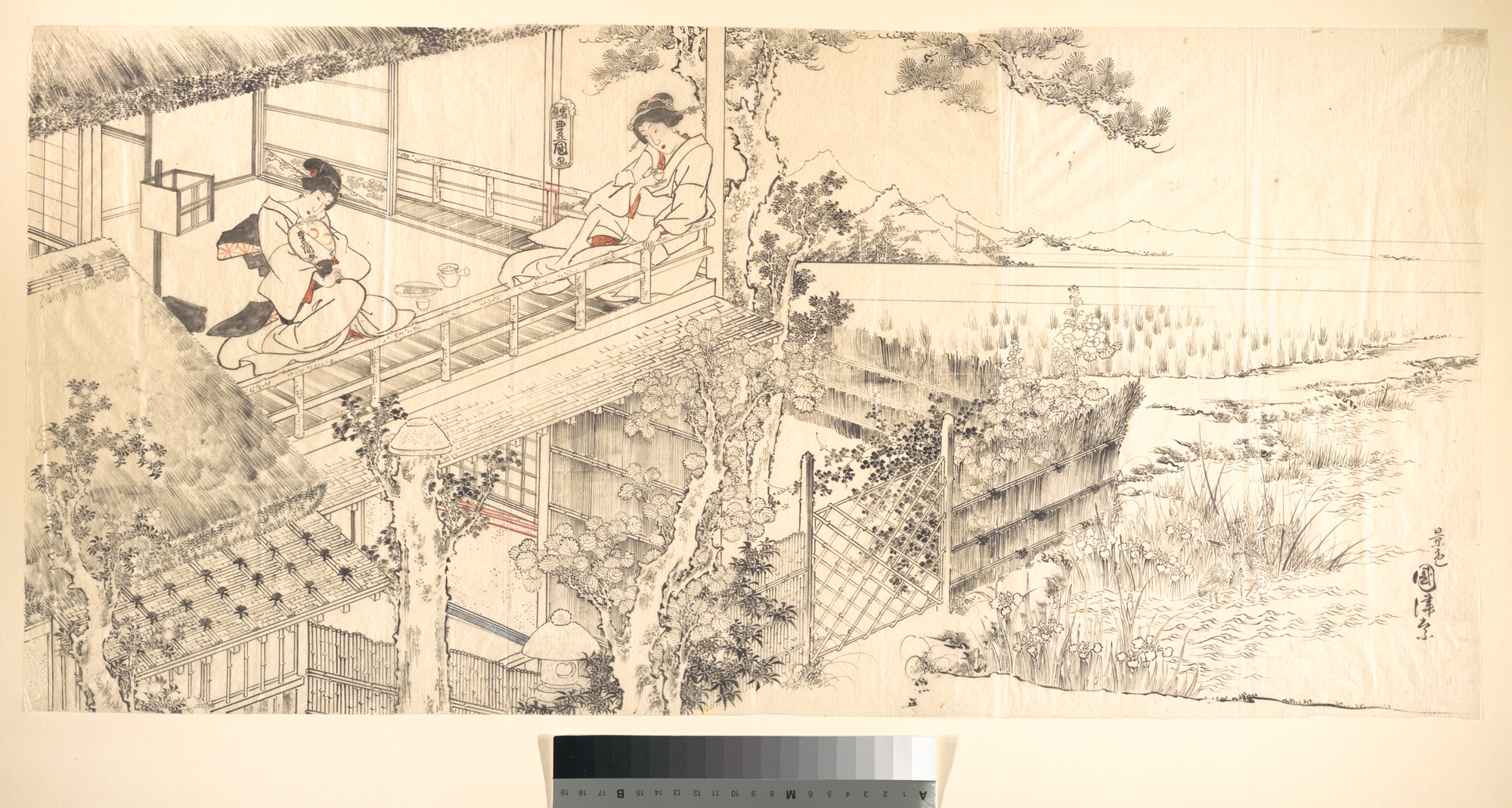
Two Courtesans Enjoying the View from a Teahouse
after 1844
Drawings intended as design for woodblock prints (triptych); ink and color on paper
More Birds & Flowers Prints
Frequently Asked Questions
Kiyomizu mode no Kagekiyo, Moyo no azami (Kagekiyo on a Kiyomizu Pilgrimage, Thistle) / Tosei mitate sanju-rokkasen 當盛見立 三十六花撰 (Contemporary Kabuki Actors Likened to Thirty-Six Flowers (Immortals of Poetry)) was created by Utagawa Kunisada (歌川国貞).
Kiyomizu mode no Kagekiyo, Moyo no azami (Kagekiyo on a Kiyomizu Pilgrimage, Thistle) / Tosei mitate sanju-rokkasen 當盛見立 三十六花撰 (Contemporary Kabuki Actors Likened to Thirty-Six Flowers (Immortals of Poetry)) depicts birds & flowers.