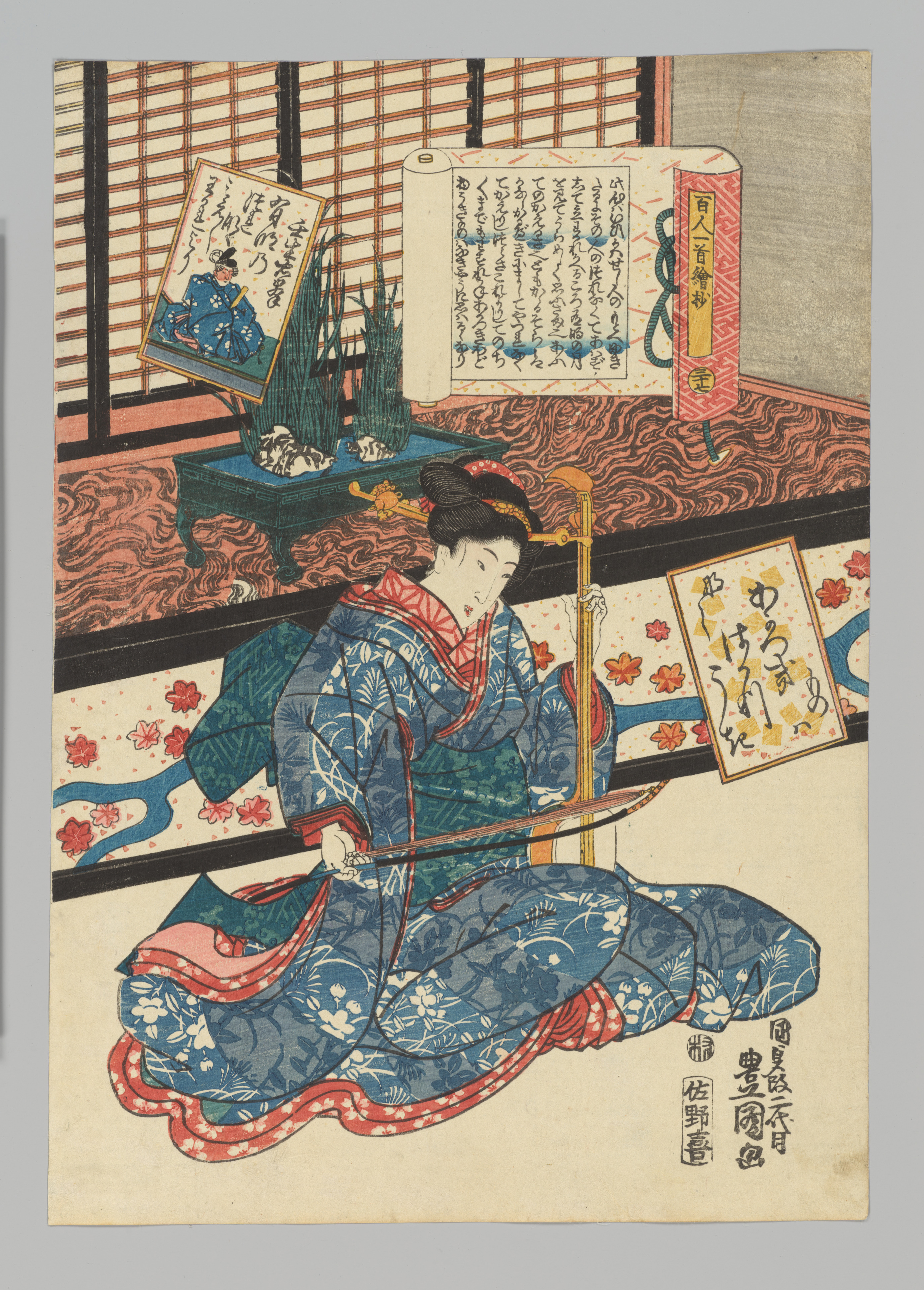
Mibu no Tadamine (no. 37), from the series A Pictorial Commentary on One Hundred Poems by One Hundred Poets (Hyakunin isshu eshō: Mibu no Tadamine)
- Date:
- ca. 1844
- Medium:
- Woodblock print (nishiki-e); vertical oban; ink and color on paper
- Source:
- Metropolitan Museum of Art
Description
From his 1834 series "A Pictorial Commentary on One Hundred Poems by One Hundred Poets (Hyakunin Isshu Esho)," this Utagawa Kunisada print pairs the early Heian court poet Mibu no Tadamine (no. 37 in the canonical anthology) with a contemporary mitate image. The Hyakunin Isshu, compiled by Fujiwara no Teika in the thirteenth century, was perhaps the most widely circulated poetry collection in Edo Japan, woven into popular memory through card games, schoolroom exercises, and a vast tradition of Edo ukiyo-e illustration. Kunisada's series, like its predecessors by Hokusai and others, treats each poem as a pretext for a fully developed pictorial design: the verse appears in cartouche, with a poet's portrait and biographical note above, while the main composition presents a scene whose imagery resonates with the poem's language through visual and literary pun. Tadamine's famous poem, lamenting that the moon at dawn could be no more pitiless than the lover who departed at first light, gave Kunisada the opportunity to picture an early-morning figure framed by autumn moonlight. As one of the dominant designers of mitate compositions in nineteenth-century Edo ukiyo-e, Kunisada uses the Hyakunin Isshu series to bring his bijinga and yakusha-e vocabularies into dialogue with classical literature, demonstrating the genre's capacity to absorb and re-energize courtly material. The Metropolitan Museum of Art preserves this sheet within its holdings of Kunisada's series, where it documents both his stylistic maturity and the literary depth of the late Edo print market.
More Prints by Utagawa Kunisada

The actors Ichikawa Danjuro VII as Takamoto no kitsune and Segawa Kikunojo V as Izumi no Chieda-gitsune
1818
Color woodblock print; shikishiban, surimono

Basketry Work: By the Craftsman Ichida Shōshichirō of Naniwa (Kagozaiku Naniwa saikunin Ichida Shōshichirō)
1819
Woodblock print; ink and color on paper
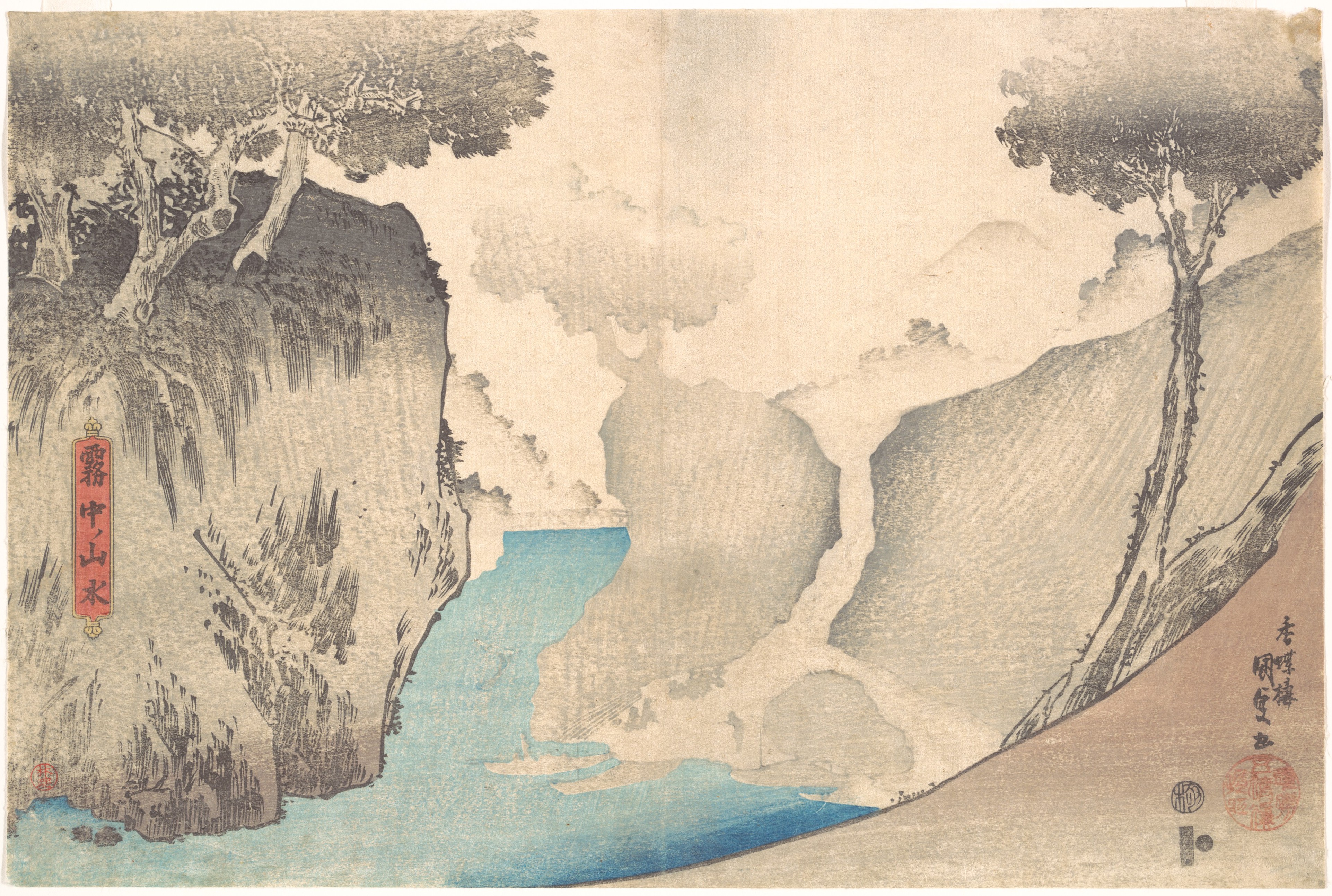
Ochanomizu in the Mist
mid-19th century
Woodblock print; ink and color on paper
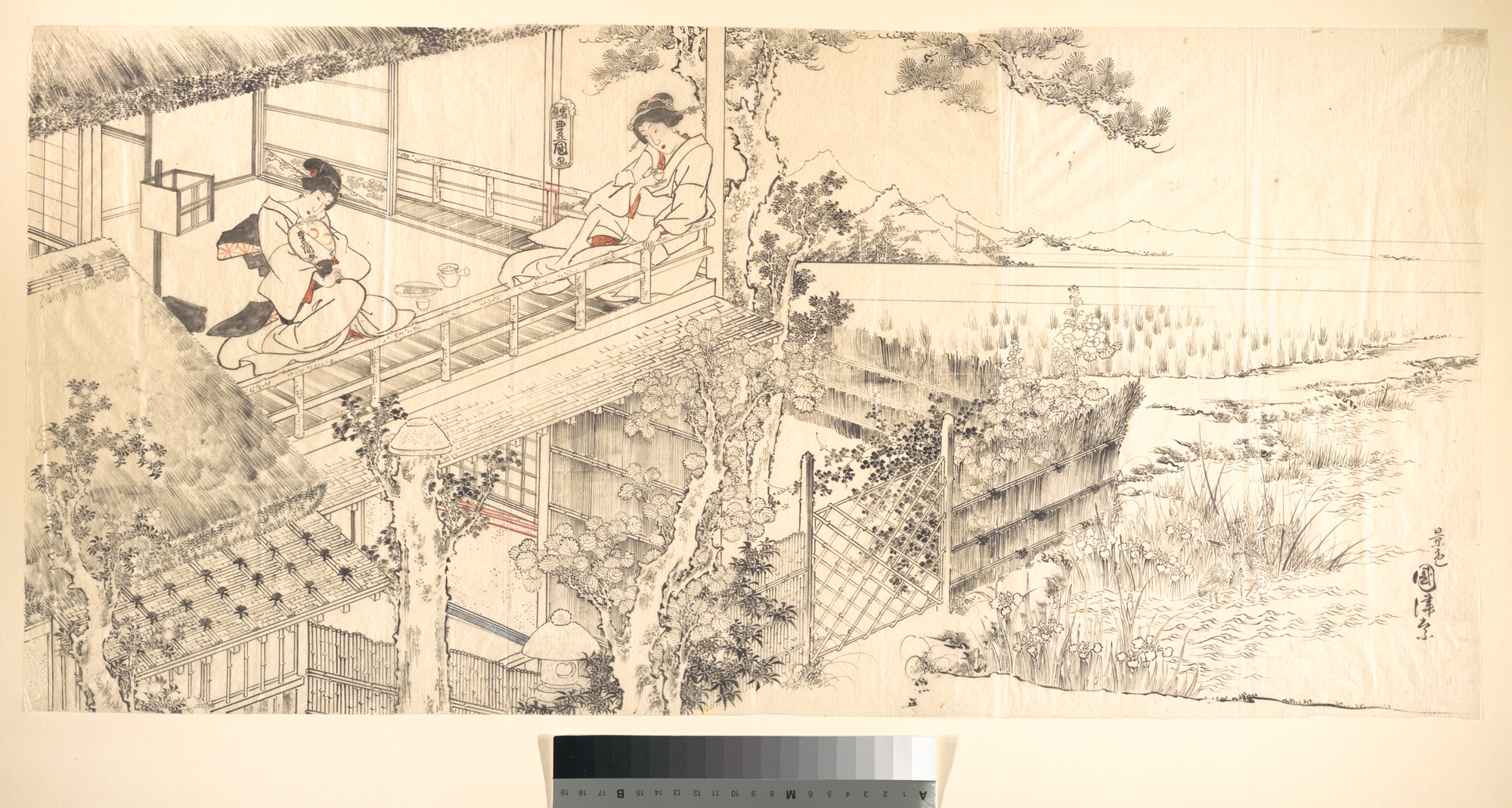
Two Courtesans Enjoying the View from a Teahouse
after 1844
Drawings intended as design for woodblock prints (triptych); ink and color on paper
Frequently Asked Questions
Mibu no Tadamine (no. 37), from the series A Pictorial Commentary on One Hundred Poems by One Hundred Poets (Hyakunin isshu eshō: Mibu no Tadamine) was created by Utagawa Kunisada (歌川国貞) in ca. 1844.