
Miniature Shunga print from Album No. 9
- Source:
- ukiyo-e.org
Description
Miniature Shunga print from Album No. 9, an Edo ukiyo-e by Utagawa Kunisada documented through ukiyo-e.org from the Asian Art Museum's holdings, belongs to the parallel shunga production that nearly every commercial Edo print artist undertook alongside his official output. Shunga, the erotic woodblock prints and albums sold privately through Edo booksellers, was a substantial market governed by its own conventions of compositional intimacy, costume display, and visual humor. Miniature albums, of which this print is a single leaf, were produced in compact formats suitable for discreet handling and often used the same designers, block-cutters, and printers as the publicly distributed yakusha-e and bijinga sheets. Kunisada's contributions to shunga are extensive but, for most of the modern period, were collected and catalogued under attributional rather than signed circumstances, since Tempo-era reforms had pushed erotic publication firmly underground. The figural style here is recognizably his: the elongated facial template, the meticulously rendered textile patterns, and the intimate spatial framing that he had refined in countless single-figure prints. The Asian Art Museum impression catalogued through ukiyo-e.org provides a representative example of late Edo miniature album production. Read alongside Kunisada's better-known kabuki portraits, his shunga work clarifies the breadth of the Edo print economy and the fluidity with which the same artists, working out of the same workshops, produced both visible and discreetly traded woodblock prints across nineteenth-century Japan.
More Prints by Utagawa Kunisada

The actors Ichikawa Danjuro VII as Takamoto no kitsune and Segawa Kikunojo V as Izumi no Chieda-gitsune
1818
Color woodblock print; shikishiban, surimono

Basketry Work: By the Craftsman Ichida Shōshichirō of Naniwa (Kagozaiku Naniwa saikunin Ichida Shōshichirō)
1819
Woodblock print; ink and color on paper
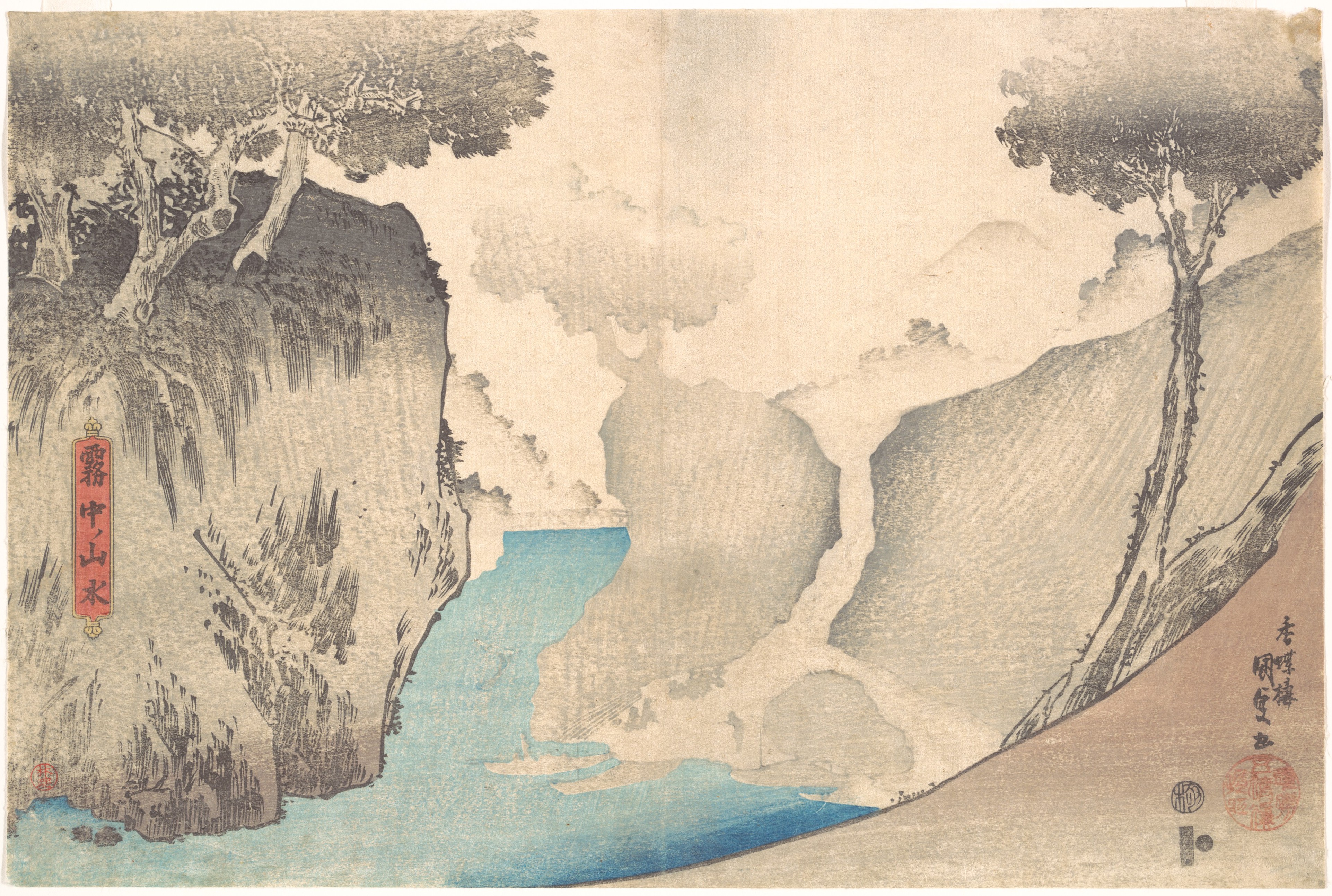
Ochanomizu in the Mist
mid-19th century
Woodblock print; ink and color on paper
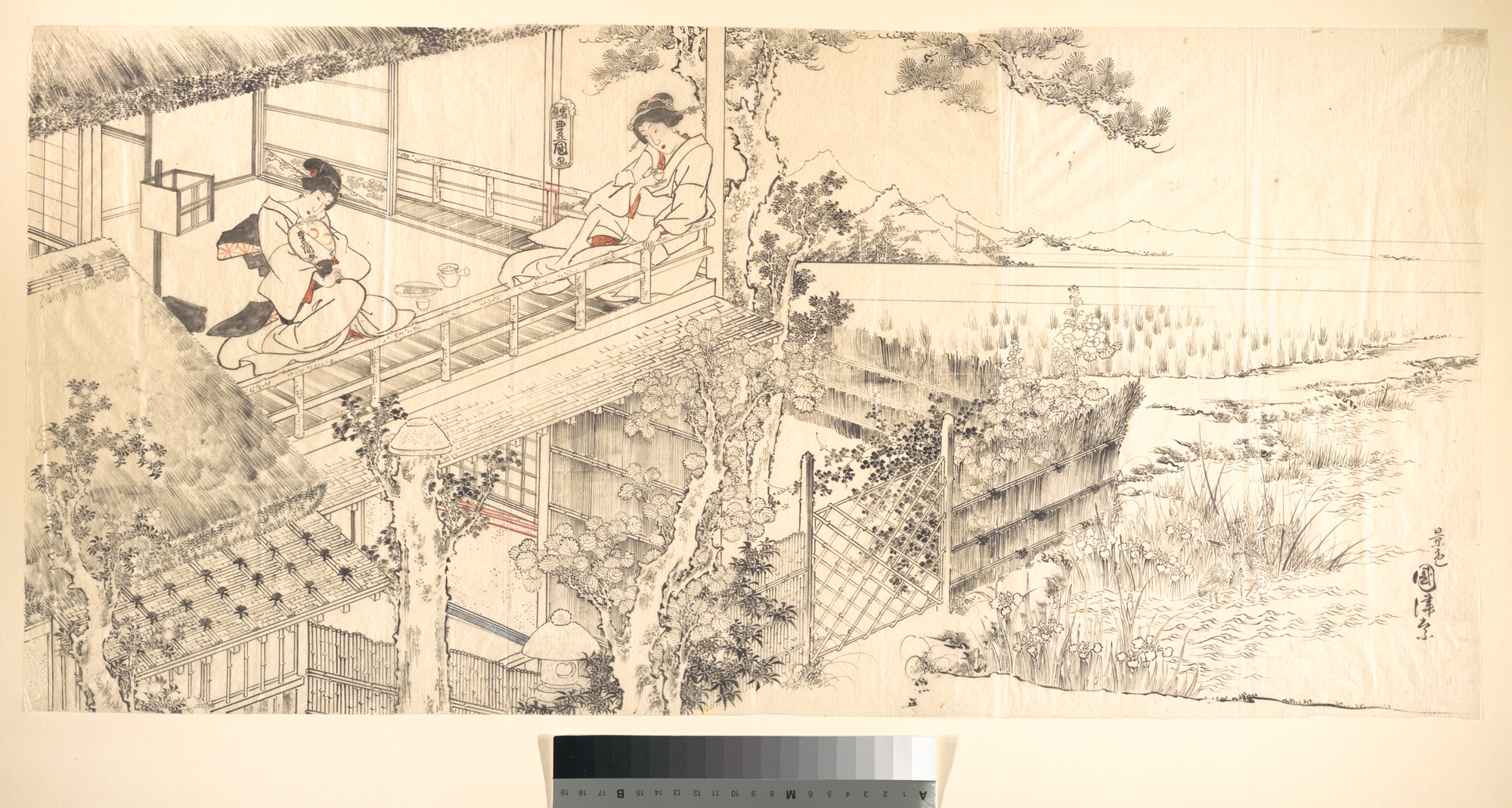
Two Courtesans Enjoying the View from a Teahouse
after 1844
Drawings intended as design for woodblock prints (triptych); ink and color on paper
Frequently Asked Questions
Miniature Shunga print from Album No. 9 was created by Utagawa Kunisada (歌川国貞).