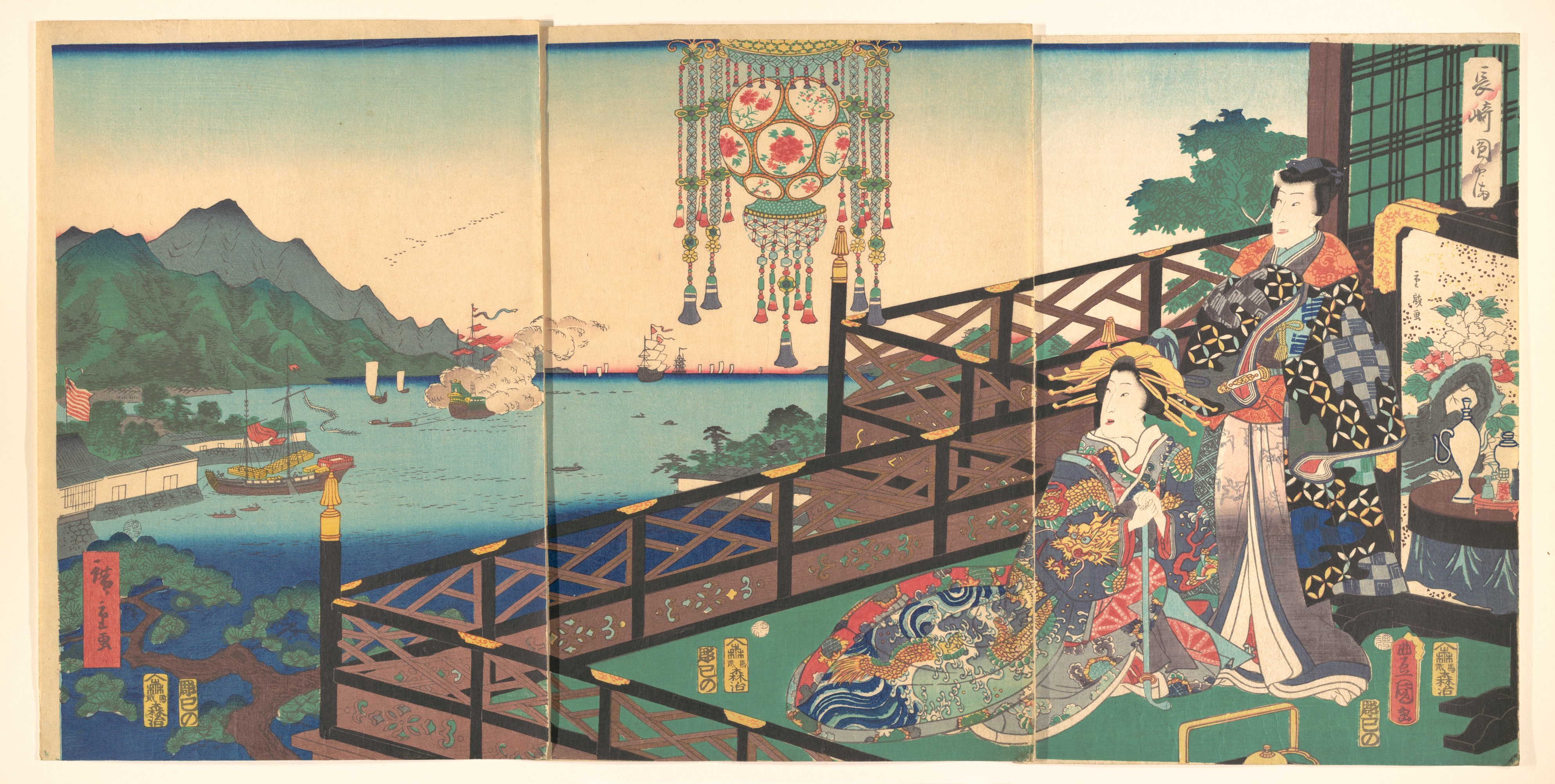
Mitsuuji in the Maruyama Pleasure District of Nagasaki (Nagasaki dejima)
- Date:
- 3rd month, 1861
- Medium:
- Triptych of woodblock prints; ink and color on paper
- Source:
- Metropolitan Museum of Art
Description
Mitsuuji in the Maruyama Pleasure District of Nagasaki (Nagasaki dejima), designed in 1861 and held at the Metropolitan Museum of Art, is a late Edo ukiyo-e by Utagawa Kunisada from his long-running Genji-themed series. Mitsuuji is the Edo-period stand-in for Hikaru Genji, the protagonist of Ryutei Tanehiko's wildly popular 1829-42 serialized novel Nise Murasaki inaka Genji (A Country Genji by a Fake Murasaki), which transposed the Heian court romance into a contemporary feudal setting. Kunisada's serial collaboration with Tanehiko - first through the novel's woodblock illustrations and then through the spinoff print series that flowed for decades after - became one of the most lucrative properties in Edo publishing. Here Mitsuuji visits Maruyama, the licensed pleasure quarter of Nagasaki adjacent to the Dejima trading post, the only port through which foreign goods entered Japan during the Tokugawa period. Kunisada uses the setting to insert exotic detail: Dutch-style shipping lanterns, Chinese-influenced architecture, and patterns suggesting imported textiles, all framed within his characteristic compressed bijinga composition. The figures' faces, with their long noses and slender eyes, exemplify the late-period Toyokuni III bijin formula, and the saturated indigo, vermilion, and aniline-tinged purples mark the print as a Bunkyu era production. The image sits at the intersection of yakusha-e portraiture and bijinga, with topographic interest in Nagasaki, and reflects the curiosity about the outside world that Edo audiences felt as the bakufu's policy of isolation drew to a close.
More Prints by Utagawa Kunisada

The actors Ichikawa Danjuro VII as Takamoto no kitsune and Segawa Kikunojo V as Izumi no Chieda-gitsune
1818
Color woodblock print; shikishiban, surimono

Basketry Work: By the Craftsman Ichida Shōshichirō of Naniwa (Kagozaiku Naniwa saikunin Ichida Shōshichirō)
1819
Woodblock print; ink and color on paper
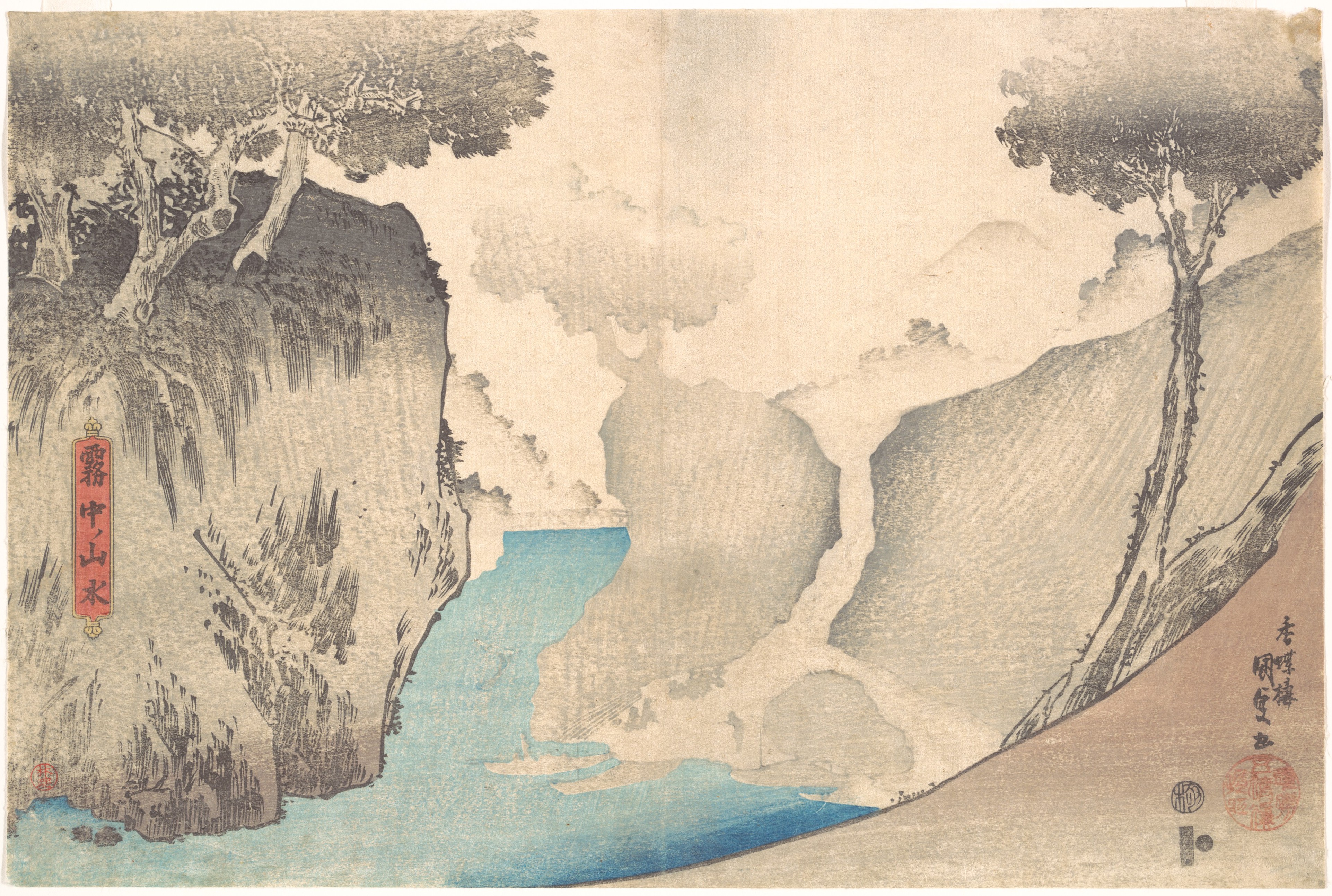
Ochanomizu in the Mist
mid-19th century
Woodblock print; ink and color on paper
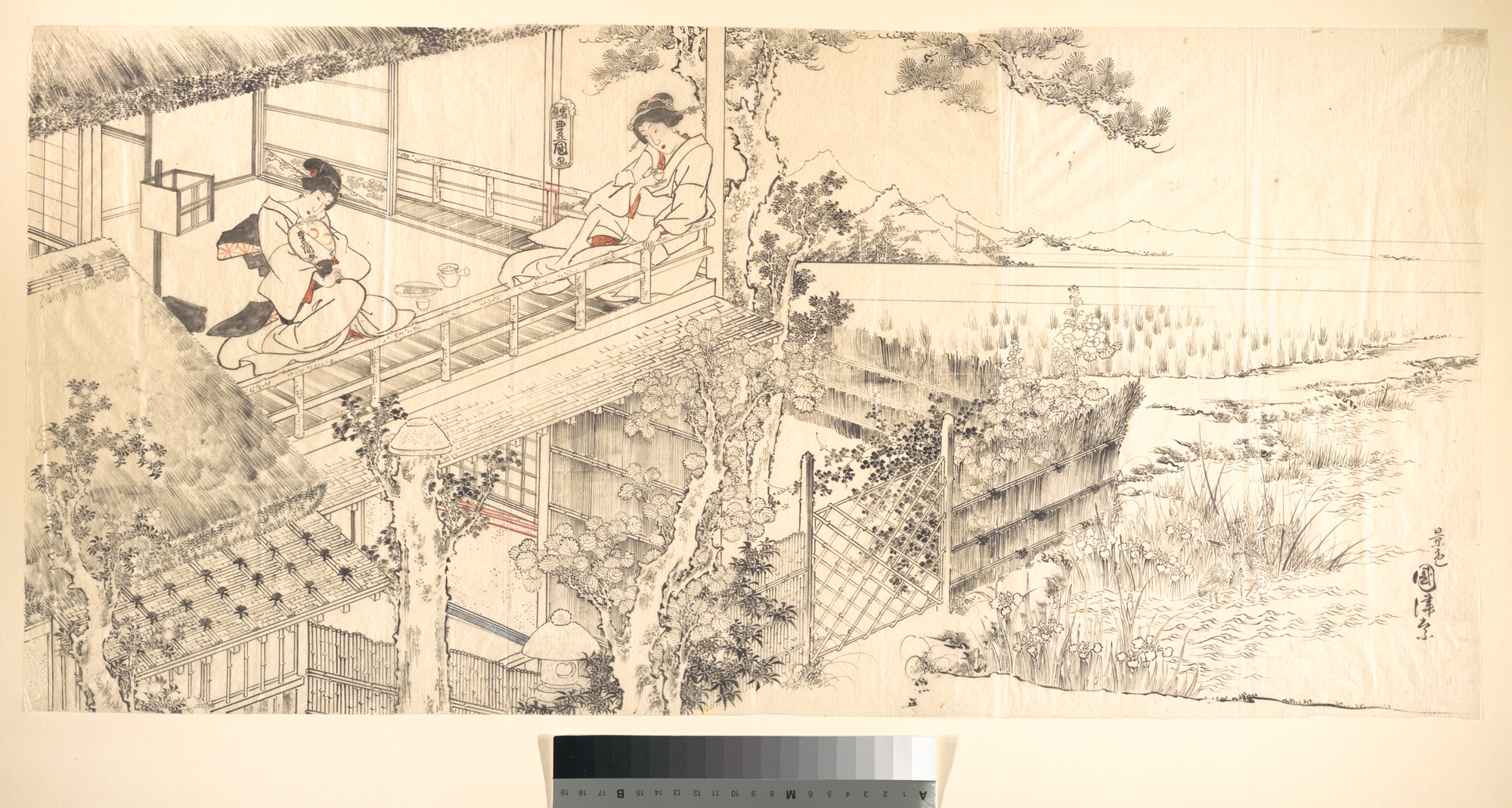
Two Courtesans Enjoying the View from a Teahouse
after 1844
Drawings intended as design for woodblock prints (triptych); ink and color on paper
Frequently Asked Questions
Mitsuuji in the Maruyama Pleasure District of Nagasaki (Nagasaki dejima) was created by Utagawa Kunisada (歌川国貞) in 3rd month, 1861.