.jpg)
Mitsuuji with Mountain Roses (Yamabuki), from the series “Six Jewel Faces” (Mu tama-gao)
- Date:
- mid- to late 1830s
- Medium:
- Uncut fan print; ink and color on paper
- Source:
- Metropolitan Museum of Art
Description
From the series "Six Jewel Faces (Mu tama-gao)," this 1834 design by Utagawa Kunisada features Mitsuuji - the Edo-period pop hero of the long-running illustrated novel "Nise Murasaki inaka Genji" (A Country Genji by a Fraudulent Murasaki) - paired with yamabuki (Japanese kerria, often translated as mountain rose). The Genji adaptation was one of the publishing sensations of the 1830s, and Kunisada designed the illustrations for the original book and a sprawling family of single-sheet prints riffing on its characters. Pairing Mitsuuji with seasonal flora was a staple device, turning each sheet into both a celebrity portrait and a flower-of-the-season image. The Metropolitan Museum of Art preserves the impression (accession 812250). The series exemplifies how Edo ukiyo-e thrived on cross-media licensing avant la lettre: a hit book generated prints, fashion plates, and parodic spinoffs across the print market. As Toyokuni III in later signatures, Kunisada was the central beneficiary of this Genji boom, and the Mu tama-gao series shows him weaving classical literary allusion into the stylish bijin-ga vocabulary that the townspeople audience expected.
More Prints by Utagawa Kunisada

The actors Ichikawa Danjuro VII as Takamoto no kitsune and Segawa Kikunojo V as Izumi no Chieda-gitsune
1818
Color woodblock print; shikishiban, surimono

Basketry Work: By the Craftsman Ichida Shōshichirō of Naniwa (Kagozaiku Naniwa saikunin Ichida Shōshichirō)
1819
Woodblock print; ink and color on paper
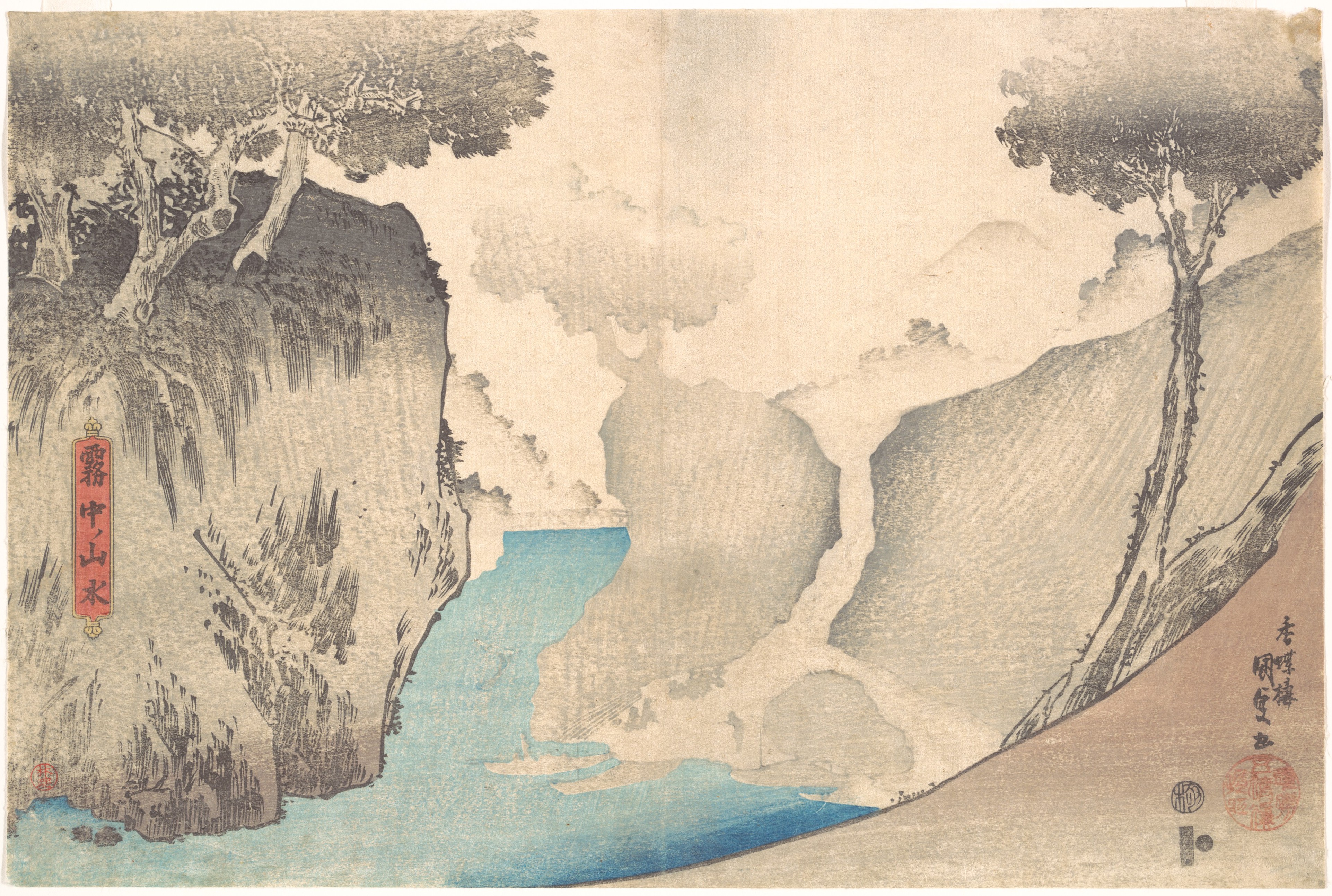
Ochanomizu in the Mist
mid-19th century
Woodblock print; ink and color on paper
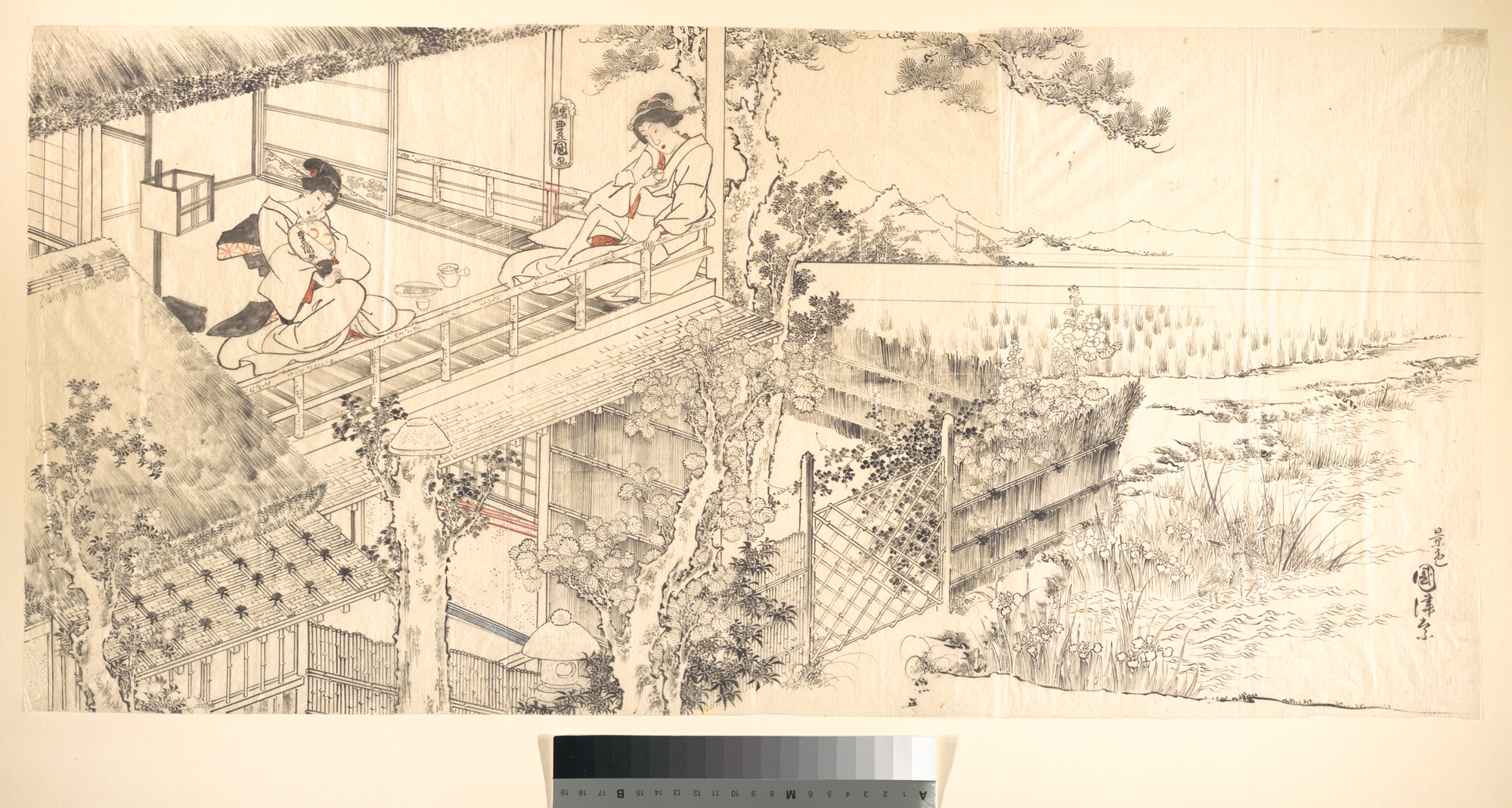
Two Courtesans Enjoying the View from a Teahouse
after 1844
Drawings intended as design for woodblock prints (triptych); ink and color on paper
Frequently Asked Questions
Mitsuuji with Mountain Roses (Yamabuki), from the series “Six Jewel Faces” (Mu tama-gao) was created by Utagawa Kunisada (歌川国貞) in mid- to late 1830s.