
Miya Station (Miya no eki)
- Medium:
- Source:
- Victoria and Albert Museum
Description
Miya Station (Miya no eki), designed by Utagawa Kunisada and held at the Victoria and Albert Museum, places one of the great post stations of the Tokaido inside the artist's actor-driven Edo ukiyo-e idiom. Miya, the forty-first station on the road between Edo and Kyoto, lay close to the great Atsuta Shrine in present-day Nagoya and was a popular embarkation point for travelers crossing Ise Bay. Hiroshige had given Miya enduring visual identity through his Tokaido series; Kunisada, as Toyokuni III, responded by absorbing the station into one of the hybrid actor-and-landscape series that became a hallmark of late Edo print publishing. The print's compositional logic - a large figure in the foreground, a topographic vignette inset above - is typical of the Tokaido prints he produced through the 1850s and 1860s. The actor's robe is patterned with motifs hinting at the role, and his face follows Kunisada's standardized bijin / yakusha facial template, with elongated jaw line and small reddened mouth. Although the V&A's record does not pin a date, the figural style suggests a late Kaei or Ansei production, when Kunisada was at the peak of his commercial output. As yakusha-e, the print is more than a travel image: it draws on the meisho-e tradition to ground a kabuki actor in a place audiences could identify, and so doubles as a celebrity print and as a souvenir of a route familiar to anyone who had read Hiroshige. The V&A's strong holdings in nineteenth-century Utagawa-school prints situate this sheet in a robust comparative context.
More Prints by Utagawa Kunisada

The actors Ichikawa Danjuro VII as Takamoto no kitsune and Segawa Kikunojo V as Izumi no Chieda-gitsune
1818
Color woodblock print; shikishiban, surimono

Basketry Work: By the Craftsman Ichida Shōshichirō of Naniwa (Kagozaiku Naniwa saikunin Ichida Shōshichirō)
1819
Woodblock print; ink and color on paper
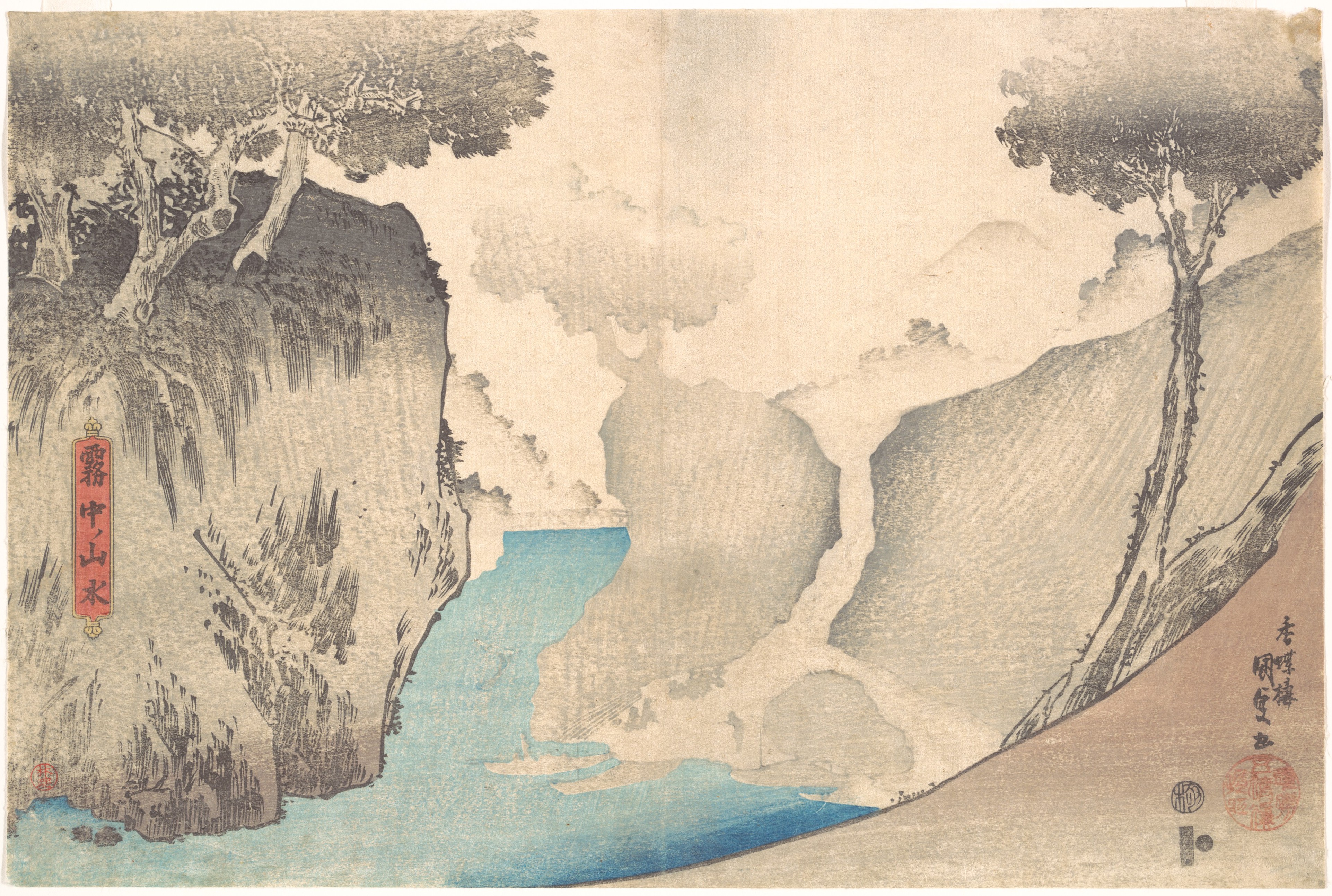
Ochanomizu in the Mist
mid-19th century
Woodblock print; ink and color on paper
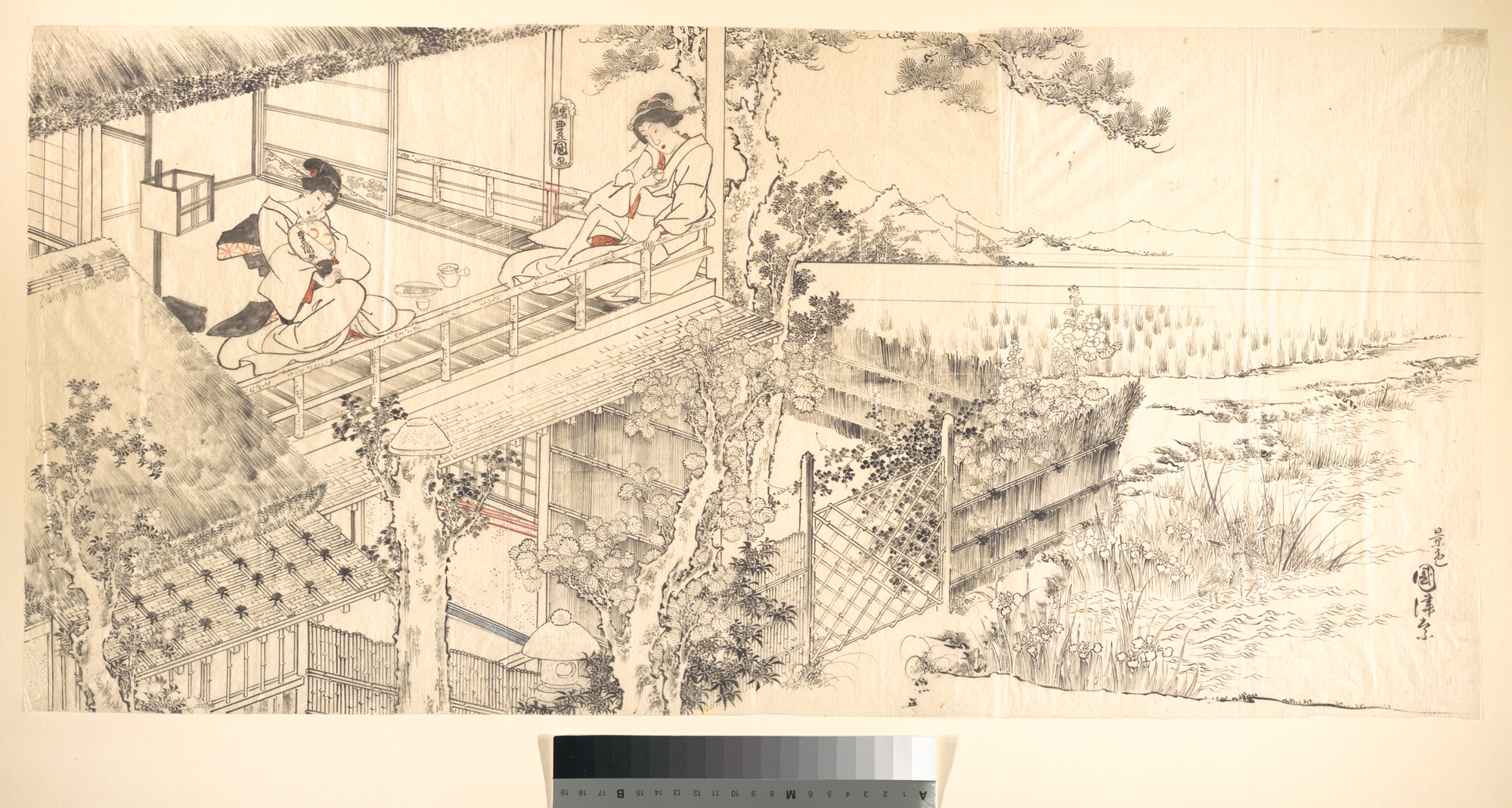
Two Courtesans Enjoying the View from a Teahouse
after 1844
Drawings intended as design for woodblock prints (triptych); ink and color on paper
Frequently Asked Questions
Miya Station (Miya no eki) was created by Utagawa Kunisada (歌川国貞).